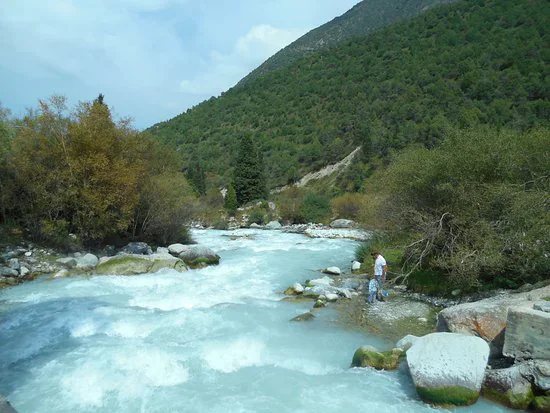
The Ala-Archa river basin, the glaciated valley just south of Bishkek that hikers flock to on summer weekends, is now home to the first early warning system in the region designed to detect glacial lake outburst floods. Kyrgyzstan's Ministry of Emergency Situations says installation and testing have been completed under GLOFCA, a regional project run by UNESCO with funding from the Adaptation Fund.
Glacial lake outburst floods — GLOFs, in the shorthand — happen when a lake dammed by ice or moraine suddenly bursts, sending a violent surge of water and debris down narrow mountain valleys. With climate change accelerating glacier retreat across the Tian Shan, Kyrgyzstan has thousands of high-altitude lakes, and officials have long flagged them as one of the country's most serious natural hazards. Until now, there was no automated monitoring on Ala-Archa, a drainage that runs straight towards villages and dacha settlements on Bishkek's southern outskirts.
The new system is meant to give people downstream precious extra minutes: sensors watch the lakes and river, and alerts go out to emergency services and communities before a flood wave arrives. Officials say it should also make rescue teams' work substantially easier during incidents.
For travellers, the relevance is straightforward. Ala-Archa National Park is one of the easiest serious alpine hikes from any capital city in the world — roughly 40 minutes by road from central Bishkek, with trails climbing to waterfalls, the Ak-Sai glacier and mountaineering camps above 3,000 metres. It's popular from late spring to early autumn, exactly the season when meltwater fills high lakes. Better monitoring doesn't remove mountain risk entirely, but it's a genuine sign that the valley's hazards are being taken seriously — and a good prompt to check conditions and register with local authorities before heading up any Kyrgyz valley with glaciers at its head.
GLOFCA is a regional effort, so expect similar systems to appear elsewhere in the Tian Shan and Pamirs. For now, Ala-Archa is the test case, and a useful one: it's the most-visited gorge in the country, meaning the system protects both residents and the steady stream of trekkers, trail runners and picnickers who use the park every summer.