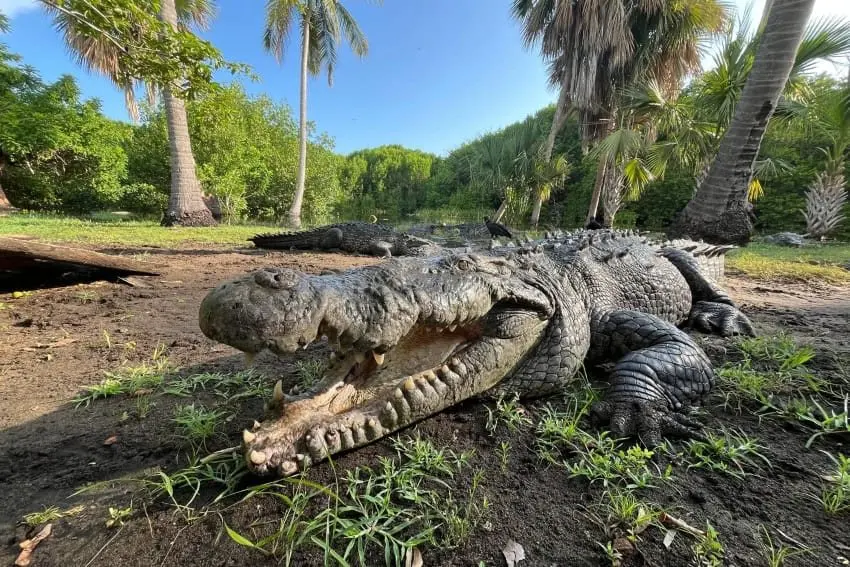
Thirty years ago, the crocodiles and turtles around La Ventanilla were nearly finished. Hunters prized their skins, and turtle meat and eggs were a local delicacy. Today, the same lagoon and mangroves shelter at least 300 American crocodiles, and the turning point wasn't a government decree — it was a group of Zapotec families who decided tourism could pay better than poaching.
La Ventanilla sits on the Oaxaca coast in the municipality of Santa María Tonameca, where a rock formation shaped like a window overlooks 15 kilometres of protected beach. After Mexico outlawed crocodile hunting in the late 1970s and turtle hunting in the early 1990s, tougher enforcement arrived here in 1998. Locals including Agustín Reyes and Vicente García, working with NGOs, then formed the Ecotourism Cooperative La Ventanilla — a project now registered as a Wildlife Conservation Management Unit under federal environment agency Semarnat, run by about 30 families.
The setting helps. During the rainy season, saltwater from the Pacific mixes with freshwater from the lagoon, creating a nutrient-rich breeding ground. Crocodiles keep the ecosystem in check, while healthy mangroves buffer hurricanes and store carbon — a big deal in a country that has lost more than 27,000 hectares of mangrove forest in five years, according to Conabio.
For visitors, the draw is hands-on participation rather than a passive wildlife show. Silent, non-motorised boats drift through the mangroves, and a small island lets you see crocodiles up close — tour fees go directly to feeding the animals. During nesting season, tourists can join nightly beach patrols that collect eggs and move them to a protected shelter, away from predators and poachers. Around 6 p.m., there's the release: thousands of hatchlings scrambling toward the sea, with travellers allowed to take part. The cooperative estimates it releases 25,000 to 30,000 turtles each year.
The model also does serious science. Cooperative members run nightly biometric monitoring, and the project hosts university students and researchers. Every tourist peso funds the lagoon, the mangroves and everything living in them — a self-sustaining loop that has made La Ventanilla a reference point for community-led conservation.
Why it matters for travellers: if you're heading to Oaxaca's coast — Puerto Escondido and Mazunte are the better-known neighbours — La Ventanilla offers something rarer than a pretty beach. Your visit measurably supports a community that replaced extinction with livelihoods. Go for the crocodile tour, stay for the turtle release, and you'll be part of one of Mexico's quiet conservation success stories.