An American Airlines flight in August saw a lithium battery incident injure four to five passengers, one of whom was reportedly hospitalised with burns. It wasn't a one-off: the US Federal Aviation Administration logged a record 82 battery incidents between January and September 2026, six involving laptops. As we all travel with more gadgets than ever, the rules around flying with them matter more too.
The first check happens before you even leave home. A damaged, swollen or overheating battery - or one subject to a recall - shouldn't be taken on a plane at all. It's also worth confirming your device complies with your airline's battery restrictions, which do vary.
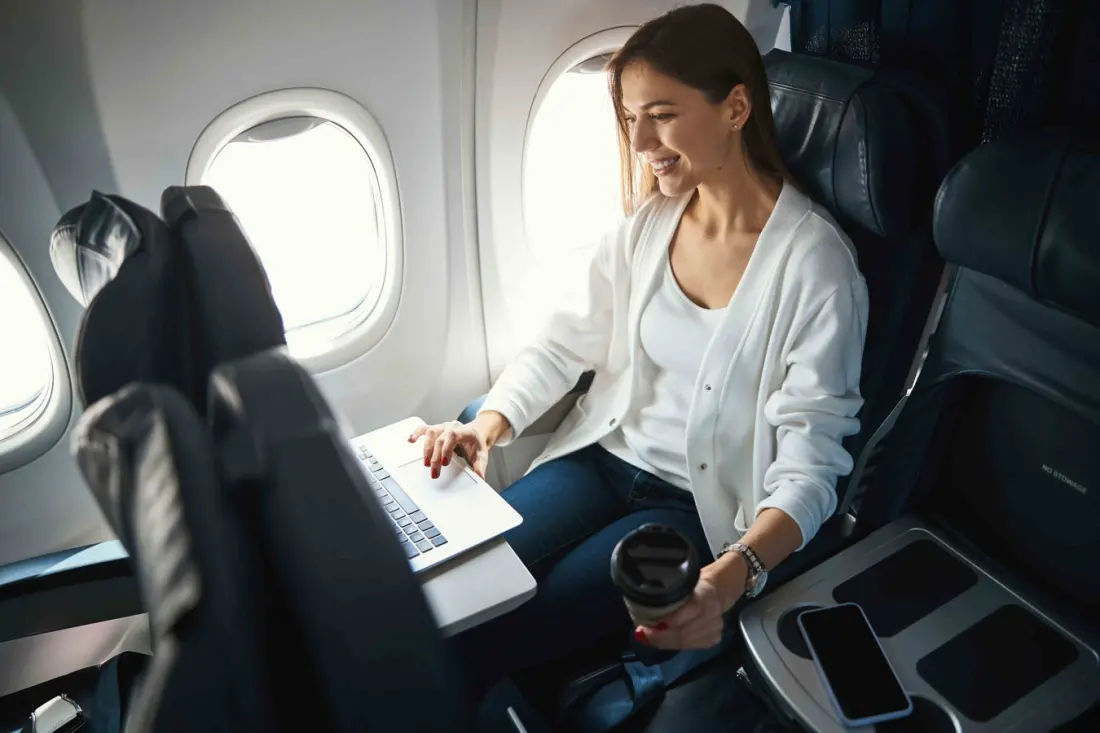
Where you stash your laptop mid-flight matters. Southwest, for instance, requires laptops of 0.9 kg or more to be under the seat or in an overhead bin during taxi, take-off and landing - partly to stop them becoming projectiles in turbulence. More importantly, devices need to stay accessible. A United flight from Washington to Rome had to turn around in October 2025 after a passenger's laptop slid behind a cabin panel into a spot nobody could reach. If a battery goes into thermal runaway and starts smoking, crew can only act fast if they can get to it.
The rules go well beyond laptops: phones, tablets, watches, electric toothbrushes, razors, kids' toys and drones all count. Brussels Airlines allows up to 15 battery-powered devices per passenger, capped at 100 watt-hours for lithium-ion batteries (2g lithium content for lithium-metal ones), with approval needed for anything between 100 and 160 Wh. It recommends hand luggage, devices cushioned and separated so they can't short-circuit or switch themselves on. If you must check devices in, only three larger than a smartphone are allowed, fully powered down with alarms disabled and kept away from flammables. Power banks always travel in the cabin - never in the hold.
If you see a device overheating, swelling, smoking or burning, tell the cabin crew immediately. Quick reporting is the single biggest factor in keeping an incident contained.
One practical habit worth adopting: keep your laptop in an easily reachable bag with a padded compartment. Fire-resistant pouches - some with up to three protective layers - won't stop a fire outright, but they can slow flames down and spare you digging through a crammed bag in an emergency. None of this removes the risk entirely, but following the rules means that if something does go wrong at 35,000 feet, it gets dealt with in seconds rather than minutes.
For anyone flying for work or taking gadgets on holiday, this is less about alarm and more about habits: check your battery health, keep devices within reach, and know your airline's limits before you pack. - Travel Tomorrow