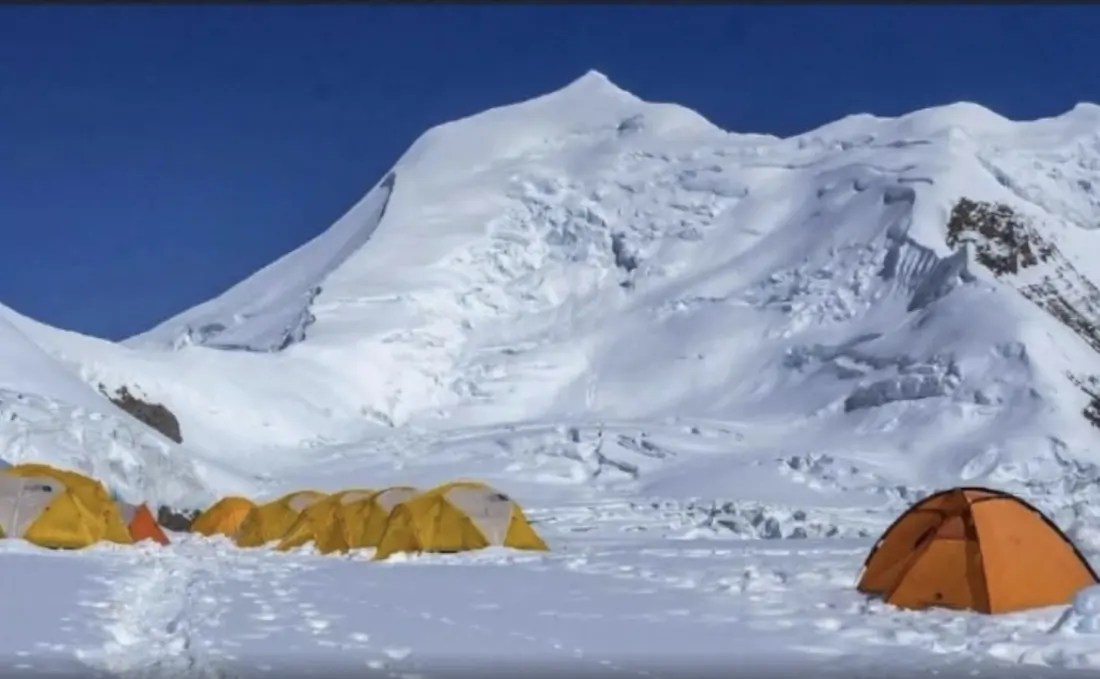
A violent late-monsoon storm has swept Nepal from east to west, leaving destruction across the country and tragedy high in the mountains. The most serious incident came at the base camp of Himlung Himal, a 7,126m peak in the Nar Phu area of Manang, where an avalanche struck while 14 Nepali guides and support staff were setting up camp ahead of arriving foreign clients. All 14 are missing. Two kitchen staff, working with Imagine Nepal Treks, are among those unaccounted for; the rest were with Himalayan Holidays Nepal.
Rescue teams reached the site quickly — Mingma Gyalje Sherpa, Pasang Sherpa, Ashish Gurung and Pemba Tsiring Sherpa, all IFMGA-certified guides, flew in by helicopter — but bad weather north of the Manang valley and darkness limited what they could do. Conditions were expected to improve from Monday.
The storm has also shut down the autumn climbing season on other big peaks. Expeditions have pulled off Manaslu, the world's eighth-highest mountain, after blizzard conditions dumped up to three metres of snow at base camp, burying tents and leaving the route exposed to avalanche risk. Seven Summit Treks has officially closed its Manaslu 2026 climb. On Dhaulagiri, the seventh-highest peak, one expedition is holding on at base camp, waiting out the snow and planning to reassess around 29 September.
Lower down, the picture is just as grim. Landslides buried homes, swollen rivers — including the Kali Gandaki and Tinau — swept away riverside settlements, and four of the five highway routes connecting Kathmandu to the rest of the country were blocked. Kathmandu Valley itself finally saw blue skies and mountain views after a week of rain, but heavy rainfall in the Bagmati catchment still flooded settlements along its rivers.
There's a telling detail behind the crowded slopes on Himlung: Nepal now requires climbers seeking an Everest permit to have first summited a Nepali peak above 7,000m. That rule has pushed a wave of climbers onto mountains like Himlung, meaning more support staff are on those slopes preparing fixed camps when weather turns. The missing guides were, in effect, working to make summit pushes possible for foreign clients whose flights in were delayed by the same storm.
For travellers, the takeaway is practical rather than alarming. Autumn is usually Nepal's most reliable trekking and climbing season, but this storm shows how sharply the monsoon can overstay its welcome. Anyone heading to Manang, Nar Phu, the Manaslu Circuit or Annapurna routes in the coming weeks should build slack into itineraries, expect road closures on the highways into Kathmandu, and keep a close eye on weather updates. Trekkers with booked expeditions should talk to their operators about contingency plans — several companies have already shown they will call off a season entirely rather than take risks. Those already in Kathmandu can expect clearer skies and the return of mountain views as the system moves out.