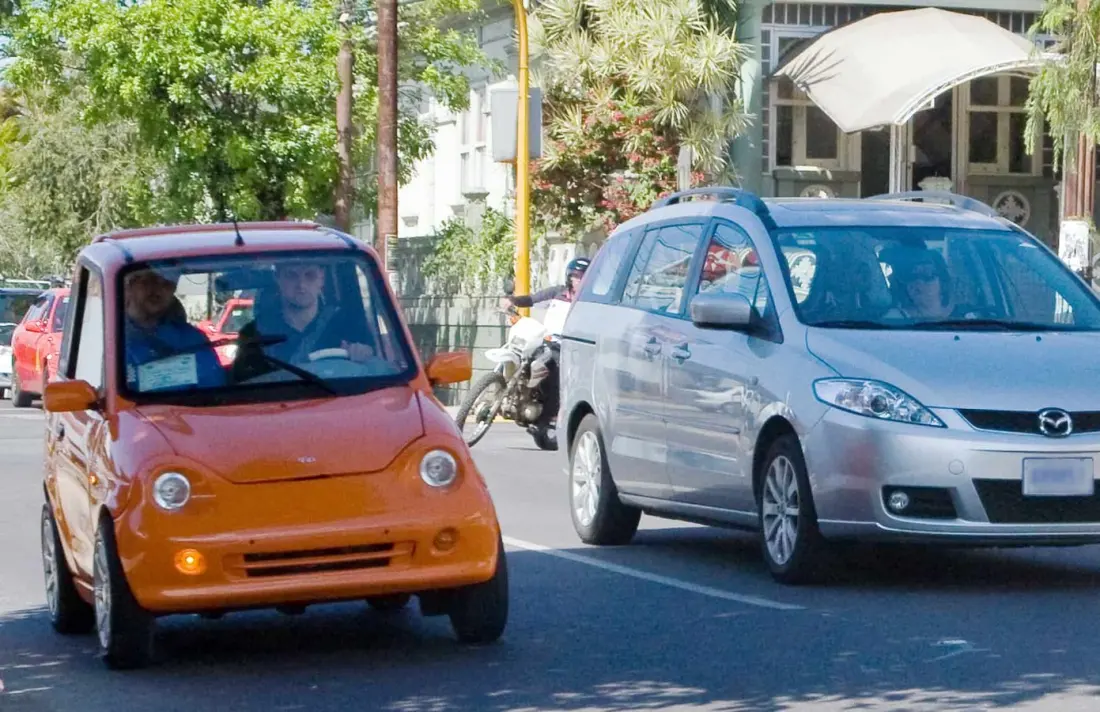
Costa Rica has more than two million vehicles on its roads today — a sevenfold jump since the early 1990s, when the country had roughly 300,000. Yet a growing number of residents and long-stay expats are asking whether they need a car at all, and the honest answer is: it depends entirely on where you live and how you spend your days.
The backbone of car-free life here is the national bus network, which reaches every corner of the country and costs very little. Direct routes into San José are generally comfortable, with air conditioning and a smooth ride. The regional interbuses that connect the provinces are another story — quality swings from acceptable to punishing. Smaller operators run buses well past their prime, every pothole lands with a jolt, and frequent stops to pick up and drop off passengers make journeys slow. Fares are cheap, but the trade-off is comfort and unpredictability, including who ends up in the seat next to you.
For shorter trips, ride-hailing has changed the game. Uber fought its way into the market years ago over fierce opposition from red taxis and unlicensed 'pirata' cabs — and won. Travellers now have three private transport options in many towns, and for quick hops around town, Uber is usually the easiest call. Beyond that, the old reliables still work: cycling and walking. The country's compact towns, mild climate and walkable centres make a car-free routine genuinely feasible for anyone working from home or living close to town.
That said, few people would call going carless easy in every situation. Remote living, school runs and jobs that require mobility all tip the scales towards ownership — but owning a car in Costa Rica isn't cheap. Beyond the purchase price you're budgeting for fuel, maintenance, repairs and the annual Marchamo, the mandatory circulation permit and insurance payment that lands every year. One long-time resident's solution? Buy used — he's owned nine cars over three decades, every one of them at least thirteen years old at purchase.
Motorcycles deserve a mention as the economical middle ground, but they come with a serious caveat. Anyone who has cycled on Costa Rican roads knows the driving conditions, and scaling a bicycle up to four times the speed on two wheels is a gamble many residents simply refuse to take.
So why should this matter to a traveller rather than a would-be resident? Because the same logic applies to holidays. If you're staying in or near San José or basing yourself in a walkable town, you can skip the rental car entirely: cheap buses for longer legs, Uber or taxis for local trips, your own two feet for the rest. If you're heading to remote beaches, cloud forests or rural lodges, a rental — or a car for part of the trip — still earns its keep. The practical takeaway is to match your transport to your itinerary instead of defaulting to a car for the whole stay, which can save real money and spare you the stresses of local driving. Pura vida, as the locals say.
Full credit to The Tico Times for the original piece.