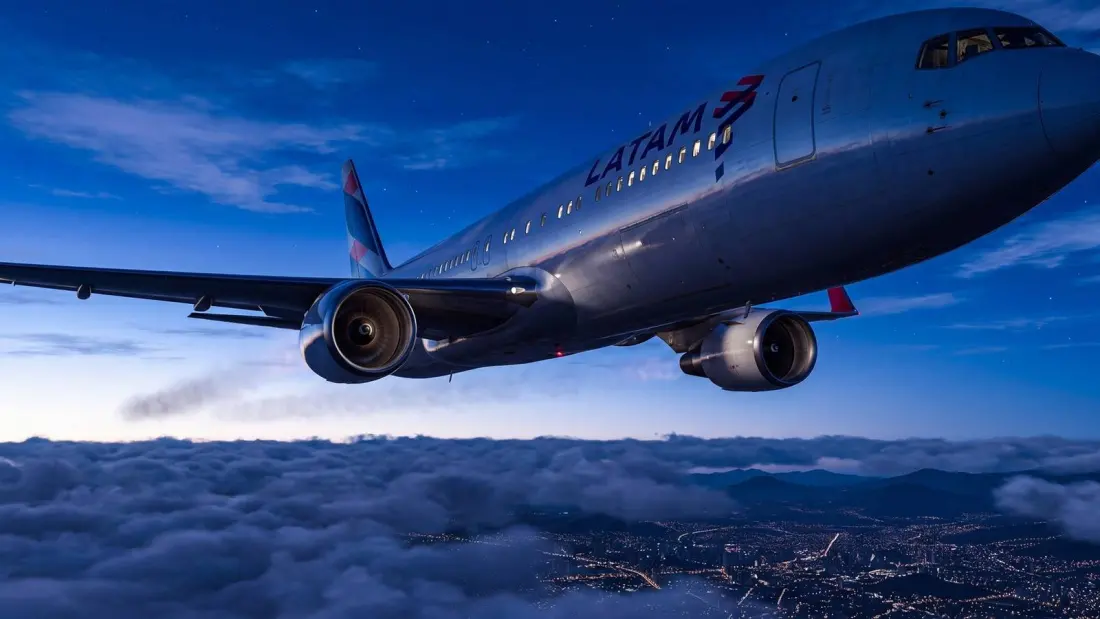
A routine hop across the Andes turned into a scare for passengers on LATAM flight LA2424, when the Boeing 767-300 flying from Lima to São Paulo lost cabin pressure and dropped more than 23,000 feet in a controlled emergency descent.
The flight had left Lima's Jorge Chávez International Airport at 9:25 AM on Friday, October 16, just five minutes behind schedule, for the roughly five-hour nonstop to São Paulo/Guarulhos. About 300 nautical miles (555 km) southeast of Lima, near the southern Peruvian city of Chalhuanca, the crew detected a sudden loss of cabin pressure and initiated an emergency descent to 10,000 feet — an altitude where passengers can breathe normally without masks. Oxygen masks deployed from the ceiling as the jet turned abruptly back west and squawked 7700, the transponder code signalling a general emergency.
The aircraft, registered CC-CWU, landed safely back at Lima on runway 16R at 11:31 AM local time, where emergency services were waiting. Everyone on board was unharmed. LATAM described the event as a "technical issue" but has not disclosed the underlying cause, and the affected jet remained on the apron at Lima at the time of the report.
Passengers were not stranded for long. A sister 767, CC-CWF, was already on the ground in Lima and departed with the rebooked travellers at 3:51 PM, reaching São Paulo at 10:33 PM — a delay of six hours and 18 minutes on the original schedule.
The jet involved is a nearly 20-year-old widebody that first flew in May 2007 and was delivered to LAN Airlines (LATAM's predecessor) later that month, transferring to LATAM Chile in 2016. It carries 231 seats: 20 in Business Class and 211 in Economy, and is one of nine 767-300s in the airline's fleet, powered by General Electric CF6 engines. The substitute aircraft is similarly aged, configured with 30 Business and 191 Economy seats. With an aircraft swap to a smaller Business cabin, some economy passengers may well have found themselves bumped up front.
For travellers, the story is a reminder of how standard these procedures are. A rapid descent to 10,000 feet after a decompression is exactly what crews are trained to do, and the safe return to Lima within about two hours of departure shows the system working as designed. Lima–São Paulo is a busy South American trunk route for LATAM, and events like this, while unsettling, are rare. The takeaway: delays and aircraft swaps after technical diversions are usually resolved same-day, as they were here — so if your flight ever turns back, expect a rebooking rather than a ruined trip.