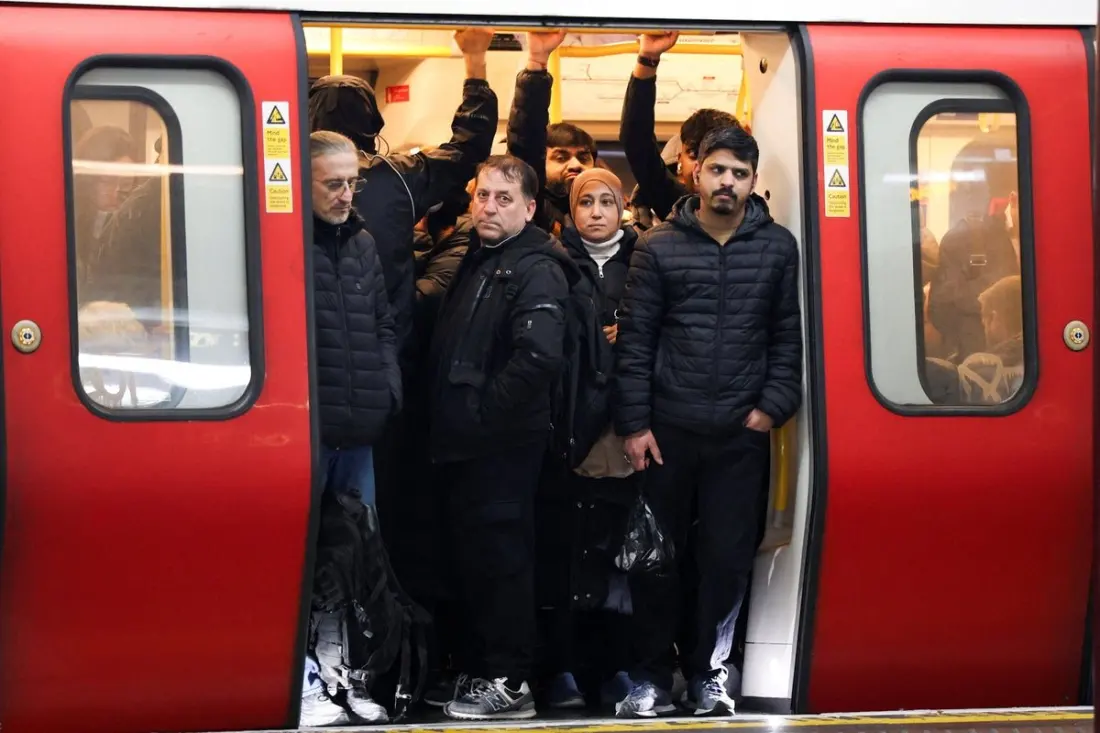
London's Underground is in the middle of a wave of strike action, with a 24-hour walkout by Tube drivers causing severe delays and partial closures across most lines. The current stoppage, called by the RMT union over changes to driver working patterns, began at midday on Thursday and officially ends at 12pm on Friday — but Transport for London warns services won't be back to normal until around 6pm.
There's some good news buried in the chaos. More drivers turned up to work than expected, so the network has held up better than TfL feared. The Piccadilly line, which was predicted to shut entirely on day one, kept running for most of the day, and most lines pushed on past the 9pm cut-off TfL had suggested. Right now only the Waterloo & City line is fully closed, and the Jubilee line is running a good service. The Elizabeth line, DLR, London Overground and buses are unaffected but noticeably busier as commuters switch modes.
The morning rush hour was rough, though. As of 8.15am, the Bakerloo, Central, Circle, District and Piccadilly lines all had sections with no service at all, while the Hammersmith & City, Metropolitan, Northern and Victoria lines were running with severe delays network-wide.
The bigger picture for anyone visiting London: this isn't a one-off. The RMT has announced a rolling programme of strikes stretching into early 2027, with further walkouts on 26-27 November and 17-20 December 2026, then back-to-back days in early January and three separate stretches in February 2027. If you're planning a London trip over the next few months, it's worth checking whether your dates overlap.
If you are in town during a strike day, TfL's advice is simple: allow extra time and check before you travel. The TfL Go app, the 'plan a journey' tool on TfL's website, and the live status pages for tubes, rail, buses and traffic are the quickest ways to see what's actually running. TfL's 'Nearby' tool is handy too — it maps Tube stops, bus stops, river services and Santander Cycles docking stations around any address, which helps if your nearest station is shut. Walking or cycling can often beat a heavily delayed Tube across central London, especially at off-peak times.
For holidaymakers, the practical takeaway is that a strike rarely makes London unreachable — airports, mainline rail and the Elizabeth line typically keep moving, and buses absorb a lot of the overflow. It just means building buffer time into airport transfers and theatre bookings, and being flexible about which line you use. Avoiding the strike days entirely is the cleanest option, particularly the December dates, which land squarely in peak Christmas shopping and markets season.