In August, a hiker named Mark Orr carried nearly 100 pounds of aluminium sheeting, steel wire and rebar up Mount Baldy in California's San Gabriel Mountains and built a DIY retaining wall along the Devil's Backbone, a narrow, exposed section of trail where people have died in falls. His heart was in the right place, but within weeks runoff carved a deep hole under his structure, and the incident — reported by the Los Angeles Times — set off a wider argument about who gets to fix America's crumbling trails.
Writing for Outside, a veteran trail builder argues that unauthorised trail work sits on a sliding scale between helpful and harmful. Clearing brush, pruning branches and sawing fallen logs off a path? Hard to mess up, and it keeps trails alive — an overgrown trail can be abandoned or erased from official maps, and replacing one later means lengthy environmental reviews. Building retaining walls, staircases, drainage features or reroutes? Absolutely not. Real trail structures are engineered: walls extend far underground, reinforced with rebar and lag screws, filled with tons of crushed rock. A proper retaining wall takes weeks to build so it lasts a century. Done badly, as on Baldy, it just creates more work — and possible legal trouble for you.
The deeper issue is that America's trail agencies have been hollowed out. The US Forest Service has lost over 5,000 jobs since January 2025, and a leaked internal report warned that backcountry trails are being abandoned because districts can't complete basic maintenance. A proposed 44 percent cut to the agency's operations budget for 2027 would deepen the crisis. Some districts now lack a single trail worker, and the revamped volunteer program is so stretched that some can't even run the required three-day chainsaw training.
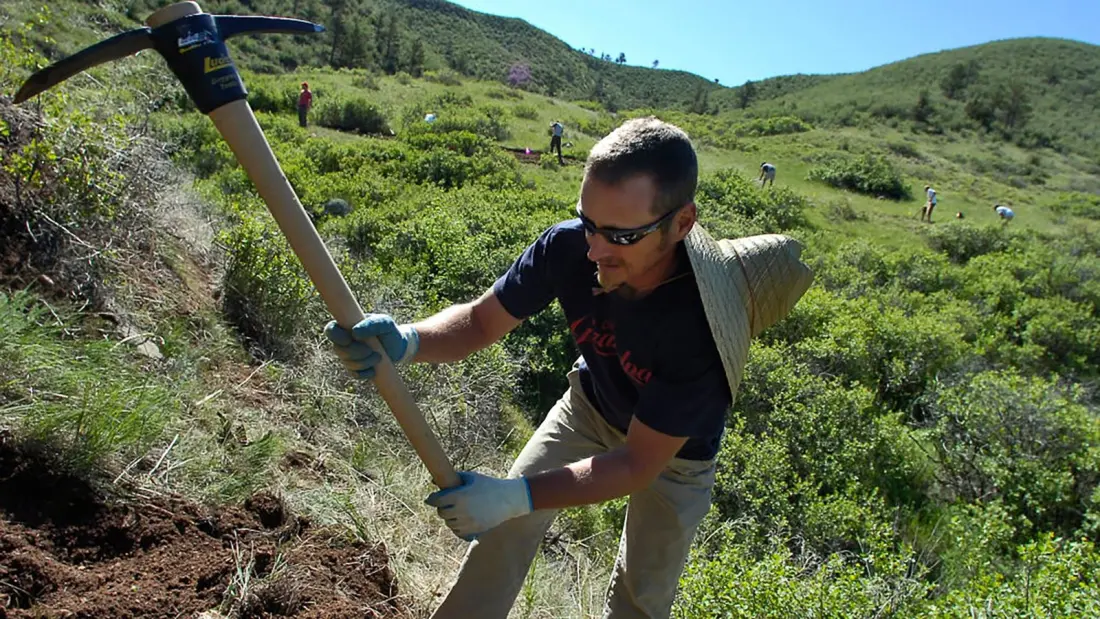
Still, the practical advice is clear: contact your land manager or a local trail organisation before picking up tools. Pinkbike's directory lists more than 1,600 trail groups across the US, and many will happily put newcomers to work — sometimes immediately, as in central Pennsylvania, where one first-day volunteer was handed loppers and assigned a three-mile section of the Mid-State Trail after a 15-minute demonstration. Volunteering also builds goodwill, can lead to signed individual agreements with land managers, and logged hours can help groups secure grant funding. If no group exists nearby, a land manager can still sign you up individually.
Why does this matter to travellers? If you hike, run or ride abroad or at home, the state of the trail under your boots increasingly depends on volunteers, not agencies. Want to give back on your next trip or weekend? Sign up with a local trail crew rather than going rogue — you'll learn how water, grades and switchbacks actually work, and you won't be building the next hazard.
Outside Online