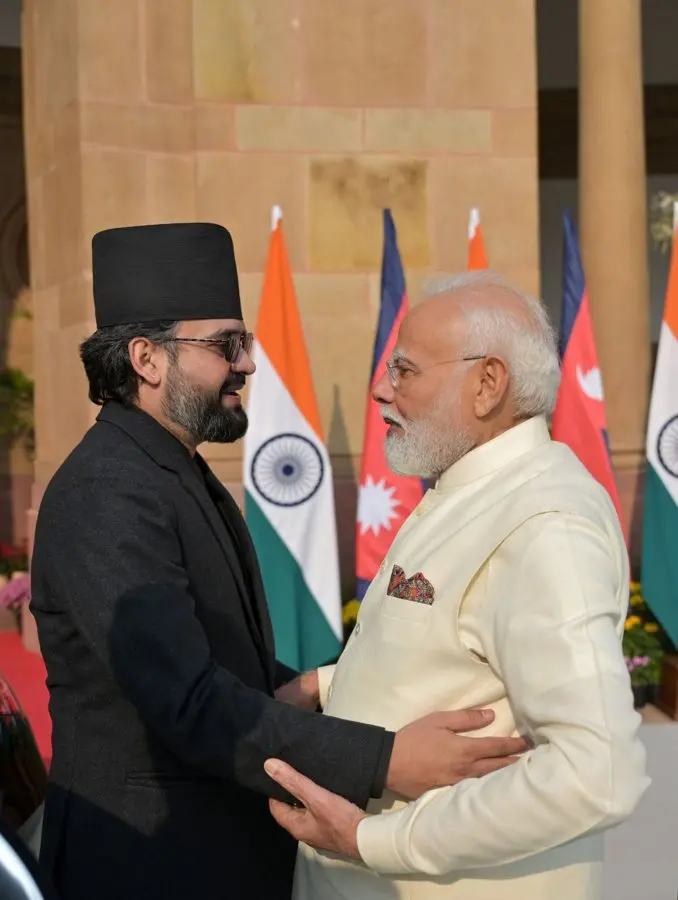
Nepal's young prime minister Balendra Shah made a flying visit to India that lasted just 24 hours and 25 minutes — and came back with the largest development package Nepal has ever received from its southern neighbour: $1.6 billion in grants and loans. Of that, $377 million is earmarked as a grant to rebuild the Bhote-Kosi Trisuli area; what the loan portion will actually fund remains unclear.
The trip was mostly about symbolism and sizing each other up. Shah, a former Kathmandu mayor who once posted rude things about Nepal's neighbours on social media, needed to show he could do conventional diplomacy. India, watching a new and unpredictable leader in Kathmandu, wanted to make sure Nepal does not swing too far towards China. Judging by the warm mutual praise at the joint press conference and the breathless coverage in the Indian press, both sides got what they wanted. The 40-year age gap between the two leaders did not appear to be a problem.
For travellers, the aviation detail is the interesting part. One air route, B345, was agreed to open for two-way traffic, allowing Nepali carriers to overfly Indian airspace both ways. But the fine print matters: at the altitude permitted, B345 mainly works for flights serving Pokhara, and it would shave only a few minutes off flights to Kathmandu. Nepal had pushed harder for the L626 route over Mahendranagar, which would meaningfully cut flying times from the west into Kathmandu, Pokhara and Bhairawa — and would suit Indian airlines heading to the country's northeast. That one did not materialise.
Other headline items come with caveats. Commitments on the long-stalled East-West Railway, the 669MW Lower Arun hydropower project and port access through Gujarat and Odisha were cheered, but several of the signed MoUs echo deals struck by earlier governments that never went anywhere. The genuinely new elements, according to observers cited by Nepali Times, are the record-breaking aid package, an IIT-related agreement, and port access for Nepal's trade.
Within Nepal, the visit played surprisingly well. Shah's supporters highlighted the low-key style — he flew commercial, kept the turnaround to a single day — and read the warm reception as a clean slate after his confrontational online past. Delhi-based journalist Akanshya Shah described the trip as icebreaking, noting that despite the usual friction between the two countries, the young prime minister starts with fresh credibility.
So what does any of this mean for a visitor? Short answer: not much yet. The new air route could eventually make flying into Pokhara smoother and slightly quicker, and better Nepal-India ties tend to keep border crossings and overland travel running smoothly. But most of the signed agreements are promises on paper, and Nepalis have seen plenty of those before. Watch whether the loan money gets allocated and whether L626 resurfaces in future talks — that would be the real travel news.