Most travellers racing between Cappadocia and Ankara blow straight past Kırşehir, but this quiet Anatolian province packs in Seljuk bridges, rock-carved settlements and a folk music legacy that runs deep. It's one of central Türkiye's least-visited cultural destinations, which means you'll often have the highlights to yourself.
Start with the underground world. Kepez Underground City, in the Mucur district, is a network of rectangular halls linked by tunnels and galleries, fully lit and signposted for visitors since excavation work in 2002. Further north near İnlimurat village, Dulkadirli Underground City is older and stranger: likely carved by Roman-era Christians in the fourth or fifth centuries, it opens through a 22-metre vaulted tunnel into a 30-by-50-metre courtyard ringed with halls, rooms, a water well and a small worship space. Both echo the region's long habit of building down into the rock for shelter and safety.
Above ground, the Seljuk era is everywhere. Kesikköprü Bridge, about 20 kilometres south of the city, stretches roughly 400 metres across the Kızılırmak river on 13 pointed arches. Built under Sultan Izzeddin Keykavus II on a Silk Road route towards Konya, it sits beside a 13th-century caravanserai that once sheltered travelling merchants. In town, the Cacabey Astronomy Madrasa of 1272 is a genuine curiosity: a former science school, now a mosque, with columns said to symbolise the planets, plus an observation well and tower.
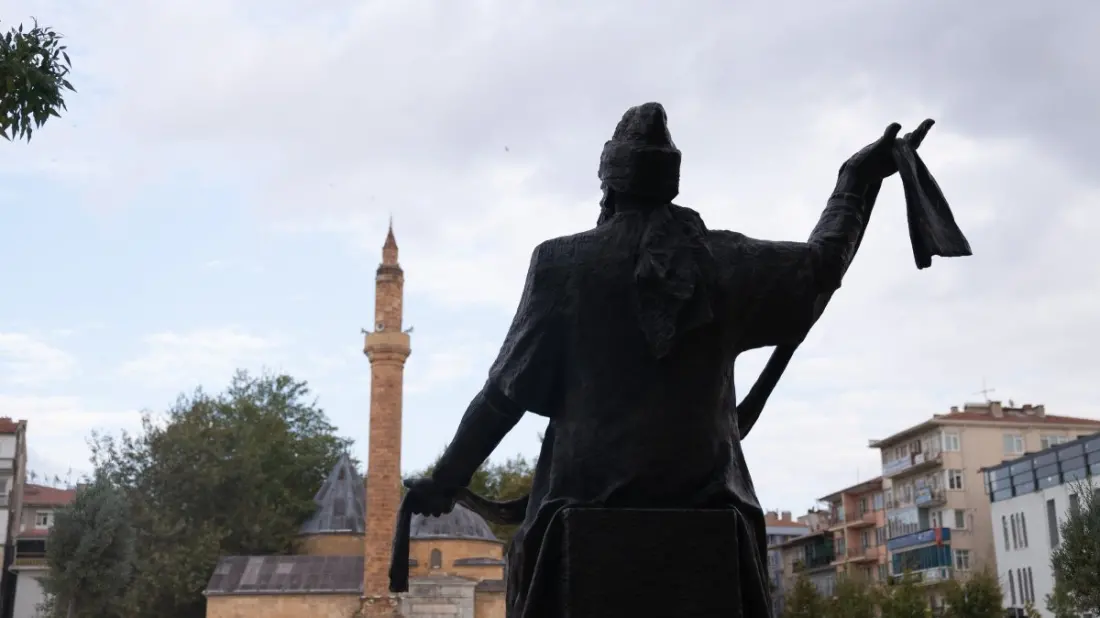
Kırşehir is also steeped in Sufi and folk tradition. A hilltop stone tomb at Ulupınar honours the poet Yunus Emre, with a tiny çilehane retreat nearby where he's said to have withdrawn for contemplation. The marble tomb of Aşık Paşa, author of the Turkish-language "Garibname", sports a dome shaped like a Kyrgyz nomad's tent. The Ahi Evran Complex celebrates the Ahilik guild tradition of artisan solidarity, with a museum covering rituals, clothing and manuscripts. And the city was home to Neşet Ertaş, the legendary bozlak singer nicknamed "Plectrum of the Steppe" — the cultural house named after him has digital displays where you can actually listen to his recordings.
One genuine surprise: the Kaman Kalehöyük Archaeology Museum in Çağırkan was built through a Japanese government heritage project and sits beside one of the largest Japanese gardens outside Japan, its grounds landscaped to look like an excavation in progress. Add the covered Uzun Çarşı bazaar, the artisans' market, dinner at the historic Ağalar Mansion, and the Hamidiye Mosque with its ceiling painted as sky and clouds, and you have a full multi-day itinerary.
Why it matters: if you love the idea of Cappadocia but hate the crowds, Kırşehir delivers a similar mix — underground cities, Seljuk architecture, caravanserais — at a fraction of the footfall, with a strong music and poetry tradition layered on top. It's an easy add-on to a central Anatolia road trip.