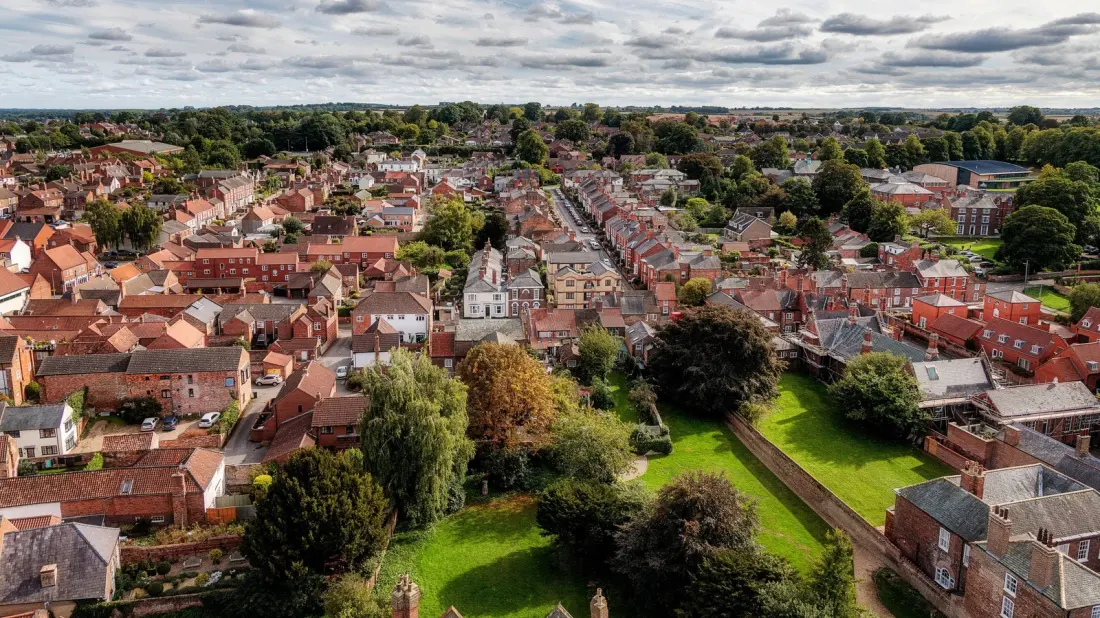
A short hop from the rolling hills of the Lincolnshire Wolds National Landscape, Louth is the kind of English market town that rewards slowing down. Red-brick buildings, white-painted shopfronts and chimney-lined lanes cluster around a Market Place framed by a lofty clock tower — a scene that has been playing out since the 11th century, when the farming settlement grew into a busy trading hub. Its roots go back even further, to Anglo-Saxon times.
Shopping is the main draw. The markets pitch up in the Market Place every Wednesday, Friday and Saturday, flogging fresh produce, cheeses, baked goods and clothing. Antique hunters have it even better: The Old Maltings Antiques & Home Centre, a brick warehouse just off the square, packs in ceramics, decorative figurines, vintage toys, old books and art prints from multiple vendors — and haggling is encouraged. Further down the street, the Old Coach House Antiques Centre (a past stop on the BBC's Antiques Road Trip) deals in collectible dolls and vintage jewellery.
History-wise, St. James' Church is the headline act. Its Gothic spire towers over the rooftops, and inside you'll find arches, stained glass and a tie-beam roof worth pausing for. Time your visit for November and you'll catch the town's Victorian Christmas Market, a carol-filled fixture that's been running for at least three decades.
Then there's the food. Restaurant Auction House, featured in both The Good Food Guide and the Michelin Guide, serves dry-aged steak with celeriac, focaccia with beef dripping, tempura cauliflower and a solid vegan menu — plus, reportedly, a very good orange wine. Montebello Ristorante covers the Italian side of things with carbonara, arrabbiata, pizzas and a tiramisu that reviewers rave about, all at reasonable prices. For something more traditional, Ye Olde Whyte Swanne has been pouring pints since the early 1600s; expect steak and ale pie, fish and chips and plenty of old-world atmosphere.
Why bother? Louth offers the classic English market-town experience — antiques, markets, historic church, proper pub — without the crowds or prices of better-known spots in the Cotswolds or York. It also works as a base: the Lincolnshire Wolds are on the doorstep for walkers, the seaside town of Mablethorpe and its award-winning beach lie nearby, and the port town of Grimsby makes an easy extra stop.
Getting there takes a bit of effort — about an hour by bus from Lincoln, or roughly four hours by train from London King's Cross — but that's precisely the point. Stay a night or two in a central inn or a holiday cottage in the surrounding countryside, and you'll have the lanes and market stalls mostly to yourself by midweek.