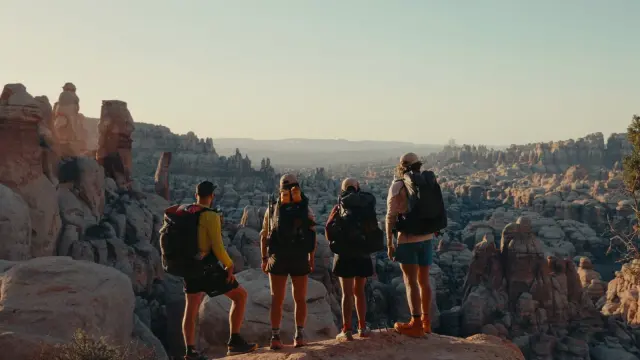
A forgotten food bag that turned into a 28km detour. A bathroom mishap at 5:45am with an audience. Five hours of crying on a rock near Muir Pass. The Pacific Crest Trail's hardest moments, it turns out, aren't always about blisters.
The Trek interviewed six hikers from the PCT Class of 2026 — known on trail as Captain, Bumper, Broadway, Mash, Teach and Sage Brush — about their worst days, whether they'd thought about quitting, and what surprised them out there. Their answers are a refreshingly honest look at what a five-month, 2,650-mile hike actually feels like.
The practical disasters are memorable. Teach left their entire food bag behind in Warner Springs, discovering it seven miles into the climb toward Mike's Place — along with the water filter and electrolytes needed for a hot stretch. The only fix: retrace those seven miles, turning a rest day into what they called a "14-mile zero." Another hiker described battling ferocious wind on exposed ridgelines leaving Tehachapi after a late start, genuinely worried about being blown off. Others flagged the relentless logistics: night hiking along the aqueduct out of Hikertown on two or three hours of sleep, racing to the next water source before the heat arrived.
The mental side cuts deeper. One hiker, near Muir Pass, finally processed five years of grief over their father's death — five hours of crying that cut a planned 25-mile day to under 20. On quitting, answers split: one said leaving trail was never an option, while another admitted serious doubts on days when they felt satisfied enough to stop. Several offered a pragmatic middle path — it's fine to change the route. One floated skipping ahead from Cascade Locks to Washington and adding the Oregon Coast Trail instead, with the advice: don't bully yourself through one continuous line if it stops being worth it.
Their surprises and hot takes are useful for anyone eyeing the trail. Despite its horse-friendly grading, the PCT is harder than advertised — it's the heat and scarce water, not the climbs, that wear you down. Desert nights run unexpectedly cold. The trail is far more social than expected. Northern California's burned sections are better than their reputation, with new growth and swarms of butterflies. You don't need ultralight gear — one hiker started with a 38.8-pound pack and never upgraded. And one carries olive oil to drink, which we'll leave with you.
On who should attempt it, the hikers disagreed productively: some say anyone with the right mindset can do it, others insist it's genuinely hard and that section hiking is underrated — even an unfinished attempt delivers something. Would they do it again? Yes, most said, though some would pick a different trail next time: the Continental Divide Trail, the Appalachian Trail, or New Zealand's Te Araroa.
For travellers, this is a candid reality check before committing to a long thru-hike — the bad days are real, but so are the mornings of smiling at the scenery for no reason. Thanks to The Trek for the interviews.