Most foreigners hunting for a beach home or retirement base in Mexico head straight for Puerto Vallarta or Cancún. Mazatlán, the northernmost resort city on Mexico's Pacific coast, rarely makes the shortlist — and that's precisely its appeal.
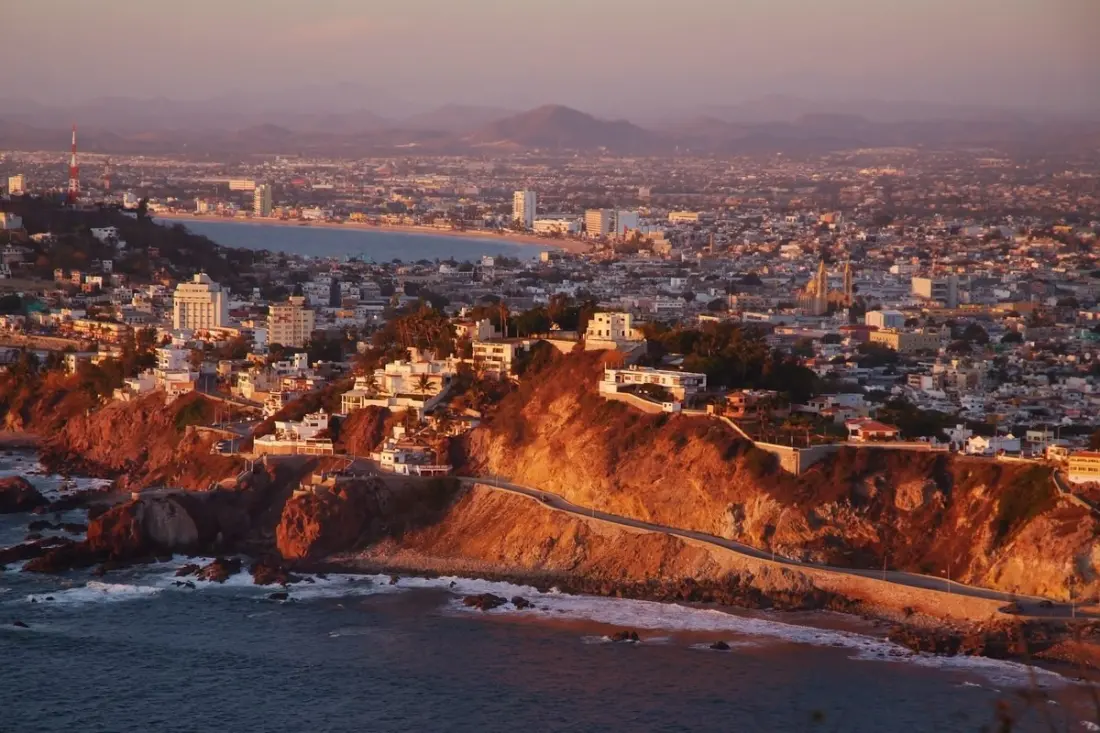
The city of roughly 350,000 people sits on a peninsula where the Pacific Ocean meets the Sea of Cortés, on the same latitude as Hawaii. That geography delivers year-round warmth with average temperatures of 81°F/24°C and noticeably less summer humidity than Acapulco or Puerto Vallarta. Winters dip to around 55°F/12°C at night; July and August peak near 95°F/32°C. The rainy season runs from late May to October, and while Pacific hurricanes can approach, the Baja California peninsula offers a degree of natural protection.
Mazatlán is often called the most affordable beach resort city on Mexico's Pacific coast — both for buying property and for everyday living costs. Prices have climbed over the past decade, but the city is still early in a regeneration cycle. Its Centro Histórico is the clearest sign: derelict 18th-century colonial buildings are being bought up and restored, while the city has upgraded water, drainage and electricity. Around the edges of the old town, fixer-upper properties are still on sale — often without obvious 'for sale' signs, so a local agent is the way to find out what's available. For anyone keen on a restoration project, this is one of the last Mexican coastal cities where it's realistic.
The city splits into two distinct zones. The Zona Dorada (Golden Zone) is a four-mile beachfront strip of hotels and condos where most tourists and ocean-view condo buyers congregate. The historic centre, by contrast, is turning into a cultural hub with theatres, galleries, boutiques and restaurants around leafy plazas. What both share is an authentic Mexican working-city atmosphere — Mazatlán is also one of the country's largest commercial shipping ports and a shrimp-fishing centre, so daily life isn't staged for visitors. The expat population remains small compared with other Mexican resort towns, with a long-standing Chinese and Italian community adding to the mix.
Growth signals are stacking up. A newly opened convention centre is now Mexico's largest, major hotel brands are building resorts to the south, and FONATUR — Mexico's tourism investment agency — is leading a multi-billion dollar resort development two to three hours down the coast, complete with its own airport. Developers are already adding luxury homes and condos to meet rising demand. Anyone who moves now is arriving before the curve.
Practicalities hold up too. The international airport has direct flights to major US cities, the highway north leads to Los Mochis and the Copper Canyon railway, and a twice-weekly ferry crosses the Sea of Cortés to La Paz. Healthcare includes private clinics with US-standard care alongside Mexico's national IMSS system.
For travellers weighing a winter-long stay, retirees on a modest budget, or investors who want a beach city that hasn't been priced out yet, Mazatlán offers a rare combination: real city life, real affordability and an ocean address.