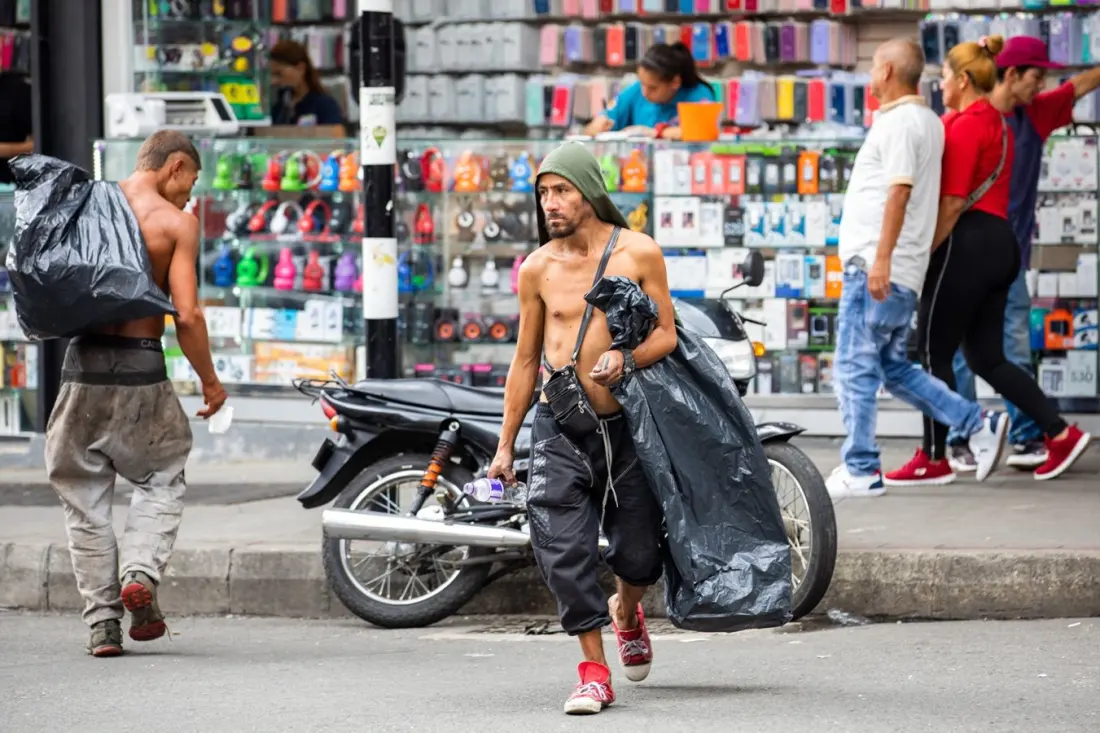
Medellin has counted 694 foreigners among the people living on its streets, according to figures released this week by the city's social inclusion office. Most come from Venezuela and Ecuador, but the list includes surprises: two Swiss citizens, plus seven Americans, three Spaniards, and one person each from Canada, France and Saudi Arabia, among others.
The foreign total is a slice of a much bigger picture. Medellin's official count identifies 8,142 people in street situations — 2,949 'habitantes de calle' who live entirely in public spaces, and 5,193 'personas en calle' who spend their days on the street but have some precarious shelter at night. The city's ombudsman office thinks the real figure could be closer to 15,000. About 90% are men, and more than two-thirds are aged 29 to 59.
City officials attribute the problem mainly to drug use, untreated mental health issues and broken family ties. Social inclusion secretary Diana Maria Carmona has also suggested that Medellin's reputation for generous residents may draw people in and encourage them to stay — though that's her assessment, not a proven cause.
What's the city doing about it? Medellin runs a voluntary 'humanitarian returns' program with Colombia's migration authority and national police, which has so far transferred 488 foreigners back to their home countries. Before each trip, teams contact the person's family to try to make the return a genuine reintegration rather than just a relocation. Cucuta, near the Venezuelan border, receives the largest share of returnees at 27.9%, followed by towns in Antioquia and Bogota.
On the ground, outreach is concentrated around La Macarena, De Greiff Avenue and the Medellin River — areas many visitors will recognise from the tourist map. Teams work around the clock, and the city runs a day centre offering healthcare and food, plus treatment programs of three months to a year.
Why should travellers care? Medellin has transformed itself over the past two decades into one of South America's most popular city breaks, but the numbers show a visible street population concentrated in neighbourhoods close to the main nightlife and hotel zones. If you're visiting, it's worth knowing that areas around La Macarena and De Greiff Avenue — popular with backpackers and digital nomads — are also where the city directs much of its social outreach. A basic awareness of your surroundings, especially at night, matters as much here as in any big city.
The story also says something about the destination beyond tourism: homelessness here is a regional and international phenomenon, not just a local one, and the city is openly publishing data and running programs to address it. That transparency is unusual and useful context for anyone planning a trip. Participation in the return program is voluntary, and whether the two Swiss nationals will take up an offer to go home remains an open question.
Reported by Colombia One.