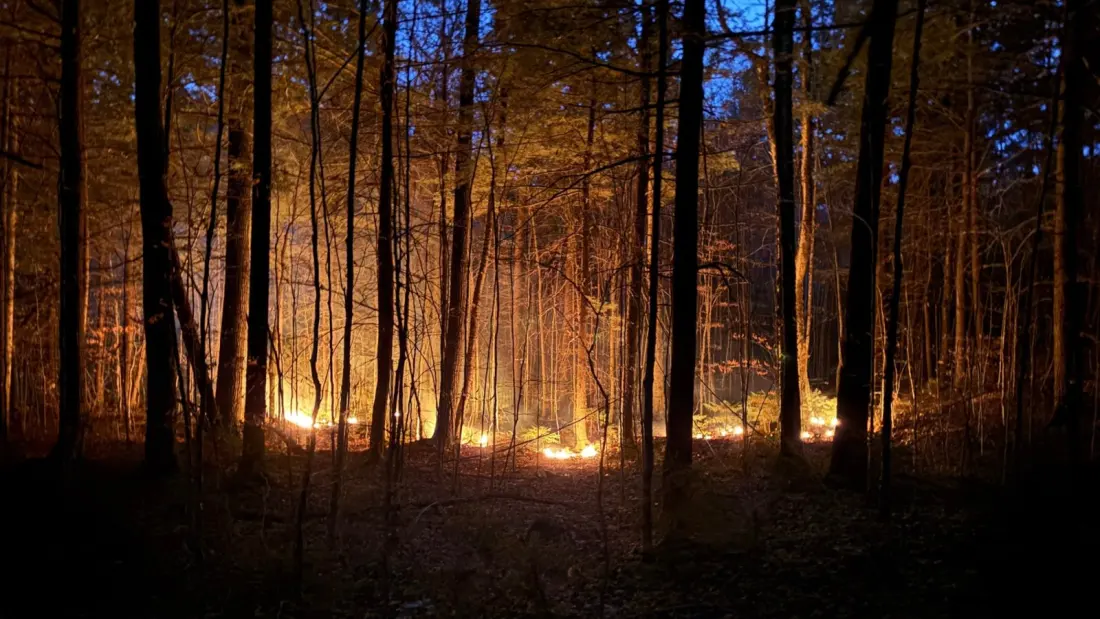
The White Mountains of New Hampshire are dealing with something locals haven't seen in decades: a large, fast-moving wildfire. The Wild River Fire ignited on Tuesday, November 3, in Coos County, and within a day had scorched close to 900 acres, peaking at 982 acres before knocking back to 865 with just 11 percent contained. For a forest where the biggest blaze anyone can recall topped out under 100 acres more than 20 years ago, this is uncharted territory.
The Appalachian Trail itself is roughly 10 miles west of the fire and remains open, with no closures or evacuations affecting the AT so far. But if you're planning a hike in the area, check before you go: the U.S. Forest Service has shut down several connecting routes, including the Shelburne Trail in its entirety, a 5.3-mile stretch of the High Water Trail from Route 113, the Kenduskeag Trail between the Shelburne and Rattle River trails, and a 10-mile section of Corridor 19. Wild River Road is also closed completely.
Officials believe the fire was human-caused, though the investigation is ongoing. Two factors made it spread so aggressively: an extended drought and unusually dry fall conditions. The terrain isn't making things easy for crews either — steep, rocky slopes in a remote corner of the forest forced firefighters to cross the Wild River on foot to attack the flames directly. Reinforcements, including the Cherokee Hotshot Crew and a smoke suppression module, have joined the effort, and District Ranger Josh Sjostrom has praised their rapid response.
For hikers, this is a timely reminder that autumn isn't automatically a safe season in the Whites. Dry conditions can flip quickly, and trail status can change overnight. Anyone heading into the White Mountain National Forest this month should confirm current closures with the Forest Service, respect any posted restrictions, and avoid anything that could spark a fire — camp stoves, cigarettes, and campfires all carry extra risk right now. Through-hikers and section hikers on the AT can currently continue, but with the blaze only 11 percent contained and connecting trails shut, it's worth monitoring updates from both the USFS and local news before setting out.
The bigger picture: fires like this one are still rare in the northeastern hardwood forests, but drought years are making them less so. If you love the Wild River Wilderness and the quiet eastern edge of the Whites, expect some sections to be off-limits for a while even after the flames are out.