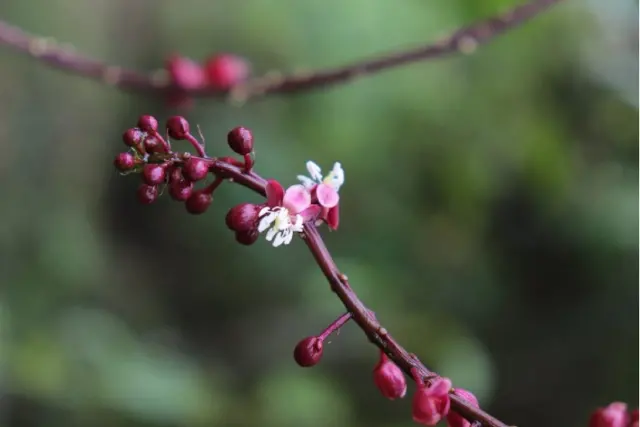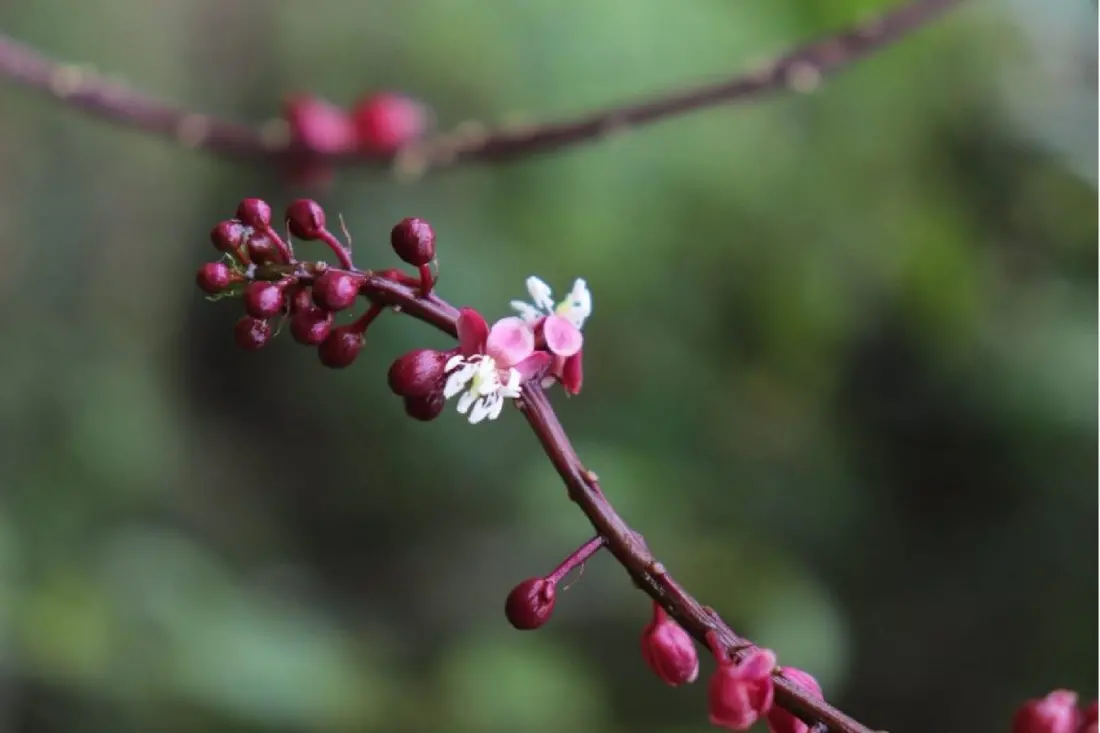
Botanists working in Colombia's southern Andes have identified a plant species new to science, and it's found nowhere else on Earth. The shrub, Trichostigma guacharense, was recorded in Cueva de los Guacharos National Natural Park, a reserve spread across the departments of Huila, Caqueta and Cauca. Researchers describe it as roughly three metres tall, living in humid montane forest between 1,800 and 2,150 metres, with reddish-magenta flower clusters, grooved leaf stalks and distinctively shaped fruit that set it apart from its relatives.
The find, formalised in the journal Brittonia by a team from Universidad Militar Nueva Granada and Universidad de los Andes with help from park rangers, matters because it shows the park is still yielding surprises. The genus Trichostigma grows widely across Colombia, from sea level up to 2,200 metres, yet has barely been studied — proof that even familiar plant groups can hide unknown species in well-protected forest.
The name is a double homage. It honours the park itself and the oilbird, the cave-nesting bird that triggered the area's protection as Colombia's first national park in 1960. The bird has an even older pedigree: Alexander von Humboldt and Aime Bonpland examined it in September 1799 and introduced it to Western science.
For travellers, Cueva de los Guacharos covers 7,134 hectares across five municipalities — Acevedo and Palestina in Huila, San Jose del Fragua and Belen de los Andakies in Caqueta, and Piamonte in Cauca — and is considered a benchmark for intact Andean and sub-Andean forest. It's set up for ecotourism, with hiking trails, camping, caving and serious birdwatching, including the chance to see the very oilbirds that gave the place its name and its protected status.
Why care about a new shrub? Because parks like this reward the traveller who goes beyond the headlines. A reserve whose flagship species once prompted scientists to coin a new name is exactly the kind of place where a guided hike turns into a lesson in living botany. If you're routing a southern Colombia trip — say, between the coffee heartland of Huila and the Amazonian fringe of Caqueta — this park slots neatly into the itinerary and remains one of the country's least crowded protected areas.
The discovery also carries a broader message: Colombia's protected areas function as active research sites, not just fenced-off scenery, with academics, park staff and local communities working together. For visitors, that means real science happening on the trails you walk — and a decent chance that the forest you hike through still has unnamed species in it. Credit: Colombia One.