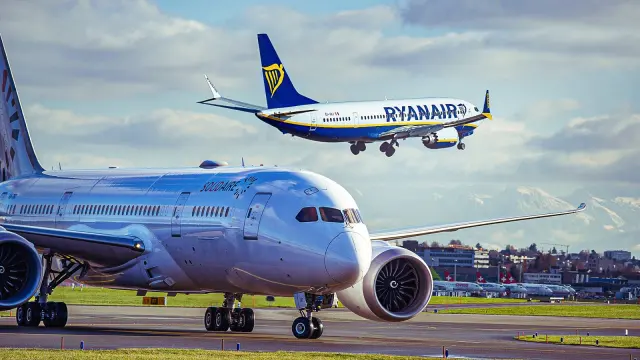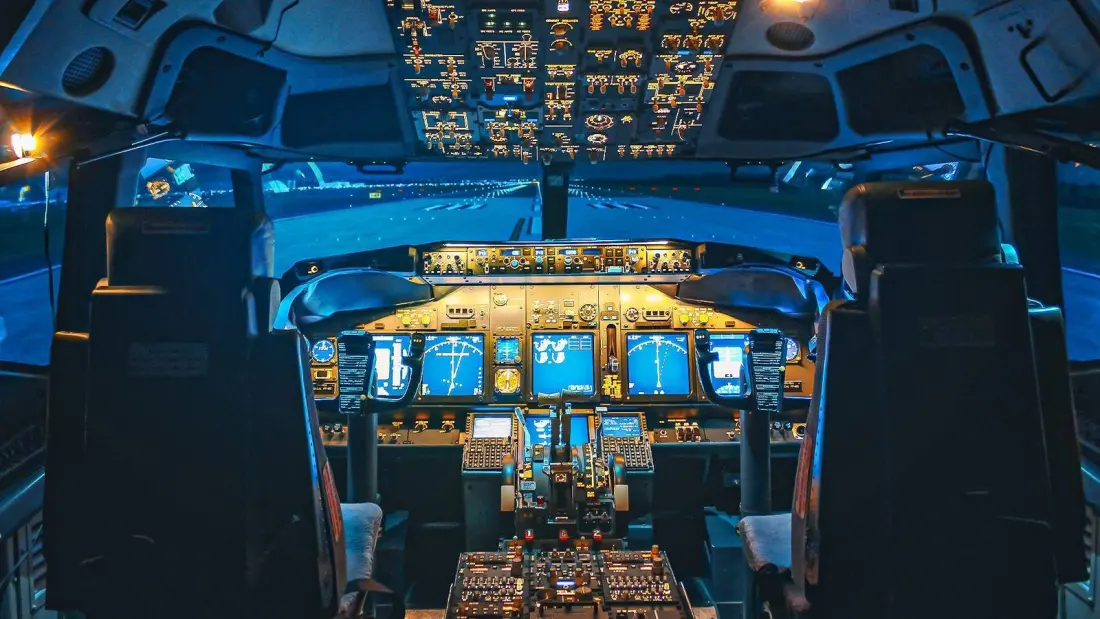
The honest answer to whether Microsoft Flight Simulator can teach you to fly a Boeing 737 or Airbus A320 is no. Regulators won't log a single home computer hour toward a commercial licence, and no desktop setup can replicate the G-forces, the shudder before a stall, or the 36 kilograms of rudder pressure needed to keep a 737 MAX straight after an engine failure at takeoff speed. But as a supplement to real flight training, the simulator has become genuinely useful — and for aviation enthusiasts, it's the cheapest way to sit in an airliner flight deck.
The detail in today's sim is startling. MSFS models airflow across hundreds of points on the airframe, while third-party add-ons from developers like PMDG (737) and Fenix (A320) recreate flight management systems, glass cockpits and navigation radios down to individual electrical circuits. Weather and global geography are realistic enough that students can rehearse instrument approaches, then connect to virtual air traffic control networks to practise radio calls — all without paying the roughly $200 an hour that aircraft rental plus an instructor can cost.
The catch is discipline. Casual play can train bad habits, like staring at screens instead of scanning outside for traffic and horizon. The students who benefit most follow real-world checklists, learn proper procedures, and treat the sim as a procedural sandbox rather than a game. Hours still don't count toward a licence — the FAA requires certified devices with enclosed cockpits and physical switches — but arriving at the airport already knowing a cockpit's layout lets students spend their expensive paid hours on actual handling rather than button-hunting.
The simulator also does something no textbook can: it shows the philosophical gulf between Boeing and Airbus. Load a 737 NG or MAX and you get a yoke, rows of mechanical toggle switches on the overhead panel, manual thrust, and trim wheels spinning beside your knee. Switch to an A320ceo or neo and it's a side stick, illuminated push-buttons that stay dark when all is well, and fly-by-wire computers that trim the aircraft and block excessive bank or pitch. Experiencing both explains why airline crews train so differently for each jet.
Beyond the cockpit, the sim's detailed airports — think New York JFK, London Heathrow or Tokyo Haneda — let you learn standard instrument departures, runway markings and gnarly taxiway layouts. And since mistakes cost nothing, you can experiment in ways no real pilot ever would: fail a hydraulic system at cruise, land a max-weight jet in a crosswind on a short mountain runway, or test stall behaviour to understand why airline limits exist. Try the same exercise in a commercial full-motion simulator and you'll pay hundreds of dollars an hour on a rigid curriculum.
For aspiring pilots, it's a money-saving head start on instrument training and airline procedures. For everyone else, it's simply the most accessible way to experience what an airliner flight deck actually demands — with the useful reminder that the screen ends where real flying begins.