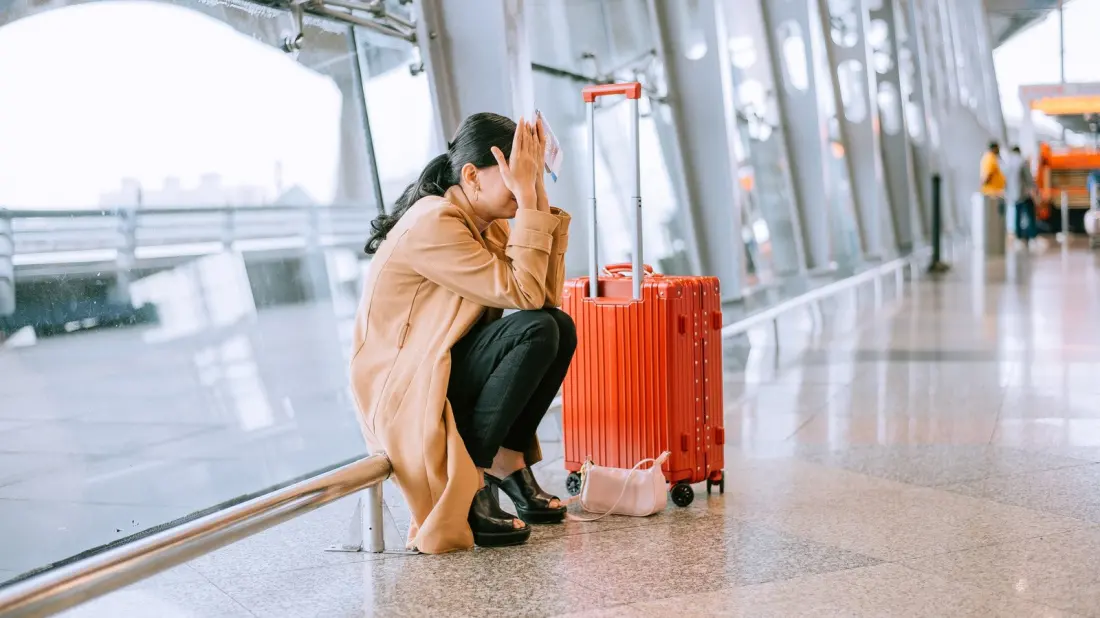
Few travel moments are as stressful as sprinting to your gate and watching your connecting flight's doors already closed. But what happens next isn't random — it depends heavily on how you booked the trip in the first place, and on why the delay happened.
If all your flights sit on a single reservation with one airline, the picture is simple: the carrier should automatically rebook you on the next available flight at no extra cost, assuming the miss wasn't your own doing. Not thrilled with the new flight? You can still ask an agent about alternatives.
Booked through a third-party site like Expedia or Priceline? Things get murkier. The airline has less authority over your itinerary, so you may need to deal with both the airline and the booking platform to get rebooked. And the trickiest scenario of all: two separate reservations. If your domestic flight runs late and you miss a connecting flight on a different, non-partner airline, that carrier simply doesn't know you were inbound. In their eyes you're a no-show, which can mean buying an entirely new ticket or paying a change fee, with no refund for the flight you missed. Beware of third-party sites that stitch together two one-way fares on separate airlines — it can look like one booking to you, but the airlines treat the flights as unconnected, and Expedia's own terms flag that a change to one flight may force you to rework the other.
The cause of the delay matters too. Under US Department of Transportation definitions, controllable delays — maintenance problems, crew issues, cabin cleaning, baggage loading, fueling — are the airline's problem. Weather delays are not, so don't expect the airline to cover a hotel or meals if a storm wrecked your itinerary. For controllable delays, most major airlines will move you to partner carriers, though Allegiant, Frontier and Southwest are exceptions since they lack such partnerships. If the airline-caused delay stretches past three hours, meal vouchers kick in, and if you've missed the last flight of the day to your destination, most airlines will put you up in a hotel of their choosing.
Your checked bags usually follow the same logic. On a properly linked itinerary, luggage should be rerouted to your new flight automatically when the airline caused the delay. If the miss was your fault, your bags may have flown on without you and be waiting at the final destination. Either way, confirm the bag's status at the service desk before moving on — policies vary by airline and by whether you're flying domestically or internationally.
The takeaway for anyone booking a multi-leg trip: favour a single airline reservation or genuinely partnered carriers when possible, read the fine print on OTA bookings, and leave generous buffer time between separate tickets. A few extra minutes at the booking stage can save you hundreds of dollars and a very long airport day later.