A 17.5ft bronze figure of a young Black man slumped over a horse sets the tone at the Freedom Monument Sculpture Park in Montgomery, Alabama. Created by artist Kehinde Wiley, the piece borrows the visual language of European equestrian heroes but inverts it, mourning Black lives lost to racial violence. It's one of more than 50 artworks spread across a quiet 17-acre site above the Alabama River, built to honour the nearly 13 million people forced across the Atlantic into slavery.
The park deliberately strips away distraction: no phones, cameras, food or drink are allowed inside. Visitors walk in near silence among the exhibits, and the disconnect between the birdsong, dappled light and the brutal subject matter is part of the design. Trains still rumble along the nearby tracks that once carried enslaved people from Georgia into Montgomery. Writers and visitors consistently describe leaving in tears — and yet also with something like hope.
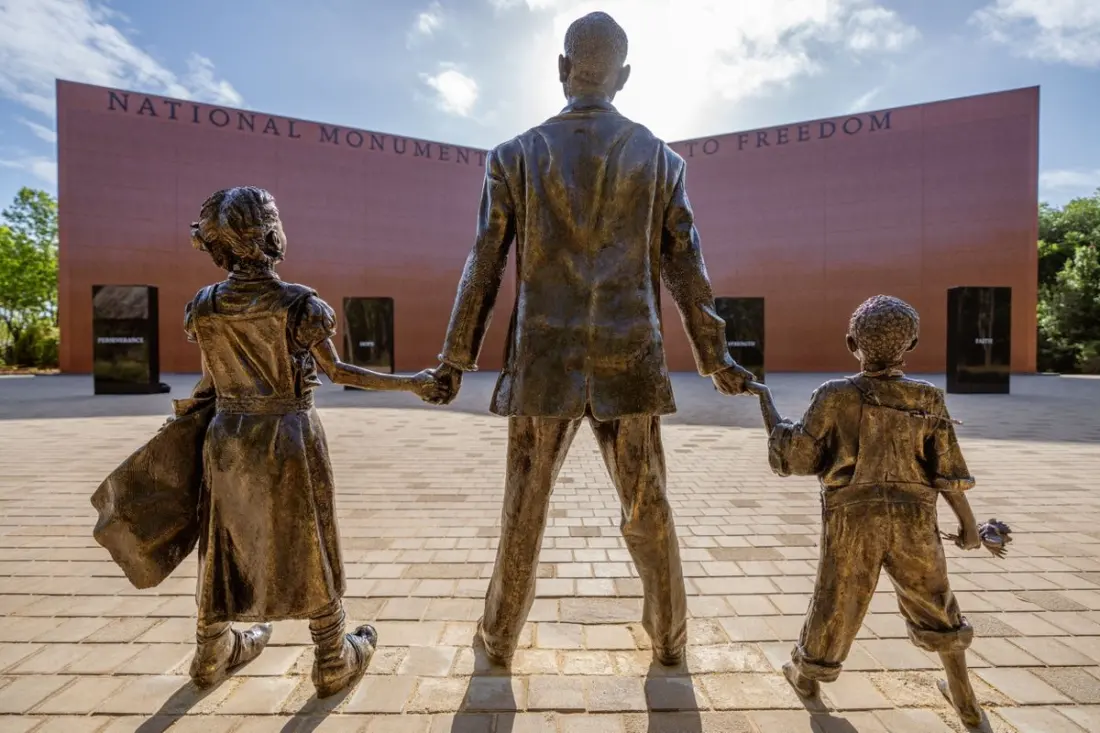
That hope crystallises at the National Monument to Freedom, a wall 43ft high and 155ft wide dedicated to the four million people emancipated after the Civil War, engraved with more than 1,000 surnames carried by survivors of slavery.
The sculpture park is one of four "Legacy Sites" run by the Equal Justice Initiative, a nonprofit founded by lawyer Bryan Stevenson that began in 1989 representing prisoners on Alabama's death row before turning to historical truth-telling in 2018. The National Memorial commemorates the more than 4,400 Black people killed in racial terror lynchings between 1877 and 1950, marked by 800 steel columns — one for each county where a lynching occurred. The Legacy Museum traces an arc from the Atlantic crossing through segregation to today's mass incarceration. A fourth site, Montgomery Square, greets visitors with two hands holding the number 7053 — Rosa Parks' booking number from her 1955 arrest, which sparked the Montgomery Bus Boycott.
Practically, the park sits a 20-minute walk from downtown Montgomery along the old rail corridor, and some visitors arrive by boat along the Alabama River, echoing the steamboat routes used from New Orleans. Stevenson's framing sums up why it resonates: the sites acknowledge slavery's horror while celebrating the love, character and resilience of enslaved people, arguing that understanding history is essential to a fairer future.
For travellers, this is heavy but rewarding stuff — Montgomery has become one of the most significant civil rights destinations in the United States, and the Legacy Sites reward a full day, ideally paired with the Rosa Parks Museum and Dexter Avenue King Memorial Baptist Church downtown.