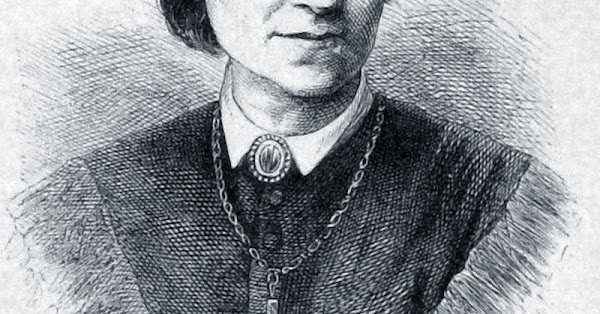
Long before Charles Ponzi gave his name to investment fraud, an out-of-work actress in Munich was running the same trick on thousands of ordinary Bavarians. Adele Spitzeder, born in Berlin in 1832 to a family of opera singers, arrived back in Munich in 1868 broke after a modest stage career. Her solution: promise investors 10 per cent interest per month, roughly double the total annual returns offered by conventional savings banks.
The scheme began with a carpenter's wife who handed over 100 gulden and immediately received 20 gulden — two months of 'returns' up front. Word spread fast. Spitzeder placed newspaper adverts, founded the Spitzedersche Privatbank in 1869, and became known across Bavaria as the Dachauer Bank, after the district outside Munich where many of her customers lived.
Her clientele were the people conventional finance overlooked: servants, day labourers, craftsmen and small farmers, some of whom mortgaged their homes to get in on it. At its 1871 peak, the bank was reportedly taking in over 60,000 gulden a day. That same year Spitzeder moved from a hotel room into a grand house at Schönfeldstrasse 9 in Munich. The operation's 'bookkeeping' involved sacks of cash in cupboards, untrained staff, and illiterate depositors signing receipts with an 'XXX'.
The mechanics were pure Ponzi: new deposits paid the interest owed to earlier investors. Spitzeder reinforced her position with a public image as a pious woman of the people, funding a soup kitchen at Munich's Orlandohaus that reportedly fed thousands daily.
Regulators saw through it early — the Interior Ministry ran newspaper warnings — but the money kept coming until November 1872, when withdrawals began to outpace deposits. Spitzeder restricted withdrawals to a single hour each morning, then 40 simultaneous demands totalling around 180,000 gulden toppled the whole thing. She was arrested for fraudulent bankruptcy. The books revealed liabilities above 38 million gulden and at least 30,000 depositors; thousands lost everything, and a wave of suicides followed. She was sentenced in July 1873 to three years and ten months, jailed again in 1880 after further financial dealings, and died in Munich in 1895, having spent her later years singing under the name Adele Vio.
For visitors to Munich today, the story is a footnote worth knowing: this was one of history's first documented Ponzi schemes, unfolding in the Bavarian capital some fifty years before Ponzi himself, and it says a lot about 19th-century Bavaria — a deeply unequal society where ordinary people had almost no safe way to grow their savings. You can still walk past Schönfeldstrasse 9 in the Haidhausen-adjacent streets near the Isar, and the Bavarian capital's history is full of similar episodes of spectacle and swindle. It also doubles as a timeless traveller's caution: if an offer looks too good to be true, it usually is — in 1869 or today.
Story first reported by Amusing Planet.