Bangkok has a word for its fast-growing fascination with the supernatural: mutelu. What began as slang has become shorthand for a whole scene — shrine visits, lucky amulets, sacred jewellery, even phone wallpapers featuring deities — and it's reshaping both Thai culture and the tourism economy around it.
The practice itself is nothing new. Philosophy professor Soraj Hongladarom, of the International Buddhist Studies College at MCU, traces the behaviour back generations, long before Buddhism arrived in Thailand. Pre-Buddhist communities believed in spirits tied to the natural world, and those animist traditions later blended with Buddhist and Hindu influences into the distinctive mix visitors see today. The old rituals survive too: make a vow, and if it comes true, return with offerings — eggs, or even a traditional dance performance. What has changed is what people ask for. Where worshippers once prayed for children to help with the family workload, today's requests reflect modern anxieties.
That shift has spawned a commercial ecosystem. Tour operator Chotechuang Sooramgura calls it "belief marketing" — or, in the local pun, "muketing". Beyond amulets and offerings, businesses now sell deity-themed accessories and digital products, and operators run trips to spiritual destinations in and beyond Thailand. Foreign travellers from China, Malaysia, Vietnam and Western countries are now regulars at Bangkok's popular shrines, and the spending trickles down to flower sellers, dancers and neighbourhood shops. Chotechuang argues operators should add storytelling to the experience — comparing it to a Japanese omakase meal where the chef explains each ingredient — and sees Thai spiritual culture as an untapped source of soft power and more sustainable tourism.
There's a more sobering reading, though. Soraj pushes back on the idea that worshippers are simply greedy or gullible: many pray because they're genuinely struggling. Market vendors with no savings, or young people who see education and jobs as precarious, turn to sacred beings because they feel no one else will catch them if they fall. He's troubled that so many young Thais feel the need — and links it to the same insecurities behind declining birth rates. His advice isn't to abandon faith, but not to let it substitute for understanding a problem's causes and acting on them.
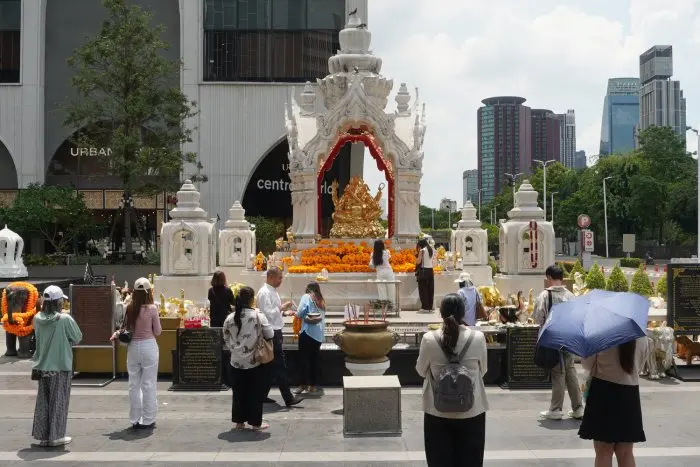
For travellers, mutelu is an unusually accessible window into contemporary Bangkok. The shrines are free to visit, deeply photogenic and woven into everyday city life — from the Lakshmi Shrine on top of the Gaysorn Village shopping mall, where worshippers gather on sacred days, to the famous Erawan Shrine in the shopping district. Go at dawn or dusk, buy a modest flower garland or incense sticks, and watch locals fold the ritual into a commute or a shopping trip. Just remember you're a guest at someone's act of faith, not at a theme park — observe quietly, dress respectfully, and don't treat rituals as a photo backdrop first and a belief second.