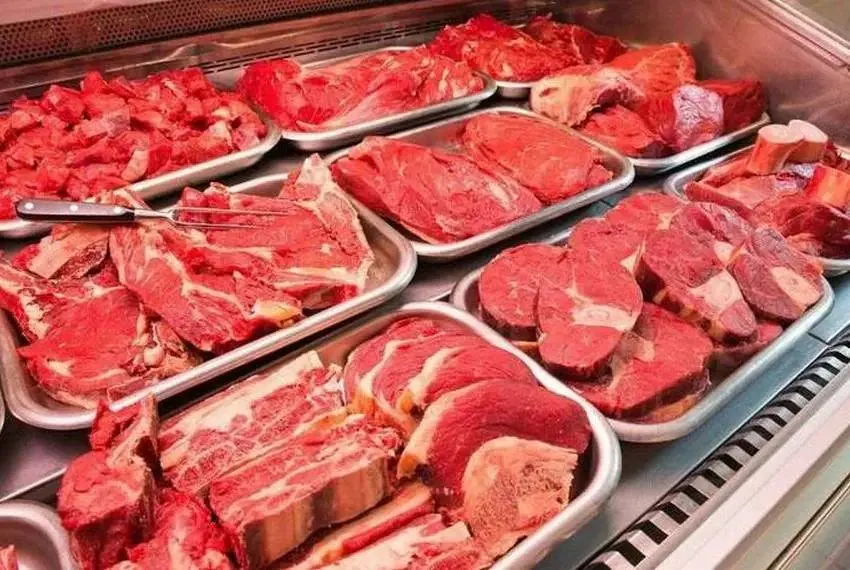
If you've been dreaming of a bowl of rich Kyrgyz naryn or a roadside shashlik skewer, here's a heads-up: meat in Kyrgyzstan has taken a sharp turn upward in 2026. Official figures from the National Statistical Committee show mutton climbing 25.4 percent since the start of the year, while beef is up 18.9 percent.
The numbers are specific. In September, a kilo of mutton averaged 876.07 soms, up from 707.64 soms in January — a jump of nearly 170 soms in nine months. Beef went from 713.74 to 840.43 soms per kilo over the same stretch. The steepest rises came over the summer, with mutton moving from about 816 soms in June to 874 by August.
It's not just meat. Food and non-alcoholic drinks overall cost 7 percent more between January and September 2026 than in December 2025. Eggs rose 16.9 percent, instant coffee 16.4, dairy 8.7, tea 8.5 and sugar 5.8. There are some bright spots for anyone shopping at a bazaar: fresh vegetables fell 22.6 percent, potatoes dropped 21.8 percent and rice slipped 2.2 percent.
Interestingly, this is happening even as production grows. Livestock and poultry slaughtered in live weight reached roughly 339,671 tonnes across January to September — up 3.9 percent on the year before. So more meat is being produced, but it's costing more anyway.
Why should a traveller care? Kyrgyzstan is one of Central Asia's most affordable destinations, famous for horseback trekking around Song Kol lake, yurt stays and hearty meat-centred food. A 25 percent jump in mutton won't break most budgets — we're talking roughly the equivalent of a few pounds or dollars per kilo — but restaurant and guesthouse meal prices tend to follow the market, so expect meat-heavy dishes like laghman, plov and kebabs to tick up slightly in cost. The good news: vegetable-heavy and rice-based dishes should stay friendly to the wallet given the falling produce prices.
For budget travellers heading out on treks where food is included or bought en route, factoring in a modest bump for meal costs is sensible. Fruit and veg lovers, meanwhile, are arriving at a good time — late-season produce is notably cheaper than last year.