Kangaroo Island is known for its wildlife, but some of its most remarkable animals are easy to miss. One is the Kangaroo Island assassin spider, a critically endangered arachnid just 3 millimetres long with elongated mouth parts that give it a pelican-like look and a lightning-fast hunting strike. Its lineage is ancient — related fossils date back roughly 160 million years — yet the species now hangs on at only a handful of sites, mostly on private land.
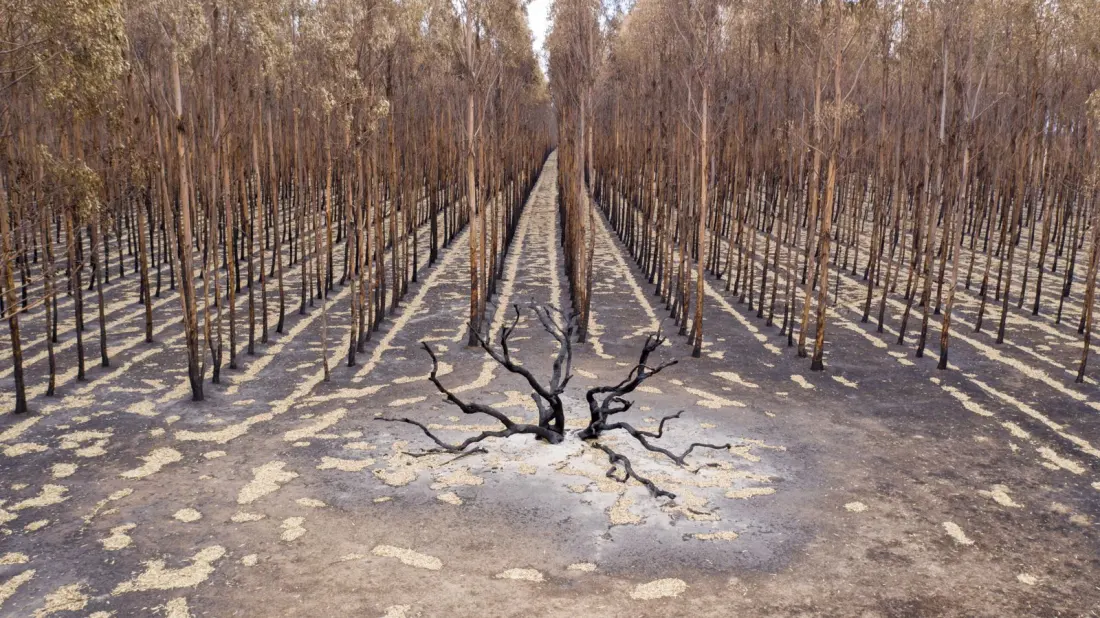
The turning point came with the 2019–20 Black Summer bushfires, which burned through all of the spider's known habitat, in places scorching the soil down to bare rock. The spider lives in elevated leaf litter about knee height in heathland and open eucalypt woodland, usually along creek lines — a microhabitat that catches fire fast because of the airflow around it. Researcher Dr Jess Marsh, who has lived on the island for nearly two decades and co-founded Invertebrates Australia, says the remaining patch of long-unburned vegetation is large but vulnerable: one bad fire day could wipe it out entirely.
The island's fire story may already have a casualty. The green carpenter bee, a large metallic-green insect thought to hold South Australia's last population on Kangaroo Island, hasn't been seen since November 2024 despite weeks of intensive searching. Dr Remko Leijs of the South Australian Museum has studied the bees since 1996 and knows how fussy they are: females inspect dead banksia trunks and grass tree stalks for hours, rejecting wood with even small cracks. Grass trees only produce suitable nesting stalks for a few years after a fire, and genuinely good habitat — long-unburned banksia — takes about 30 years to develop. His team's clever workaround, 500 balsa-wood artificial nesting stalks with starter holes, was working (around half were occupied) until the Black Summer fire erased that too. By winter 2023 only two active nests remained; by spring 2025 none could be found.
The bigger picture is sobering. Australia is thought to host around 300,000 invertebrate species, fewer than a third formally described, and researchers estimate more than 9,000 have already been lost since European settlement. Marsh's team has now built AusInverTraits, an open-access database matching species traits — flightless, above-ground, habitat-specialist — against fire risk, so conservationists can flag which invertebrates need help before it's too late.
For travellers, this reframes a Kangaroo Island trip. The island's recovery after the fires is an ongoing story, and the small creatures underpinning it — pollinators, nutrient recyclers, prey for larger animals — are part of what makes places like Flinders Chase and the island's eucalypt gullies worth visiting. Supporting local conservation programs, staying on tracks in fire-affected scrub, and choosing operators that contribute to habitat protection all matter more here than on most holidays.