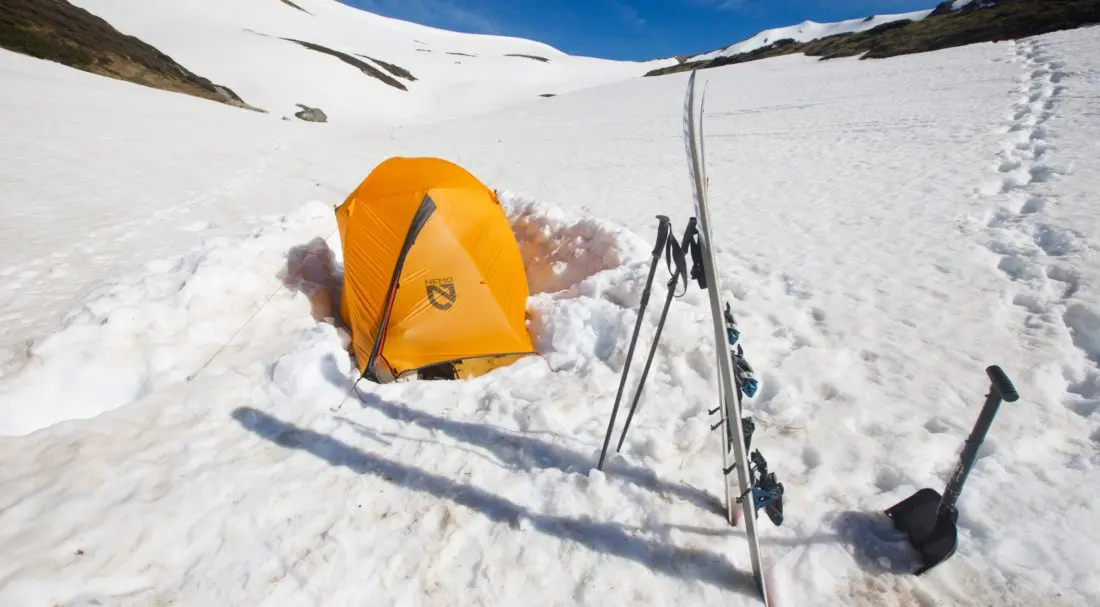
Camping on snow in Australia is a different beast to a summer overnighter, and getting the gear wrong has a way of announcing itself around 2AM. That's exactly what happened to outdoor content creator Kate Donald on her first alpine snow trip — blown snow under the tent, a summer-rated sleep bag, and a very cold lesson learned. Her advice for beginners centres on the 'big four': sleeping bag, mat, tent and pack.
The sleeping bag is where she says to be conservative. Ratings assume ideal conditions, so if you think you need 0°C, aim for something rated closer to -5°C. Down wins on weight and compression but fails when wet, so look for treated fill and a water-resistant shell. Synthetic handles damp conditions better. Cheap warmth boosters help too: a fleece liner adds a few degrees, a hot-water Nalgene bottle doubles as a hot water bottle, and a shell jacket zipped around the footbox buys extra insulation.
The most common beginner mistake, though, is the sleeping mat. Most of your heat leaks straight into the snow below, and a compressed bag can't stop it. That makes R-value — a mat's insulation rating — the number to watch. The higher, the better on snow, and stacking a cheap foam mat under an inflatable is an easy way to add warmth without big spend.
Tents need to cope with heavy, wet Australian snow and the strong winds that come with it. A freestanding design pitches more easily when you're pitching on snow rather than soil, and good ventilation matters — breath condenses on cold walls and can coat the inside in ice by morning. Double-wall tents manage this best, and for some three-season models you can buy a full-nylon inner to replace the mesh one, turning an existing tent winter-ready on a budget.
Winter gear is bulky, so pack volume jumps: 55–65L is a sensible overnight size once you factor in a winter sleep system, extra layers and technical kit like crampons. Look for A-frame ski or snowboard carry and solid external attachment points for helmets and axes. Australian alpine terrain mixes snow with scrub, so ultralight fabrics tend to suffer — and if it's your only pack, it needs to compress down nicely for day tours once camp is set.
There's also a low-commitment entry point: late-season trips around September or October still offer snow in the Alps, but milder conditions and often grassy patches to camp near, so you can test whether snow camping is for you before investing in a full winter setup.
For travellers, this matters because Australia's snow country — mainly Kosciuszko National Park in NSW, reachable via Jindabyne — is one of the few places in the country where you can camp, tour or ski-tour above the snowline. It's a genuine winter adventure without needing a northern-hemisphere expedition budget, but only if your sleep system and shelter are up to it. Get the big four right and a night under alpine stars becomes memorable for the right reasons.
From Wild Magazine Australia.