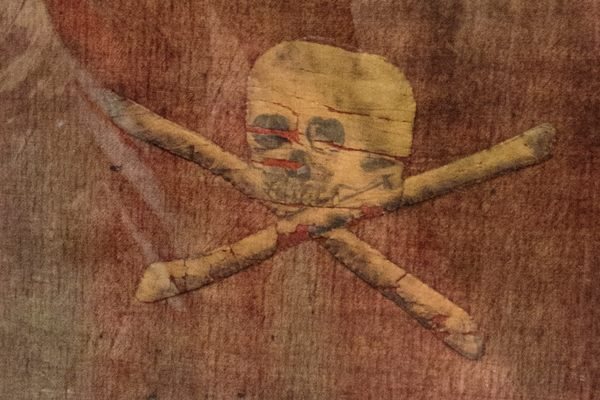
Genuine pirate flags are among the rarest objects in maritime history. They were cheap fabric, never built to last, and almost every one rotted, burned or got thrown away centuries ago. That's what makes the example on display at the National Museum of the Royal Navy in Portsmouth so remarkable: it's a real Jolly Roger, seized from pirates off the North African coast in 1790 by Admiral Richard Curry. Only two or three authenticated surviving pirate flags are known to exist anywhere.
Because so few physical flags survived, historians usually have to reconstruct pirate symbolism from court records and books, notably Captain Charles Johnson's 1724 volume A General History of the Pyrates. This makes the Portsmouth flag one of the very few pieces of primary evidence for how pirates actually communicated - and intimidated - at sea.
The flag also punctures some popular myths. The black banner with a white skull and crossbones we all picture from films wasn't the standard design. Early Jolly Rogers were typically dyed blood red, a colour chosen deliberately: it told enemy crews that no quarter would be given - no prisoners taken - unless they surrendered immediately. Even the skull-and-crossbones motif has a surprisingly mundane origin, borrowed from the symbol sailors used in ships' logs to mark a death on board.
The story doesn't stop in the 18th century. The Royal Navy's submarine crews adopted the Jolly Roger from the First World War onwards, after Admiral Sir Arthur Wilson dismissed submarine warfare in 1914 as underhanded and fit only for pirates. Rather than take offence, the submariners wore the insult as a badge of honour, hand-sewing symbols onto their own flags to record each successful patrol. You can trace this whole lineage in one dockyard visit.
For anyone heading to Portsmouth's Historic Dockyard - already home to HMS Victory, the Mary Rose and the submarine museum - this small but rare artefact is a reason to look beyond the big ships. The museum recommends buying an annual ticket to the dockyard, which covers the Royal Navy Museum plus the ships and submarines, making it far better value than single-entry tickets. Whether you're a family looking for a day out, a history buff chasing genuine artefacts, or a traveller who likes their museums with a bit of swagger, a two-and-a-half-century-old pirate flag is hard to beat.