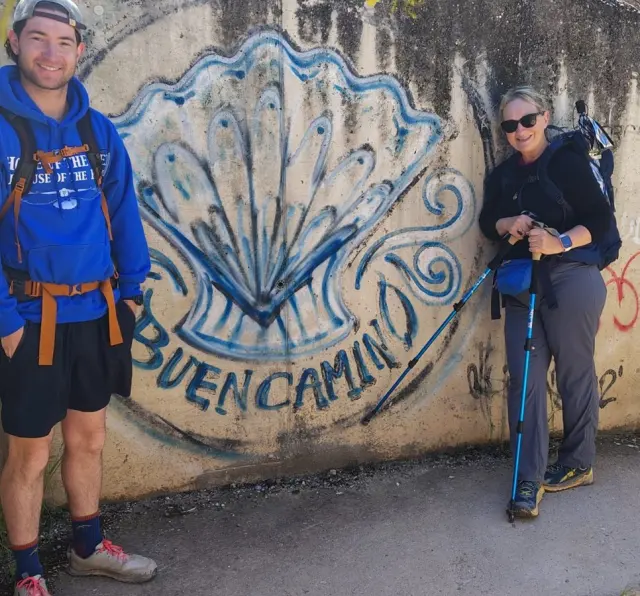
Day 12 of a Camino de Santiago pilgrimage sounds unremarkable on paper: rolling olive groves, a hostel bunk, a market visit. But as hiker Marley "Chill Out" Kreiser's account on The Trek shows, this stretch between the early villages and Estella is exactly the part of the Camino that hooks people for life.
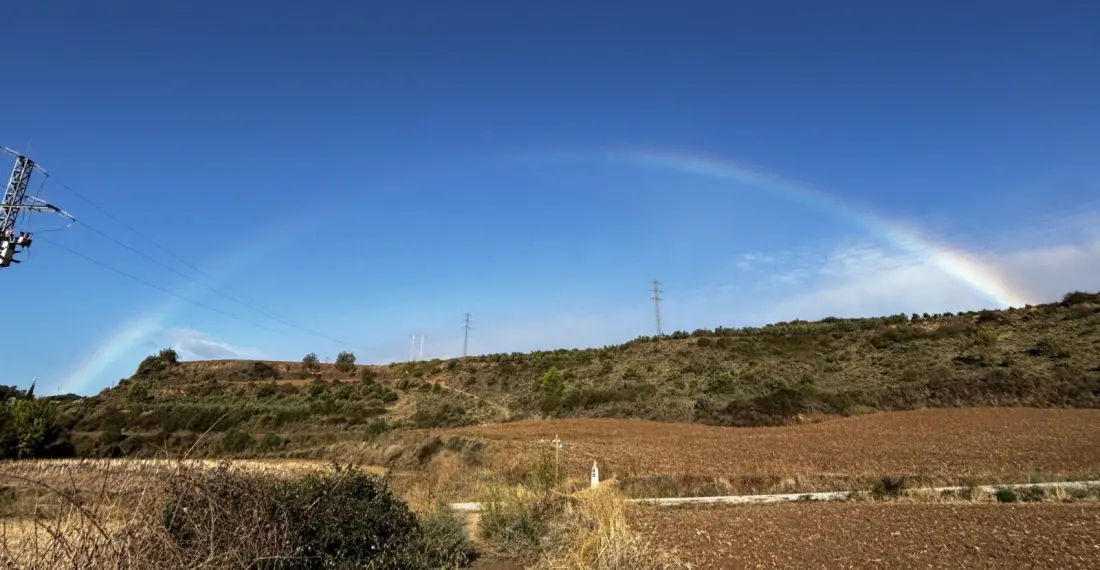
The day started badly. Kreiser set out before sunrise with a gallon bag of scrambled eggs and a foggy mood, walking to think rather than to cover distance. Then came the kind of run of small coincidences pilgrims describe as the Camino's signature. First, an unofficial rest stop among the olive trees, dubbed "Olivegardzen," complete with a leave-one-take-one book library, where a copy of Julia Baird's "Phosphorescence" sat waiting on top. Then a full-arc rainbow over the fields.
Under that rainbow, Kreiser fell into step with two Spanish pilgrims and managed a full conversation in Spanish. One, from Madrid, patiently slowed his speech; the other turned out to be Basque, delighted to spot the lauburu symbol drawn on Kreiser's shoes. Further on, a table signed "Feliz Viaje, Peregrinos" offered free supplies for walkers — Camino trail magic, funded by a donation box.
The social current carried through the afternoon. Kreiser caught up with an Italian friend and his new walking companion, a 69-year-old Australian with Kilimanjaro and Everest Base Camp on her résumé. The pair checked into the Estella Pilgrims Hostel, sprinted to the town market before closing for fresh fruit and pastries, then rounded out the evening with a group of pilgrim "dads" at the Restaurant Bar Florida during siesta-quiet streets. Different nationalities, different languages, one shared table.
Why should this matter to you if you're considering the Camino? Because it captures what the guidebooks struggle to explain. The walk itself is mostly flat, dusty farmland through Navarre — not dramatic scenery. What draws roughly hundreds of thousands of pilgrims a year is precisely this: an unofficial library in an olive grove, strangers slowing their Spanish so you can follow, snacks left out for whoever comes next. It also shows the rhythm worth copying. Kreiser had deliberately resisted the urge to hammer out big miles, and the reward was a day full of unplanned encounters.
Practically speaking, Estella makes a natural stop on the French Way, about a week out from Pamplona and roughly a fortnight from the start in Saint-Jean-Pied-de-Port if you're walking moderate 20-25km days. Towns like it are built for pilgrims: donativo hostels, municipal albergues, markets that close mid-afternoon, and bars that fill up with walkers when everything else shuts. If your legs are strong but your head is full, this middle stretch — rather than the famous finale into Santiago — is where the Camino tends to do its real work.
Story via The Trek.