The Airbus A321XLR is currently the only intercontinental narrowbody on the market, and just six airlines fly it so far: American, United, Iberia, Aer Lingus, Air Canada and Qantas. Yet only American and United have bothered to install premium economy cabins on it — and even then, just 12 seats each. The other four carriers went with business suites up front and a dense economy cabin behind, skipping the middle tier entirely.
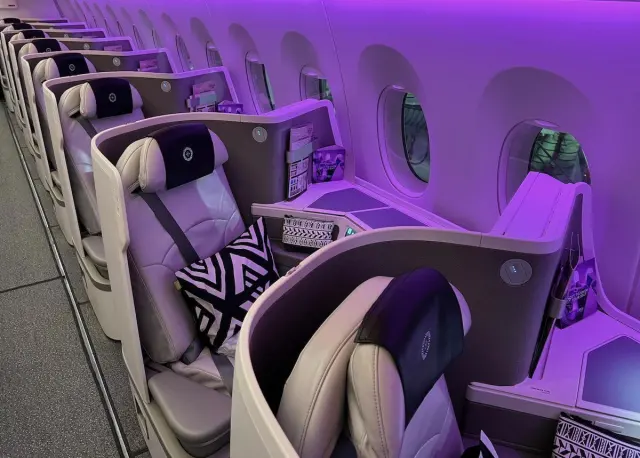
The cabin counts tell the story. American fits 20 Flagship Business suites, 12 premium economy recliners and 123 economy seats, for 155 total. United's standard layout is similar, though its higher-end 'Elevated Interior' variant drops to 150 seats with a far plusher spread of premium seating. Meanwhile, Air Canada and Iberia cram in 182 seats apiece, Aer Lingus 184, and Qantas a hefty 200 — none with a premium economy row in sight.
The real compromise on a narrowbody is space at the back. None of the launch aircraft originally had a mid-cabin lavatory, so everyone queues at the rear galley. Qantas is worst off, with just two restrooms for roughly 180 economy passengers — around 90 people per lavatory, versus 42–49 on its own widebodies. Iberia's inaugural flight reportedly saw a constant queue snaking through the rear galley during service. Qantas has since backtracked, adding a mid-cabin restroom from its fourth aircraft onward and deleting a row of seats to make room.
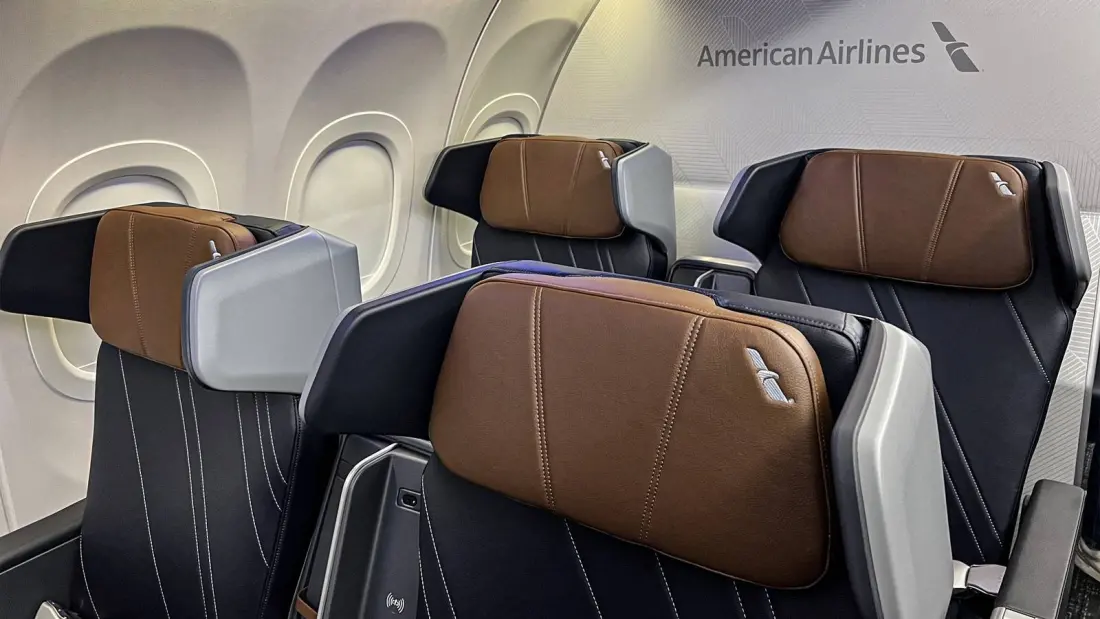
American's premium economy itself gets decent reviews — Recaro R5 recliners with 37 inches of pitch and eight inches of recline, comparable to what the airline offers on its 787s. The problem is what surrounds it: a tiny shared galley with a small oven, three lavatories shared with the whole economy cabin, and a fare that on sample JFK–LA dates hit $1,050 — nearly triple Basic Economy at $379 and only a few hundred dollars short of Flagship Business. For that money, critics note, the airline skipped even building a proper extra-legroom section beyond exit rows.
The industry logic is interesting. On widebodies, premium economy is a proven earner — Lufthansa has called it a money-making machine, generating roughly a third more revenue per square foot than economy. But a single-aisle jet has no spare floor space to insulate a middle cabin, so every premium economy seat comes directly at the cost of another economy row. Four of the six launch airlines did that maths and chose volume instead.
For travellers, the takeaway is simple: if you're booking an A321XLR on a long transatlantic or transpacific route, check the layout before you pay up. On American or United you can genuinely upgrade; on Qantas, Iberia, Aer Lingus or Air Canada your choice is business class or a crowded coach seat with long bathroom lines.
The aircraft itself is here to stay. With over 500 orders, it burns roughly 30% less fuel per seat than the 757-era planes it replaces, and it helped push the A320 family past the 737 in lifetime deliveries in late 2025.