
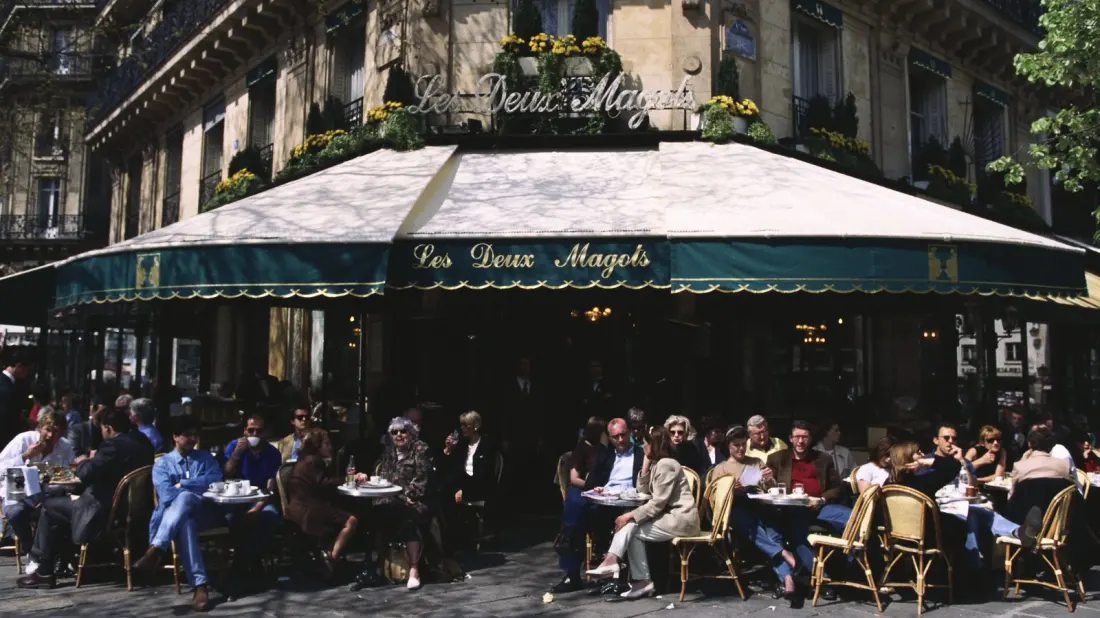
A café stop in Paris seems simple enough — until you realise the locals are following a script you never got. French coffee culture runs on a handful of unwritten rules, and visitors (Americans especially, though nobody is immune) tend to break most of them within minutes of walking in. The good news: they're all easy to learn.
First, timing. Coffee in France comes either in the morning or after a meal — never at the start. In a restaurant, coffee is treated like dessert: you order it once your plates are cleared, often alongside a digestif. Asking for one with your appetisers won't get you thrown out, but it will mark you instantly as a tourist.
Second, vocabulary. French coffee terms don't map onto the Italian-derived words most travellers know. "Un café" gets you an espresso — the default. Want something longer? Ask for "un café allongé" (also called un café Américain). A "café au lait" is brewed coffee with hot milk in a big cup; a "café crème" is the closest thing to a latte, an espresso topped with steamed milk. And that macchiato you're craving? Order "un noisette" — named for the hazelnut colour of the drink, not the flavour.
Third, milk has a schedule. Milky drinks like café crème and café au lait are morning territory — they're considered gentler on an empty stomach. After lunch and into the evening, the French stick to black options: an allongé in the afternoon, a straight café or noisette after dinner, on the theory that milk hampers digestion. Nobody will stop you ordering a latte at 4pm, but if blending in is the goal, skip the milk after noon.
Fourth, location matters — and can save you money. Traditional bars, cafés and even tabacs have a counter where you can drink standing up, which is the classic Parisian way to take a quick coffee. There's a practical bonus: drinking at the bar ("au comptoir") costs less than sitting at a table. Stand, sip, go.
Finally, slow down. Coffee in France is a ritual, not fuel. It's drunk from real porcelain, seated or at the counter, not carried down the street in a paper cup with a plastic lid. Even a short pause beats a to-go order — no spills, no scalding cup, no litter, and you'll look like you belong.
None of this is rigid law, and no waiter is going to refuse a milky afternoon coffee. But following these habits costs nothing, often saves a euro or two, and turns an ordinary coffee stop into a small act of cultural fluency. For anyone heading to France — Paris especially — it's the kind of low-effort know-how that changes how the trip feels.