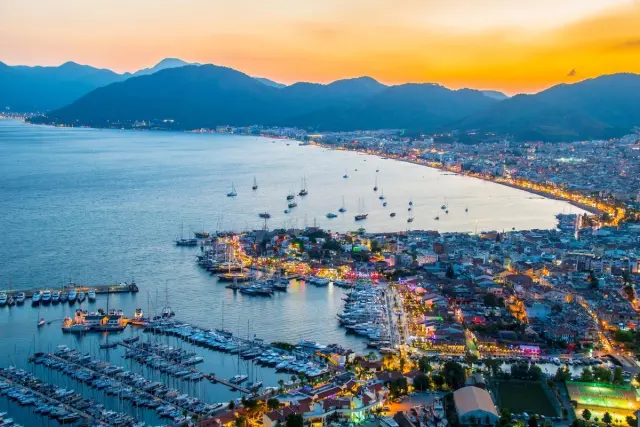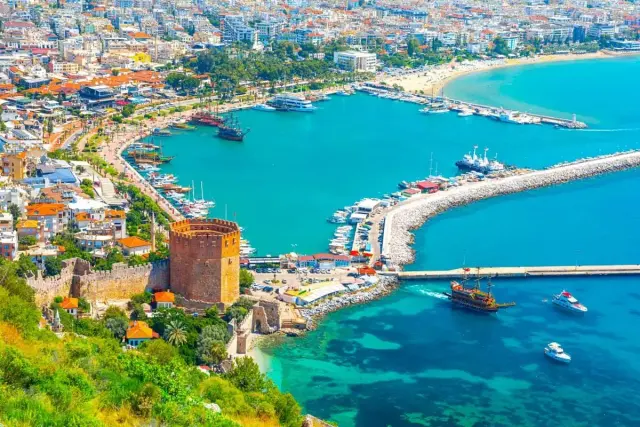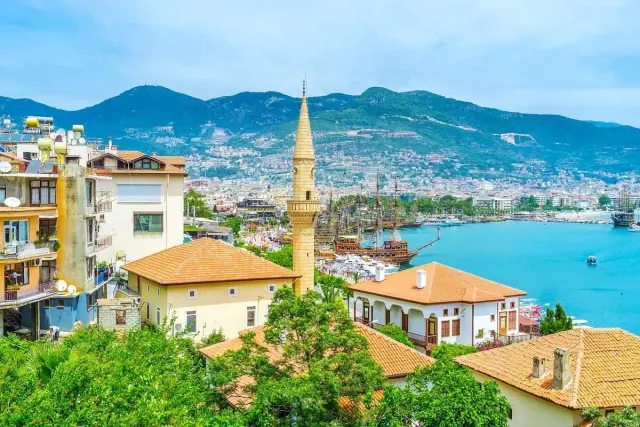
Antalya has a reputation as a sun-and-sand resort city, and the beaches are genuinely good. But this Mediterranean hub on Turkey's southwest coast also happens to be one of the best bases in the country for history and scenery — with Roman ruins, thundering waterfalls and one of the world's strangest natural wonders all within day-trip range.
The standout excursion is Pamukkale, roughly a long day's drive away. The name means "cotton castle", and the white limestone terraces formed by mineral-rich thermal water really do look otherworldly. The site pairs with Hierapolis, a Roman spa city where visitors soaked in the hot springs nearly two millennia ago; there's a huge theatre and a vast necropolis to explore, plus Cleopatra's Pool, where you can swim among sunken stone columns for an extra fee (check ahead — it doesn't always open). Going with a tour that includes transport, lunch and a guide makes the long haul far easier.
Closer to the city, a trio of ancient sites makes an equally compelling day out. Perge has walkable Roman streets, Aspendos boasts one of the best-preserved Roman theatres anywhere — still massive after almost 2,000 years — and Side is a coastal town where a Temple of Apollo stands right over the sea. The same circuit usually throws in Manavgat Waterfall.
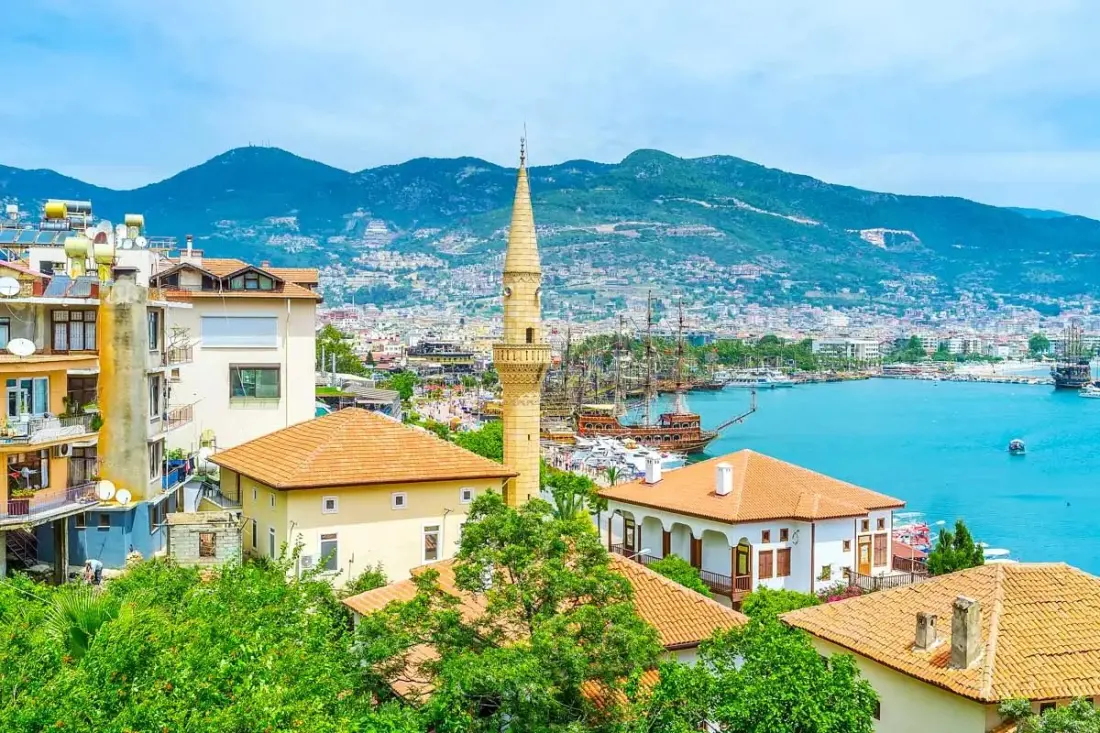
Within Antalya itself, the Lower Düden Waterfall is the showstopper: water plunges straight off cliffs into the Mediterranean. Hadrian's Gate, a 2nd-century Roman arch, anchors the Kaleiçi Old Town, best explored on foot through narrow lanes past the Clock Tower and Yivli Minare Mosque, finishing at the Old Marina. A private walking and tasting tour ending with irmik helvası — a semolina dessert served with ice cream and tahini — is a well-reviewed way to get oriented.
Then there's the hammam. Traditional baths like DEMIRHAN, FALEZ Hamam & Spa and Onay Hamamı offer the full routine: steam on a heated marble platform, a brisk scrub with a kese mitt, then a foam massage. Bring swimwear and check what your package includes.
For something different, an hour-long horseback ride through forest trails and along Lara Beach at sunset suits complete beginners and delivers golden-hour views over the sea.
Beach-wise, you're spoiled. Konyaaltı is the easiest to reach with mountain views; Lara has golden sand and beach clubs; Mermerli sits below the Old Town cliffs (paid entry). Further afield, Olimpos is a laid-back stretch near ruins about 90 minutes away, Patara is one of Turkey's longest beaches and a protected turtle nesting site, and Kaputaş is a tiny cliff-ringed cove with impossibly blue water — worth the three-hour drive, but arrive early.
Practicalities matter here. Pick up an AntalyaKart for buses and trams instead of relying on taxis, carry small lira notes (some restrooms charge), and haggle freely in the bazaars — but not in fixed-price shops. July and August are scorching and packed; April–May and September–October are far more comfortable.
A solid three-day shape: city highlights and Old Town with a sunset marina stroll on day one, bazaars, beach and that horseback ride on day two, then Pamukkale or the Perge–Aspendos–Side circuit on day three. First published by Destinationless Travel.