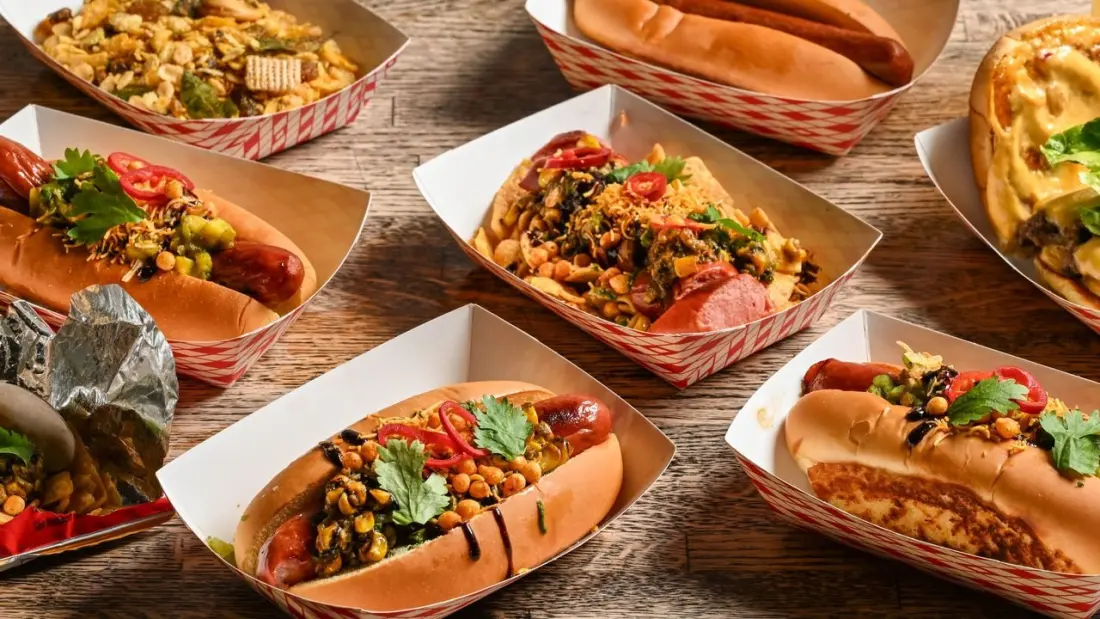
A bhel puri-topped hot dog at a 2017 birthday cook-off turned out to be a preview of where American food is heading. The chef behind it, journalist-turned-restaurateur Pervaiz Shallwani, has since turned that mashup into Chaat Dog, now with a permanent counter inside Brooklyn's Time Out Market. He's part of a wave of Pakistani-American restaurateurs who are done hiding behind the "Indian" or "Indo-Pak" umbrella label their predecessors often used.
The numbers explain the shift. The Pakistani diaspora in the US has grown from about 32,600 people in 1980 to nearly 680,000 today, concentrated in New York, Chicago, Houston, Washington DC and Los Angeles. For decades the community's restaurants either catered to enclaves like Coney Island's Little Pakistan or folded into generic South Asian menus. That's changing fast, especially since the pandemic, with a distinctly fast-casual approach: bold Pakistani flavours served in formats Americans already understand.
In New York, the clearest example is Nishaan in the East Village, a 600-square-foot counter founded by Zeeshan Bakhrani after he was laid off from an IT job in 2024. His Pakistani chopped cheese griddles chapli kebab with peppers and onions, finished with lime-cilantro sauce and tamarind chutney. The menu also runs to bihari barbacoa tacos, elote chaat and soft-serve made with Pakola, the iconic green Pakistani soda. Before signing the lease, Bakhrani and his team won season 18 of Food Network's The Great Food Truck Race — the first all-halal truck to take the $50,000 prize.
The playbook travels. Namkeen, opened by the Chaudhry family in Chatham, New Jersey in autumn 2020, applies South Asian spices to Nashville-style hot chicken — think a tikka-sauce fried chicken sandwich on a brioche bun — and has grown to 10 locations across three states plus Canada. In Texas, Zain Shafi's food truck Sabar spent 2023 to 2025 doing halal Pakistani barbecue, including seekh kebab sausage and smoked tandoori turkey, after getting his start at acclaimed Goldee's. And in Bushwick, BK Jani has been serving premium halal burgers with Lahori flavours since 2015, well before the trend had a name — founder Sibte Hassan nearly gave up before a glowing New York Times review arrived. Even Harlem has Kaafi, a Pakistani chai café opened in 2024 by Saud Khan, born in Peshawar.
Why should a traveller care? Because this is the rare food movement you can actually eat right now, cheaply and without a reservation. These are counters and food trucks, not tasting menus — a chopped cheese or hot chicken sandwich runs fast-casual prices, and several spots, like BK Jani and Nishaan, are in easy reach of any New York itinerary. For travellers to New York especially, it's a good excuse to skip the usual burger joint: the flavours are unmistakably Pakistani, but the format is pure American corner-store. New York currently has the densest cluster, from Bushwick to Harlem to the East Village, though Houston, the Bay Area and New Jersey are worth detours too. As Shallwani puts it, this isn't fusion so much as the oldest American tradition there is — every immigrant group making the food their own.