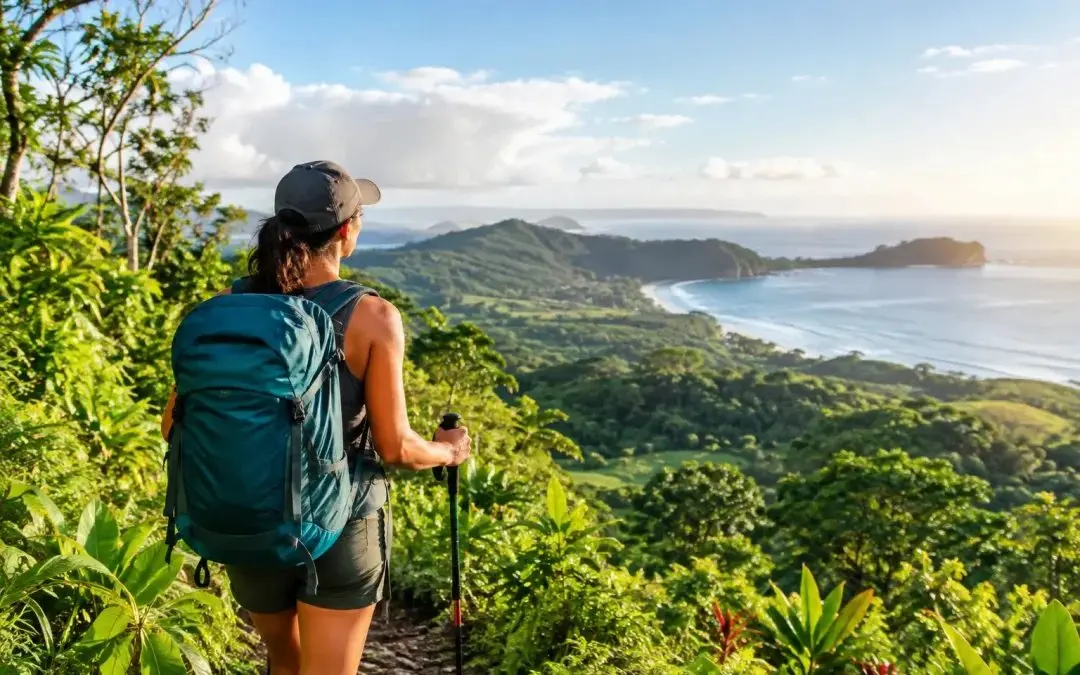
A Costa Rican hike can start under cloud forest, cross a river by midday and finish on a beach with scarlet macaws overhead. That variety is the draw — and the reason the country's trails catch visitors out. Distances look tiny on paper, but humidity, slick roots and sudden elevation gain mean a muddy kilometre can take longer than two on firm ground. Many of the best routes sit well beyond mobile signal, so preparation matters more than fitness.
The first rule is deceptively simple: pick a trail for the least confident walker in your group, not the strongest. Check conditions with rangers or your accommodation before setting out — a route that was fine last week may be flooded, closed or storm-damaged. Parks and reserves have entry hours, capacity limits and wildlife rules, so confirm those too. Tell someone your plan and expected return time, download an offline map while you still have Wi-Fi, and don't treat your phone as a safety net. Start early: mornings are cooler, wildlife is livelier, and in the green season you'll want to be off exposed terrain before the afternoon downpour.
At Arenal Volcano National Park, the trail options make a good case study. Heliconias is the shortest at 610 metres — a sensible first pick — while Las Coladas heads toward old lava fields where rough rock slows you down, and El Ceibo, named for a giant ceiba tree, is the longest of the three. At the ranger station, ask how the trail is today and whether any section is closed; trace the return leg on the map before you go.
Pack for microclimates, not for the weather at your hotel. Closed-toe shoes with grip beat sandals on wet roots and gravel, and a rain layer belongs in the bag even under blue skies. Alongside water, snacks, sunscreen and repellent, carry a basic first-aid kit, a whistle, a headlamp and a dry pouch for electronics. Don't count on streams as drinking water, and remember that humidity makes your body work harder than the scenery suggests.
Rivers and waterfalls deserve respect. Heavy rain can raise water levels fast, so never cross a swollen river or edge closer to a waterfall for a photo — wet rock is slipperier than it looks. If a rising stream turns muddy, move to higher ground away from the bank and tell a ranger. Hear thunder? Leave exposed ridges for a solid building or a hard-topped vehicle, and wait 30 minutes after the last rumble. Emergency number throughout the country is 911.
Stay on marked trails even when side paths look inviting, keep your group close enough that you can always see or call the next person, and give wildlife room: no feeding, no baiting animals for photos, and secure your food from monkeys and snack-savvy coatis. If you spot a snake, back away slowly — it wants the encounter over as much as you do.
A guide isn't essential everywhere, but it's the smart call for remote routes, night walks, canyons and volcano terrain, where trained eyes spot the sloths and poison frogs you'd otherwise walk past. The real skill, though, is knowing when to turn back. The viewpoint will still be there another day — Costa Rica rewards repeat visits.