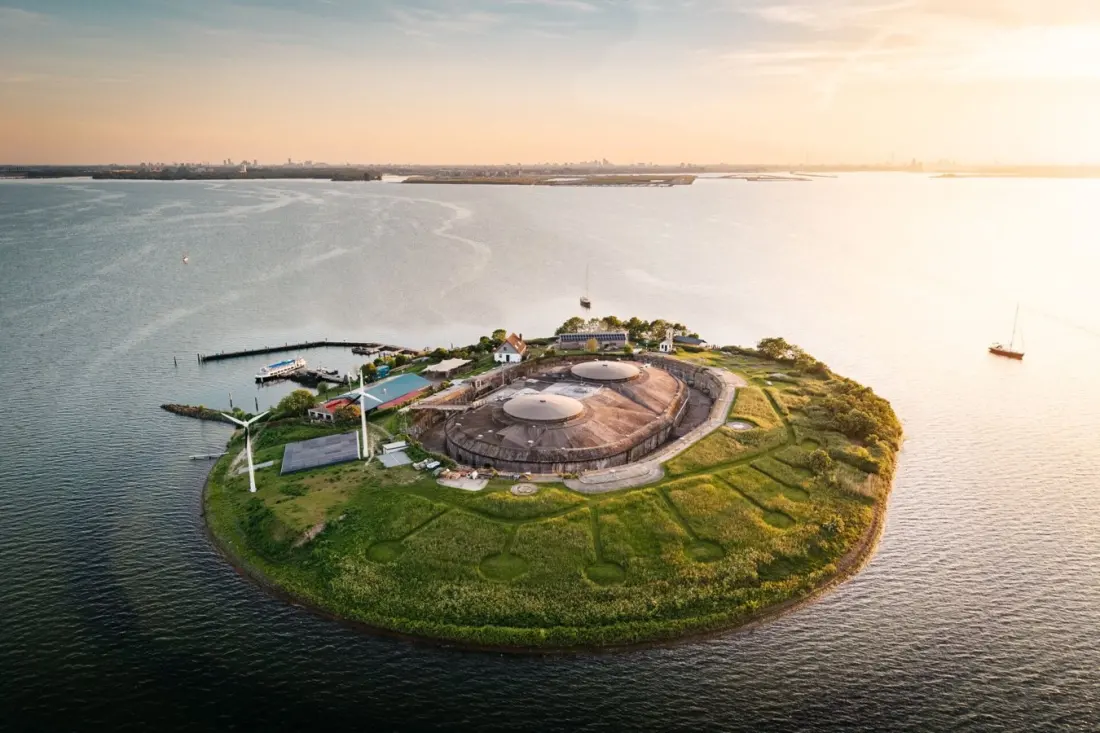
A short boat ride from Amsterdam, in the IJmeer lake, sits Pampus — a 19th-century sea fort built so its garrison could hold out for months without any help from the mainland. That old requirement for self-sufficiency has become the island's modern selling point, and it has just earned Pampus a place on the shortlist for the 2026 VriendenLoterij Museum Prize, themed around "the green museum".
Pampus is one of three finalists. A jury picked the shortlist, but the €100,000 prize goes to the museum that wins a public vote, open from 5 to 27 November, with the result announced on 2 December. The money would fund interactive installations across the island covering energy, water, food and materials — think hands-on exhibits on harnessing wind power, the tiny creatures that keep a vegetable garden thriving, and preserving a summer harvest for winter.
The fort is already running a convincing demo. It operates entirely without fossil fuels, generates its own renewable energy and purifies water drawn from the surrounding lake — approval to serve that treated water as drinking water is still pending, but the system is in place. The island kitchen uses vegetables and herbs grown on site, and the grounds double as habitat for wildlife. Everything is built around one idea: show visitors that careful use of natural resources can simply be part of everyday life.
There's heritage weight behind it too. Pampus is part of the UNESCO World Heritage-listed Dutch Water Defence Lines, the ring of fortifications that once protected Amsterdam by controlled flooding. A spokesperson, Anouschka Zanolla, described the mix of history and future-facing practicality as what makes the place special, noting that the experience starts with the boat trip itself.
If it wins, the team wants visitors to leave with more than a fun day out. The stated ambition is that people go home questioning where their tap water, electricity and food come from — and maybe try a version of island thinking in their own lives. Optimistic framing, but it suits the place: a fort designed for isolation is now a working example of living lightly on a small patch of land.
For travellers, Pampus is an easy add-on to an Amsterdam trip that goes beyond the usual museum circuit — and it's genuinely kid-friendly territory, with boat access, ramparts to explore and, if the vote goes their way, a whole new layer of interactive exhibits. The public vote also gives you a reason to care right now: if you visit before early December, you can back the project yourself. Spokesperson Zanolla put the pitch neatly: if so much is possible on one small island, imagine what could happen beyond its shores.
Story via Travel Tomorrow.