
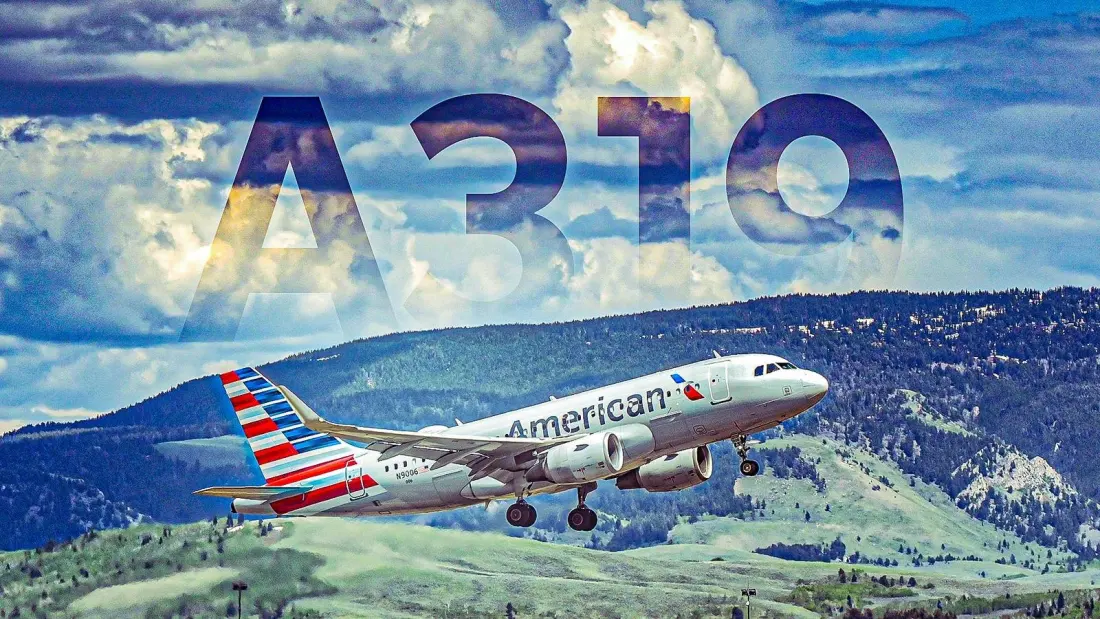
A heated exchange between an American Airlines pilot and an Atlanta tower controller has become the latest aviation radio moment to go viral — and it shines a light on a safety rule most passengers never think about: wake turbulence separation.
The incident involved American Airlines flight AA1428, an Airbus A319 scheduled to depart Hartsfield-Jackson Atlanta International (ATL) for Philadelphia at 7:35 AM on Sunday, September 13. As the jet lined up behind a departing Boeing 757, the pilot asked ATC for a bit more time before taking off, citing concerns about the wake turbulence the larger aircraft would leave behind. The controller obliged, but then scolded the crew, saying that if they needed more than standard separation, they should say so before entering the runway.
The pilot pushed back hard, pointing out that flight decks don't carry separation manuals and that ATC had cleared them for takeoff behind a 757 with calm winds — conditions where a heavy jet's vortices linger longest. The controller's retort that there was "no wake turbulence separation" required in that case drew an exasperated "let us fly the airplane" from the cockpit, and a threat from ATC to file a report. Despite the drama, the flight's timing barely suffered: tracking data shows it landed in Philadelphia 14 minutes early.
Why does this matter? Atlanta is the world's busiest airport and Delta's fortress hub, with aircraft of wildly different sizes departing in rapid succession. Separation categories exist precisely because a small plane crossing a heavy jet's wake can be violently rolled — a Delta DC-9 crashed landing in Texas in 1972 after hitting the wake of a DC-10, killing all four crew. The A319 and 757 here sat just one category apart (F and E), but pilots retain the right to refuse a takeoff they consider unsafe, whatever the tower says.
For travellers, the takeaway is reassuring rather than alarming. Crews actively watch for these risks, and a short radio argument at 7 AM is the system working, not failing. It's also a reminder that the ATL-PHL corridor is a genuine trunk route: Cirium scheduling data shows 14-18 daily flights each way, split between Delta (seven to nine), American (typically five or six, mainline and regional) and Frontier (three).
For anyone transiting Atlanta — or wondering why the plane ahead of them waited an extra half-minute at the runway — this is a rare, noisy glimpse of the safety margins quietly in play on every departure.