Paris's Hôtel Plaza Athénée has done something unusual for a palace hotel: opened its flagship restaurant without a celebrity name on the door. After two decades of Alain Ducasse and four years of Jean Imbert, the avenue Montaigne icon now presents La Grande Table du Plaza Athénée — a dining concept built around a collective of chefs rather than a single luminary. A third of the brigade has been in Plaza kitchens for over a decade, with Jocelyn Herland, Anthony Di Prospero and pastry master Angelo Musa overseeing the operation.
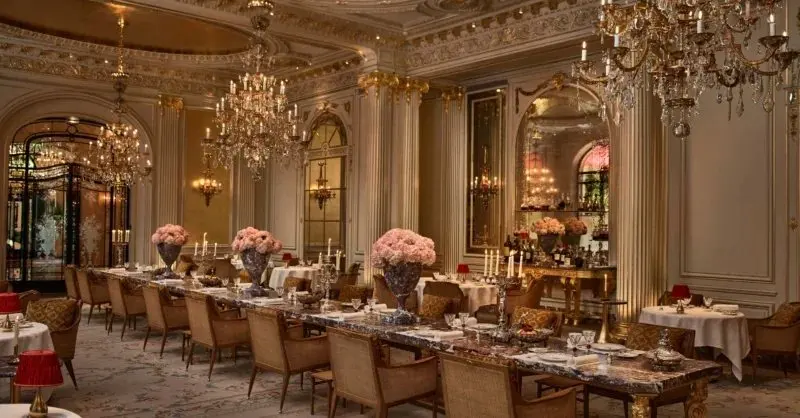
The menu, called Les Agapes, is a six-course tasting journey rooted in classical French cooking. It draws on 19th-century masters like Auguste Escoffier and Jules Gouffé, reviving the spirit of Belle Epoque banquets inside a dining room that suits the brief: chandeliers, a gilded ceiling and a 12-metre antique marble table at the centre of it all. Anyone after something more discreet can book the 'Cabinet des Conspirateurs', a chef's table in the kitchen itself, secured with a €1,000 (around $1,150) deposit.
Where La Grande Table really commits is the theatre. Servers bring soup to the table in comically oversized tureens, flambé langoustines in front of guests, and even produce a heated iron to caramelise the petit fours. Mains — a choice of turbot Dieppoise, sea bass with Vin Jaune or grilled pigeon with black fruits — arrive with a trio of sides, from vegetables arranged as flowers to a millefeuille-style potato confit worth fighting over. There's no formal wine list: sommelier Laurent Roucayrol tailors pairings to each table, which might mean Billecart-Salmon Vintage 2016 followed by a Saint-Aubin Premier Cru.
The highlight, though, is the mid-meal 'interlude'. Midway through the cheese course, diners are led out of the dining room and into the kitchens to meet the team over a palate cleanser — a reminder that the whole point of the concept is the people behind it. One quibble from the review: the menu could do more to explain the historical research baked into each dish, which is considerable. But as entertainment, it lands, and it quietly asks a fair question — does fine dining actually need a headliner?