Ever wondered what it actually takes to buy and renovate an apartment in Paris? Antonia Mahon, founder of property search and interior design firm Blue Sparks Paris, has spent 27 years reading the city's buildings, and her answers to common buyer questions are packed with useful detail.
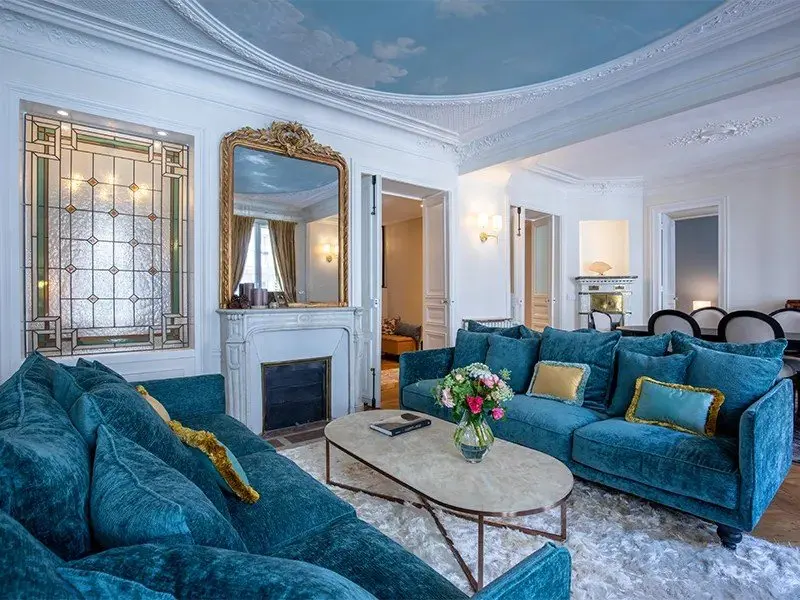
The biggest mistake, she says, is judging an apartment by its surface. Old Haussmann and pre-war flats often show up badly — flaky paint, dated kitchens, odd layouts from decades of piecemeal updates — while a beautifully staged flat can hide poor light, heavy service charges, or a building heading for expensive works. Her advice: read the bones. Ceiling heights, parquet, fireplaces and stone are the raw material, and behind a false ceiling or carpet you can find original cornicing and near-perfect floorboards worth far more than a cosmetic facelift.
On value: with roughly €700,000 to €1.5 million (2026-27 market), buyers have genuine options outside the pricey 6th, 7th and 8th. Parts of the 11th and 13th, and the Buttes-Chaumont area of the 19th, offer attractive buildings and real neighbourhood life at lower prices. But Mahon insists the street, orientation, building condition and surrounding structures matter more than the arrondissement number.
Then there are the red flags that never appear in listing photos. In France you inherit any works already voted through by the co-ownership — sums that can be significant — so the AGM minutes from the syndic (management company) must be read carefully, ideally by someone fluent in French, to spot deferred works, disputes and repeated maintenance issues. Check the DPE energy rating (increasingly tied to resale and rental value as regulations tighten), the orientation (a north-facing flat with small windows is a different life), and noise — her team visits shortlisted properties at different times and on different days, because a peaceful Tuesday morning can become a loud Friday night.
Mahon also argues for pairing the property search with interior design from day one, so the full cost — purchase, works, furnishings — is understood before an offer, not discovered six months later. In a city where good artisans are booked up and lead times run long, keeping one team across the whole project saves both money and stress.
Her parting tip for first-time buyers: drop the fixed checklist, because many unremarkable-on-paper apartments become extraordinary homes. And understand that French buying is genuinely different — the notaire system, co-ownership rules and negotiation norms can wrong-foot even experienced buyers from the UK, US or elsewhere.
Why care? Even if you never buy, this is a rare insider's map of how Parisian housing actually works — handy if you're dreaming of a long-stay rental in a Haussmann flat, weighing a purchase, or just curious why that perfect-looking flat was cheap.