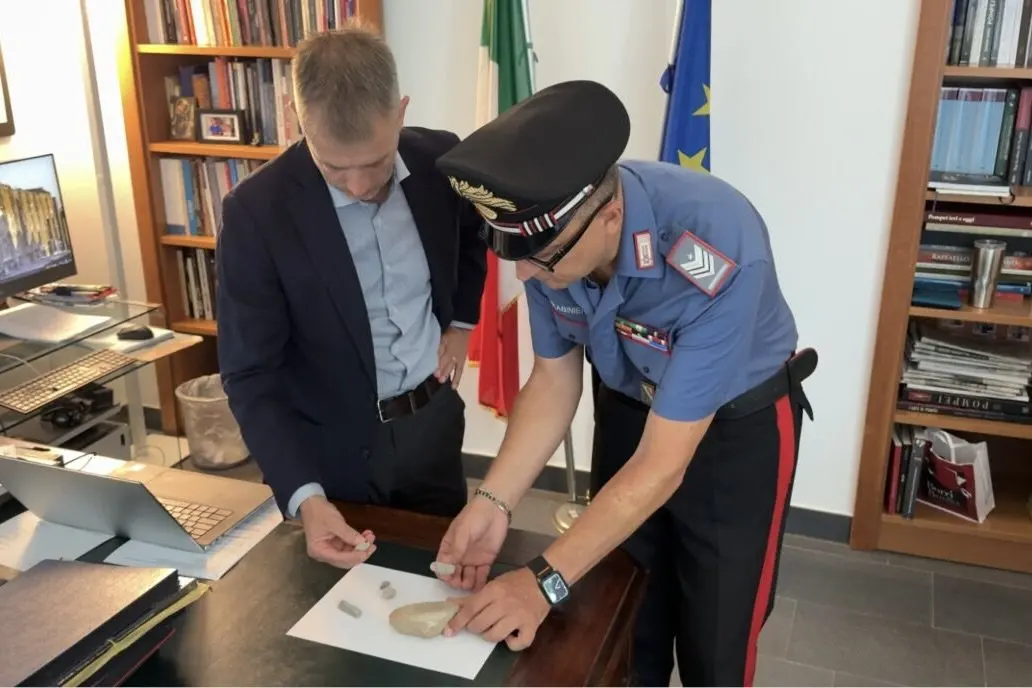
A Scottish tourist learned the hard way near Pompeii in August 2025. On a group tour by the Basilica at the archaeological park outside Naples, he picked up a few loose stones for his son's rock collection. By the time he reached the Villa dei Misteri train platform, the carabinieri had been tipped off and caught him before he could board. Taking artifacts from Pompeii can land you up to six years in prison plus a fine of €1,500 — and, one officer noted wryly, 'we may have saved him from the curse.'
That curse is no fringe rumour. Pompeii's archaeological office has received roughly 200 parcels of returned rubble over the past decade, with letters describing broken legs, shattered ankles and other misfortunes blamed on the stolen stones.
Pompeii is just one entry in a global roll-call of sites where pocketing a memento invites either legal trouble or, according to legend, supernatural payback. In Hawaii, taking lava rock or black sand is said to anger Pele, the goddess of volcanoes — a belief so entrenched that Haleakalā National Park on Maui receives around 100 packages of returned rocks a month. Rangers freeze each batch for a month to kill off foreign bacteria, then use them in gardens at the visitor centres; rocks can't go back in the crater because no one knows where they originally came from.
Australia's Uluru-Kata Tjuta National Park gets about one parcel a day, many with apology notes — hence the nickname 'sorry rocks'. The Anangu traditional owners don't endorse the curse idea, but the returned rocks at least get put to use repairing erosion damage.
Plenty of places skip the mythology and go straight to the fines. Spain's Canary Islands lose around 22 pounds of Fuerteventura's unusual 'popcorn' sand (worn coral, it turns out) every year, plus as much as a ton of sand from Lanzarote, so airport luggage inspectors now hand out penalties of up to €3,000. In South Carolina, a pocketed sand dollar can cost you $500, while swiping sand in Australia's Whitsunday Islands brings an on-the-spot fine of AU$10,000.
Two American sites layer heavier history onto the superstition. At Gettysburg, where some 51,000 soldiers died in 1863 and many bodies lay unburied for months or years, taking stones once risked disturbing the dead — one repentant letter-writer blamed a stolen rock for his divorce, lost house and nine years in jail. And at Arizona's Petrified Forest National Park, rangers have encouraged a rumoured curse since the 1930s; an artist even collected the resulting 'conscience letters' in a project called Bad Luck, Hot Rocks.
The takeaway for travellers is simple: that pebble on the ground isn't a free souvenir. Between prison sentences, four-figure fines and a surprisingly large volume of guilt-driven return post, the odds are stacked against your pockets. Leave it where it lies.