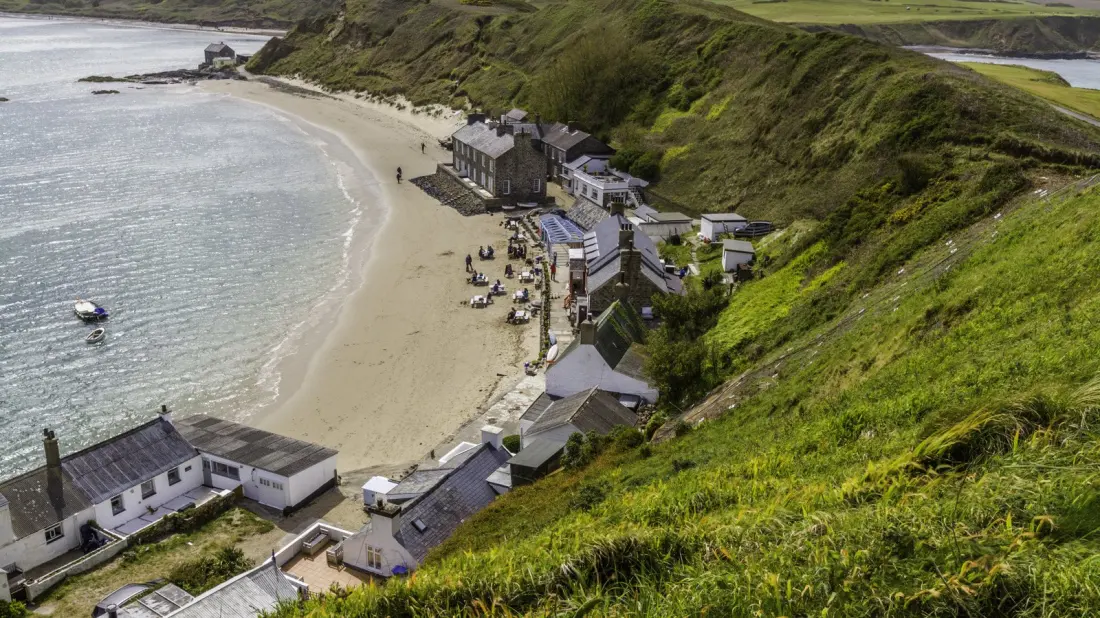
Tucked under a green headland on the northern edge of the Llŷn Peninsula, Porthdinllaen is a tiny harbour hamlet that has barely changed since the 19th century — when plans to turn it into a major port never quite materialised. What's left is a scattering of salt-weathered cottages, calm clear water, and one very famous red pub.
The catch, and the charm: you can't drive there. Only residents may take the narrow lane across the headland. Visitors walk roughly 15 minutes along the beach from Morfa Nefyn, or follow a clifftop path beside the golf course when the tide is in. Much of the village and its surroundings belong to the National Trust, which has helped keep the place stubbornly old-fashioned.
Getting here takes commitment. Liverpool is a little over two hours' drive to the east, and Manchester's international airport — the nearest with transatlantic arrivals — sits about 2.5 hours away. Cardiff's Welsh airport is closer to five hours south. Remote it is, but that's rather the point.
The reward is a bay of beaches, each with its own character. Morfa Nefyn Beach, right below the National Trust car park, runs a full two miles — plenty of room for families, sandcastles and spreading out. Walk north along the shore and you reach Porthdinllaen itself, sheltered between a reef and a craggy peninsula, so the water is often calmer and clearer than elsewhere on the coast — good news for swimmers, paddleboarders and anyone hoping to spot wildlife. Beyond the village, an official National Trust route continues another 2.5 miles around the headland, passing a lifeboat station and a second beach, with seals frequently hauled out on the rocks below. On clear days you can see the highest peaks of Eryri, Wales' largest national park, in the distance.
Then there's the reason many people come at all: the Tŷ Coch Inn. Perched literally steps from the sand, this red-painted pub — the name means "red house" — dates to the early 1800s and has been ranked among the top three beachside pubs in the world. Inside, it's all tankards, maritime bric-a-brac, sailors' lamps and hanging instruments; outside, a handful of sea-facing tables are the most sought-after seats in Wales on a sunny day. The kitchen serves local seafood, sandwiches and proper pub food daily in summer, but only Friday to Sunday in winter — so time your visit accordingly.
Who's this for? Anyone who likes their beaches quiet, their walks scenic and their pint with sand underfoot. It pairs neatly with a trip along the Llŷn Peninsula or a broader tour of north Wales and Eryri, and it's an easy day-trip target if you're basing yourself in Liverpool or Manchester and want to trade city streets for a car-free cove.