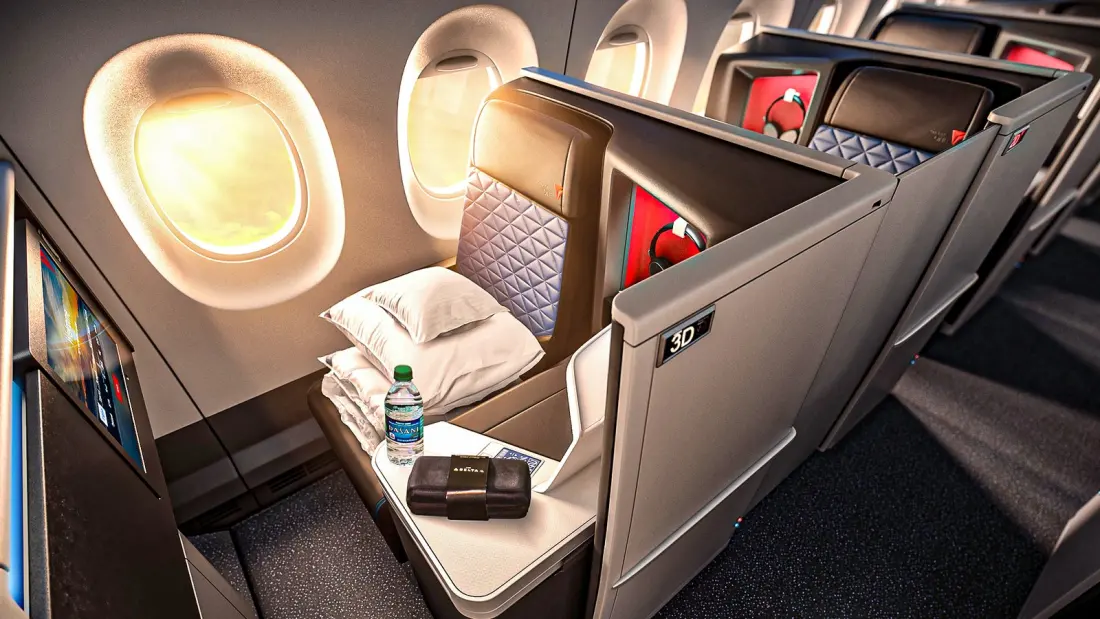
For the first time, Delta earned more money in a quarter from premium fares than from standard main-cabin tickets — a milestone that shows how decisively air travel has split into two experiences. Across North America, Asia and the Middle East, carriers are pouring billions into lie-flat beds, enclosed suites, bigger lounges and satellite WiFi, while the cheapest seats get tighter.
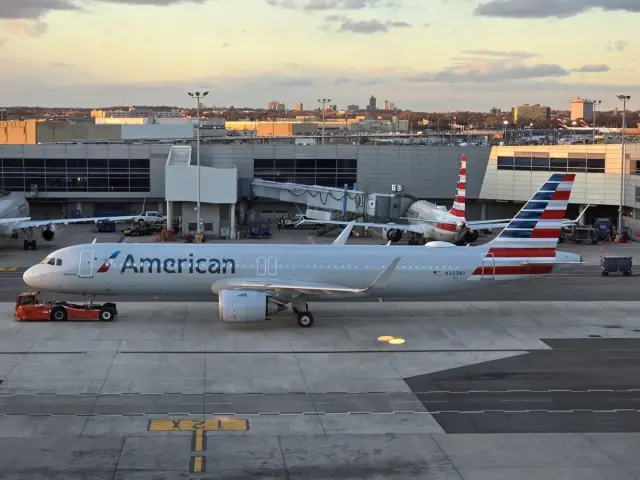
The numbers explain the pivot. American Airlines says roughly 30% of its seats generate half its revenue, and CEO Robert Isom admitted the carrier sold too many Basic Economy fares. American has since stripped elite upgrades and miles from its cheapest tickets and will retire Flagship First in March 2027, pushing narrowbody premium seating to 40% of the cabin. United, meanwhile, retired international first class outright in favour of an expanded Polaris business product aboard its new 'Elevated' 787-9s.
Narrowbody jets are getting the long-haul treatment too. Air Canada's new A321XLR offers lie-flat Signature Suites on routes like Montreal–Toulouse, and Alaska and Hawaiian will add flat-bed suites to Boeing 737 MAX 10s from 2028. Delta's interim solution — 44 domestic first-class recliners squeezed onto A321neos with just one forward lavatory — filled 80% of those seats by August, suggesting demand still outruns comfort.
Not everyone is abandoning the front row, though. Emirates has passed 100 aircraft in its $5 billion retrofit programme, keeping enclosed first-class suites on its A380s and 777-300ERs, while Singapore Airlines has spent over $1.56 billion rebuilding widebodies and adding private suites to its ultra-long-range A350s flying to New York. The trade-off lands further back: Singapore's retrofitted A350s keep 2017-era economy seats without 4K screens, and its future 777Xs will cram economy 10-abreast.
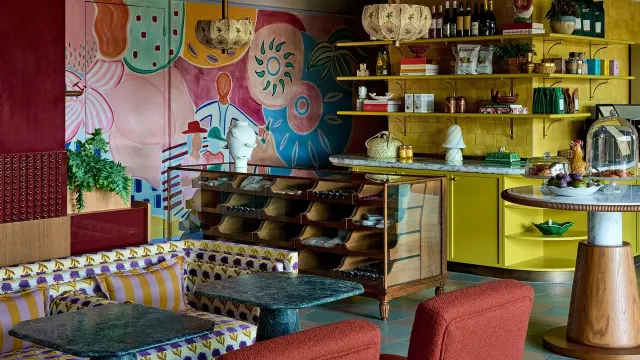
The premium war extends well past the cabin door. Lounges are overflowing thanks to credit-card perks, so access is tightening — Capital One now charges Venture X members $45 per guest unless they spend $75,000 a year. Southwest and Chase will open their first 'Icon Lounges' in Austin, Baltimore, Honolulu and Nashville in late 2027, while Alaska is building a two-tier 41,000-square-foot Seattle complex splitting standard members from international business fliers. Connectivity is the other battleground: United has passed 640 Starlink-equipped aircraft, and Emirates is fitting multi-antenna systems streaming above 2 gigabits per second fleet-wide.
For travellers, the message is clear. If you can book premium economy or business — or hold the right credit card — flying has never been better, with lie-flat beds appearing on routes that never had them. If you're flying basic economy, expect less legroom, fewer perks and no upgrade path, so compare total costs before assuming the cheapest fare wins. Watch the 2027–28 lounge openings too; how crowded they stay will tell you whether the premium gold rush has peaked.