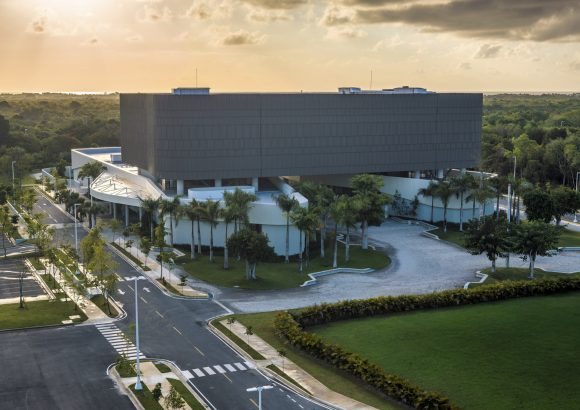
A cultural centre isn't the kind of sustainability project that usually makes headlines, but in Punta Cana it might matter more than any solar array. The Centro Cultural Rainieri — already nicknamed El Nido, or The Nest — has just opened in Puntacana Village, and its backers see it as the region's most important environmental statement yet.
The reasoning goes back to a line Senegalese forestry engineer Baba Dioum delivered in New Delhi in 1968: people only conserve what they love, and they only love what they understand. Punta Cana, argue the team behind El Nido, is a destination at risk of having no identity at all. More than 200,000 people now live in the Verón-Punta Cana area, most from other Dominican provinces or abroad, and over five million foreign visitors flew into Punta Cana Airport in 2025 alone. Many leave convinced they visited a place called Punta Cana — white sand, turquoise water — without ever clocking they were in the Dominican Republic.
El Nido is designed to fix that. Its research team travelled the country and settled on "acogida," the instinct to welcome, as the defining Dominican trait. The palmchat, the national bird, became its symbol: found only on Hispaniola, it builds enormous communal nests that other species are free to share. Even the building echoes local nature — its rounded forms nod to the freshwater springs, or ojos de agua, of the nearby Ojos Indígenas Ecological Reserve.
There's family history in the walls too. Ted Kheel, co-founder of the Punta Cana project alongside Frank Rainieri, spent his later years pushing the idea that cultural exchange — real contact with Dominican life beyond the resort gates — was the strategy that would set Punta Cana apart from every other Caribbean coastline. His great-nephew Jake Kheel, Grupo Puntacana's VP of sustainability, traces that thread through Grupo Puntacana's 2009 World Travel & Tourism Council Destination Stewardship Award, the first for a Caribbean organisation, and through Curitiba, Brazil, whose Niemeyer-designed "Eye" museum showed him how a single cultural building can become a city's gathering point and civic identity.
Why should a traveller care? Because if you're flying to Punta Cana, El Nido is the easiest way to make the trip mean something. It's a ready-made half-day off the beach: exhibits on Dominican natural history and traditions in Puntacana Village, minutes from the resort strip and close to the Ojos Indígenas reserve's trails and springs. Add it on and you come home having actually visited the Dominican Republic, not just a resort with an runway attached.
Its motto translates as "a nest open to everyone," and the ambition is bigger than tourism: give a fast-growing, mixed community of migrants and locals a shared story, and the reefs, mangroves and forests have a better chance of being defended by the people who live beside them. Pride of place, the argument runs, leads to protection of place. Curitiba has its Eye. Punta Cana is betting on its Nest.
Story via Dominican Today.