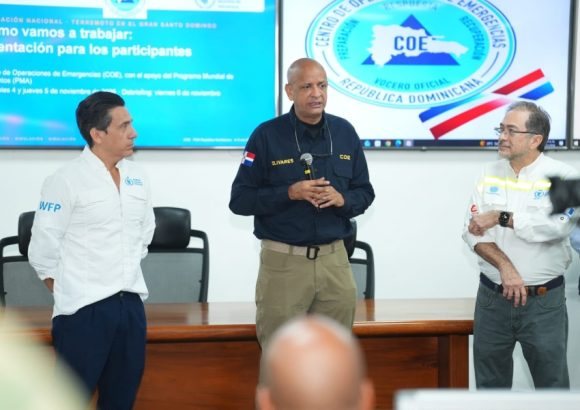
Santo Domingo recently played host to a large-scale simulation of a major earthquake, run by the Dominican Republic's Emergency Operations Center (COE) with backing from the UN World Food Programme. The scenario imagined a high-magnitude quake hitting Greater Santo Domingo, home to several million people and the hub of most visits to the country.
Institutions across the National Response System took part, working through the National Earthquake Contingency Plan: triggering the emergency activation, coordinating between agencies, moving resources, sharing information and making decisions under pressure. The point was not theatre for its own sake — organisers wanted to spot weak links, confirm protocols actually work and measure how well the different bodies function together in a genuinely large disaster.
COE director Colonel Erdwin Olivares Luciano put it plainly: good disaster response is built long before anything happens, through planning, training and coordination between institutions. The WFP's representative in the country, Alex Robayo, echoed that, arguing simulations are the only realistic way to test capabilities before a real event. The exercise got technical support from the WFP and was funded by the US government through the Resilient Basin project, which focuses on protecting vulnerable populations from disaster impacts.
The results now feed back into the system: the COE says it will use the findings to refine response protocols, update coordination mechanisms and boost the operational readiness of the agencies that would handle a real emergency. The Caribbean sits in a seismically active zone, and the Dominican Republic has a documented history of destructive quakes, so preparedness here is not an abstract concern.
For travellers, this is quietly reassuring news rather than a warning. The capital — where most international visitors pass through or base themselves — has an emergency apparatus that is actively being drilled, funded and refined at national level. There is no elevated earthquake risk attached to this story and no advisory; it's the routine work that makes a destination more resilient. If you're heading to the Dominican Republic, the practical takeaway is the usual one for any Caribbean trip: know your hotel's emergency procedure, note the nearest exits, and register with your foreign ministry's traveller programme if yours offers one. Rough terrain aside, the country remains one of the region's most visited — and its authorities are visibly taking the worst-case scenario seriously.