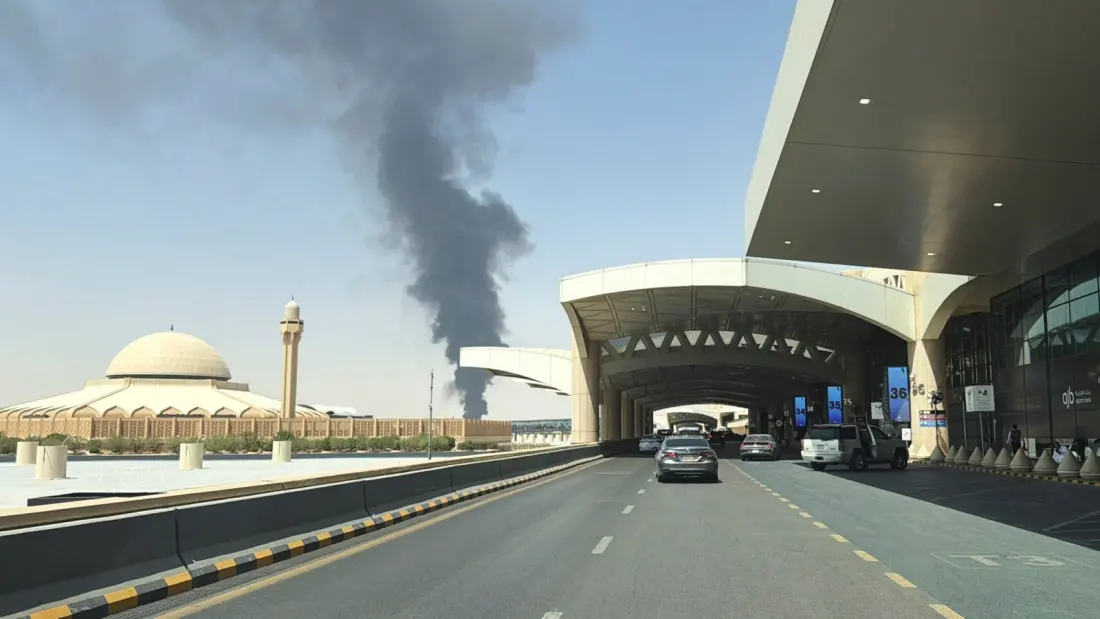
A strike claimed on Saudi Arabia's biggest airport has knocked Riyadh's flight schedules sideways. Yemen's Iran-aligned Houthis said they hit King Khalid International Airport with a ballistic missile on Thursday, and while Saudi authorities have not confirmed that claim, smoke was seen rising from a stationary aircraft at the airport. Three people had already been killed this week in strikes on Riyadh's airport and Abha airport in the country's southwest, according to Saudi officials.
The airline response was swift. Lufthansa Group suspended all flights to Riyadh through 16 October, citing developments in the Middle East. India's largest carrier, IndiGo, cancelled every Riyadh service until 9 October, while Air India and Akasa Air went a step further, scrapping flights until 10 October. One Air India flight from Delhi actually turned back mid-route, and Akasa dropped two scheduled services. The Houthis have also issued renewed threats against carriers operating in Saudi airspace.
The disruption is not marginal. FlightRadar24 recorded several dozen international arrivals into Riyadh cancelled on Thursday evening alone. Aviation analytics firm Cirium put the damage in harder numbers: nearly half of all departures from Riyadh airport — 49.7% — had been cancelled by mid-afternoon GMT, with another 31 cancellations expected across Saudi airports the following day.
For anyone with a trip to Saudi Arabia booked in the coming days, the practical reality is that your flight may simply not operate, and rebooking windows are shifting daily as airlines extend their suspensions. Even carriers that haven't publicly paused service are routing around affected airspace, so expect longer flight times and possible schedule changes on other Gulf routes too. If you're booked through a full-service airline, rebooking and refund options are typically more flexible in disruption events like this; check your carrier's travel alerts before heading to the airport rather than after.
This is also a reminder of how quickly regional security events translate into trip-ending practicalities. Riyadh is a growing business and events destination, and flight capacity there has been expanding fast — which means a sudden suspension ripples through connections across Europe and South Asia, where Indian carriers in particular operate dense schedules to the Saudi capital. Travellers with onward connections through Gulf hubs should watch those itineraries closely as well.
There is no sign yet of how long the suspension will last beyond the dates airlines have announced, so anyone travelling to Saudi Arabia this month should keep an eye on official travel advisories and their airline's updates before making non-refundable plans.