Eight square kilometres of fishing harbour, narrow streets and copper-smelting industry in Japan's Seto Inland Sea have become, improbably, one of the most respected contemporary art destinations on earth. Naoshima's transformation began in the 1980s, when publisher Tetsuhiko Fukutake and the island's then-mayor Chikatsugu Miyake set out to combine art, education and nature. The Benesse Art Site project that followed turned the whole island into a canvas.
Architect Tadao Ando shaped much of what you see today. His Benesse House Museum, opened in 1992, doubles as a hotel with works scattered across its grounds. The Chichu Art Museum, opened in 2004, is built almost entirely underground to protect the coastline, with natural light doing the work of gallery walls. Inside sits one of the island's biggest draws: five of Monet's Water Lilies paintings, alongside permanent installations by James Turrell and Walter De Maria that play with light and perception.
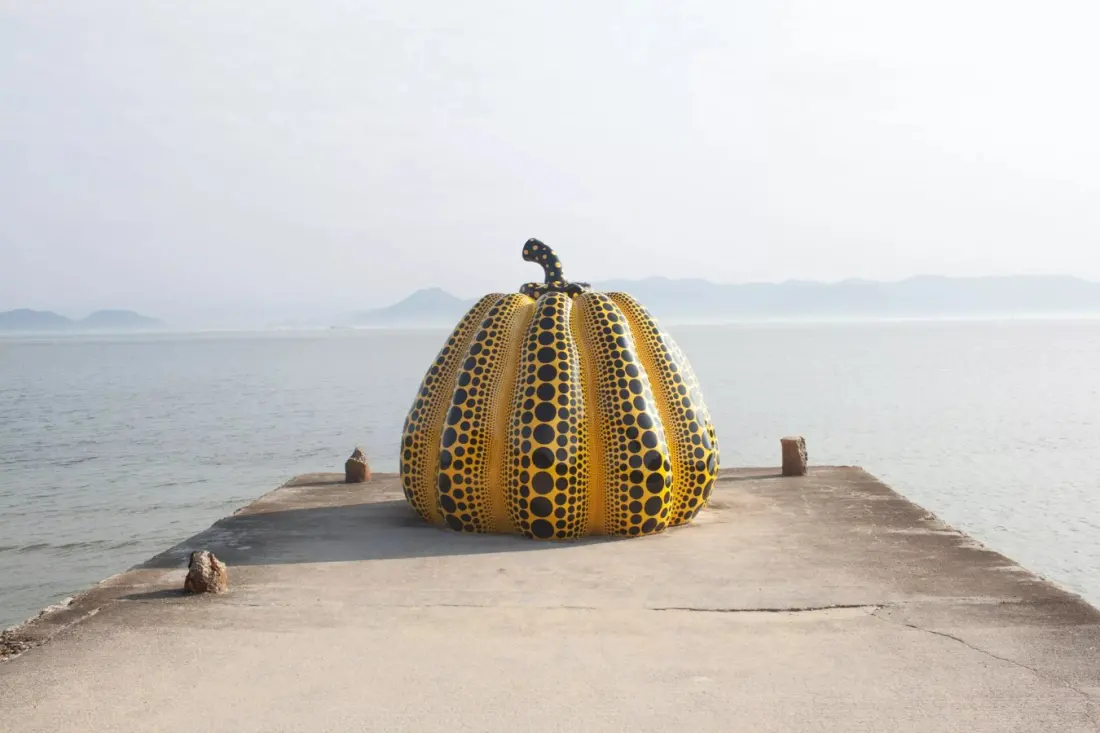
Art here escapes the museums entirely. The Art House Project, running since 1998, has filled seven vacant traditional buildings in the Honmura district with installations you explore on foot, weaving between locals' homes as you go. Shinro Ohtake's Naoshima Bath I Love Yu turns a public bathhouse into a riotous artwork you can actually soak in. And then there are the pumpkins: Yayoi Kusama's Yellow Pumpkin by the sea near Benesse House and Red Pumpkin by Miyanoura Port are the island's most photographed landmarks.
The scene is still growing. The Naoshima New Museum of Art, another Ando design focused on contemporary art from Japan and wider Asia, opened near Honmura on 31 May 2025. Nearby islands Teshima and Inujima have their own museums and installations, so many visitors build the Seto Inland Sea art circuit into a multi-day trip.
Ferries run to Miyanoura Port from Uno in Okayama Prefecture (about 20 minutes) and Takamatsu in Kagawa (50 to 60 minutes). Once on the island you can hop on local buses, rent a bicycle or walk, though attractions are spread out enough that cramming it into a couple of hours shortchanges you. Timed-entry tickets and advance online reservations are required for Chichu Art Museum and some Art House Project sites, and opening days vary, so check the Benesse Art Site calendar before you go. Overnight stays range from sleeping inside Benesse House itself to simple guesthouses around the island.
What makes Naoshima worth the detour from Japan's big cities is the blend: a working smelter, fishing boats and everyday island life sitting alongside world-class art, much of it set against the sea rather than behind a ticket barrier. It rewards slow travel. Give it a full day at minimum, ideally an overnight, and pair it with Teshima and Inujima if you have the time.