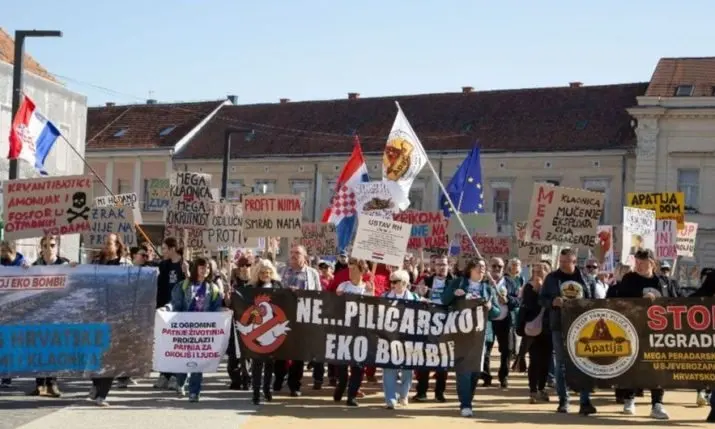
A fight over factory farming has landed in one of Europe's most important river landscapes. In Koprivnica, northern Croatia, residents and environmental groups have been demonstrating against the expansion of industrial poultry farms, with much of the anger focused on a facility in Legrad that sits disturbingly close to protected nature.
The Veliki Pažut farm has already begun trial operations, with plans to raise 1.8 million chickens a year. Campaigners say it lies inside the UNESCO Mura-Drava-Danube Transboundary Biosphere Reserve — just 200 metres from the Drava River and 320 metres from the Veliki Pažut Special Ornithological Reserve, a site known for its birdlife. Residents nearby report strong smells, manure dumped in the protected Mura River landscape, heavy truck traffic, noise and damage to roads and houses.
The Koprivnica protest, held under the slogan "Podravina is not flat either — The North against megafarms", is part of a nationwide backlash. Two foreign investors had originally proposed up to 24 poultry projects across Croatia. After strong local opposition in Sisak-Moslavina County, investor MHP asked to suspend its projects there, but the other investor is pushing ahead. Protesters want the Veliki Pažut trials stopped immediately, no operating permit issued, and the wider project pipeline halted.
Conservation group Biom, speaking through Darko Podravec, argues authorities are putting short-term economics ahead of biodiversity, and says public trust has already been eroded by earlier environmental controversies. Luka Oman of Friends of Animals points to the risks typical of intensive poultry production: crowded conditions, zoonotic disease, ammonia emissions, dust, manure and heavy antibiotic use. Organisers are pressing the Ministry of Environmental Protection and Green Transition to properly examine residents' objections, and want the government to rethink the whole strategy.
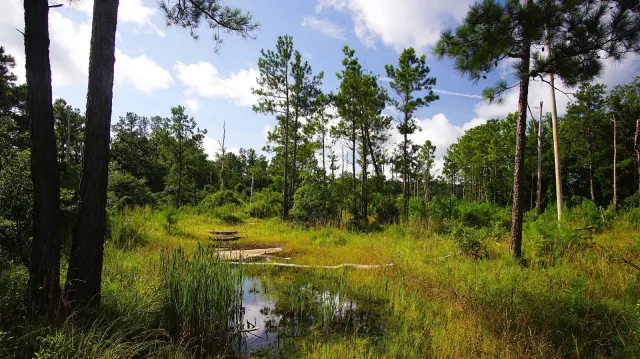
Why should travellers care? The Mura-Drava-Danube reserve — often called the Amazon of Europe — is a major draw for canoeists, cyclists and birdwatchers along Croatia's northern border with Hungary and Slovenia. The Drava's gravel banks, floodplain forests and oxbow lakes are exactly what people come to Podravina for, and a facility of this scale at its edge could change both the environment and the quiet rural character of the region. The outcome will also be a test case for how Croatia balances rural investment against the protected areas that underpin its growing nature-tourism appeal. Campaigners say they will keep protesting until the projects are stopped, so the story is far from over.
For now, the Drava remains one of the quieter corners of Croatia — a country most visitors associate with the Adriatic coast, even though its inland river country offers some of the best slow-travel territory in Europe.