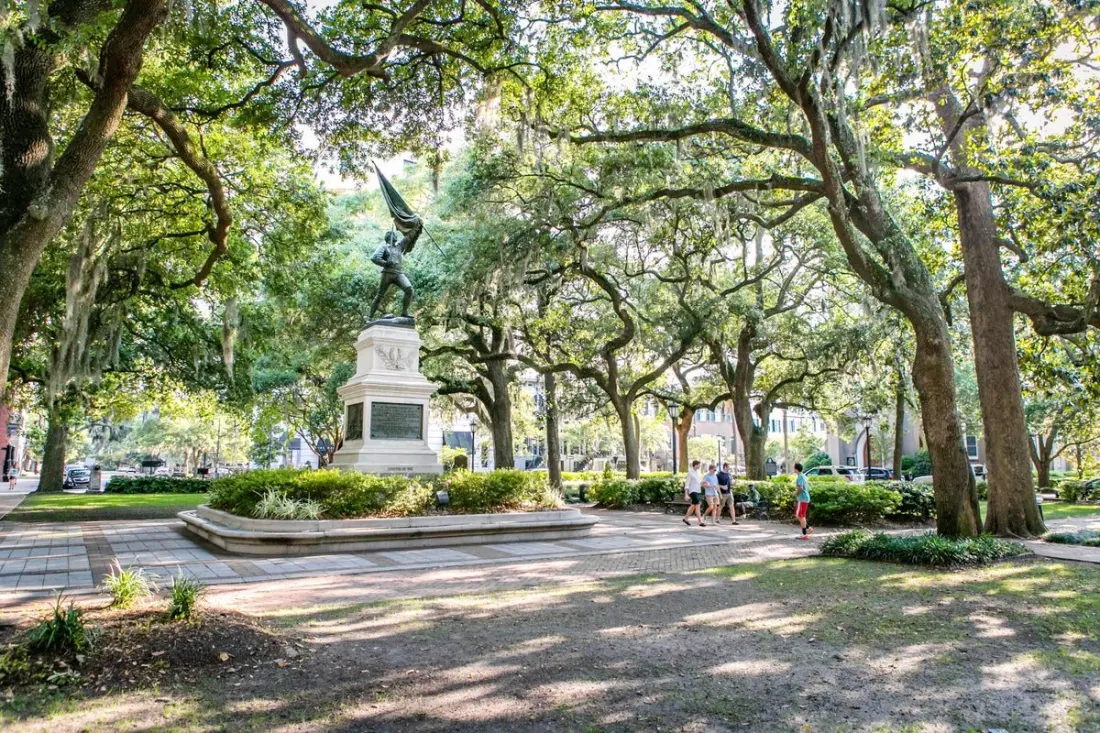
Savannah, Georgia, has long traded on its looks: oaks dripping with Spanish moss, 23 leafy squares, antebellum houses. But the city's real appeal right now is how the historic and the contemporary sit side by side — often within a few blocks of each other.
Start with the layout. Savannah's Historic District was laid out before cars existed, which is why it's routinely called the most walkable city in the US. The grid of green squares each has its own character, and River Street — cobbled, along the Savannah River — fills former cotton warehouses with boutiques, galleries and restaurants. At the district's southern edge, Forsyth Park spreads over 30 acres, anchored by its famous white fountain.
The city's history is complicated, and the best visits engage with it. Savannah's port brought enslaved Africans to work coastal Georgia's rice, cotton and indigo plantations from the 18th century, and their descendants shaped the distinctive Gullah-Geechee culture — its own language, traditions and food. At Pin Point, a historic Geechee community just south of the city, the Pin Point Heritage Museum tells that story. In town, the Owens-Thomas House & Slave Quarters examines both the powerful and the enslaved people who served them, and the Ralph Mark Gilbert Civil Rights Museum covers the local fight for equality. Black-history tours tie these threads together.
Then there's the design side. SCAD, the Savannah College of Art and Design, has turned the city into a magnet for artists and makers. The SCAD Museum of Art mounts contemporary shows inside the oldest surviving antebellum railroad complex in the US, while the Telfair Museums' Jepson Center handles today's contemporary art. Shoppers head to the Downtown Design District for independent interiors stores, and the Starland District is the bohemian quarter — vintage shops, street art, galleries, cafes.
Food follows the same old-meets-new pattern. Institutions like Mrs Wilkes' Dining Room and the Olde Pink House serve classic Southern fare, while The Grey — an award-winning restaurant inside a restored Art Deco Greyhound bus terminal — is the poster child for the city's chef-driven reinvention of Southern staples.
The kicker: Savannah doubles as a beach break. Tybee Island is a 20-minute drive away, with five beaches (livelier South Beach, sunset-friendly Back River), kayak and dolphin trips, cycling trails and the oldest, tallest lighthouse in Georgia. Refuel at The Crab Shack, a Tybee institution serving crab-leg platters with a side of baby alligators in its Gator Lagoon.
Why it matters: if you want a US city break with genuine substance — walkable, historically honest, creatively alive — plus an easy beach add-on, Savannah punches well above its size. It suits couples, design fans and anyone curious about Gullah-Geechee culture, and it works year-round outside the sticky summer months.
First published by The Independent Travel.