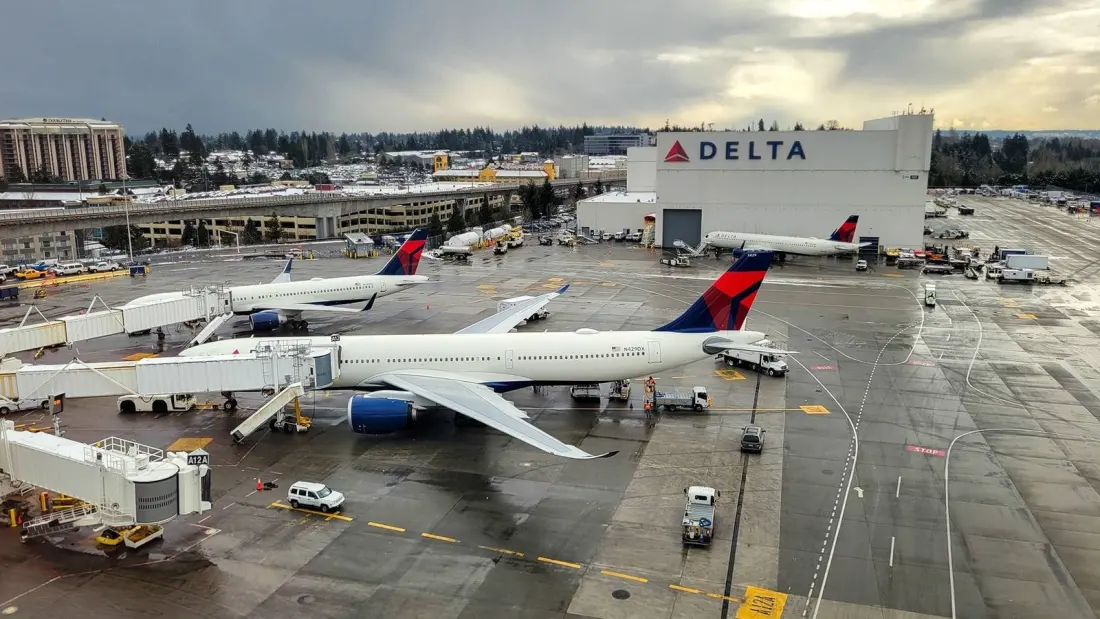
Seattle-Tacoma International Airport has quietly become one of the most competitive hubs in the US, with two full-service carriers fighting for the same premium travellers. Alaska Airlines, the hometown favourite, currently runs about double the number of flight operations Delta does there. But Delta holds the stronger long-haul hand for now, with nonstops to Tokyo Haneda and Narita, Seoul, Shanghai, Taipei, Amsterdam, Barcelona, London and Paris.
Alaska is catching up fast. Traditionally a domestic and short-haul operator, it inherited widebody aircraft and long-haul ambition through its acquisition of Hawaiian Airlines, adding A330s and 787s to the fleet. Athens and Paris launch next summer, and the airline has hinted its next long-haul routes will point west — with China, Vietnam, Thailand and even Australia floated as possibilities. The stated goal: 15 long-haul destinations from Seattle by the end of the decade.
Alaska's vice president of revenue management, Kirsten Amrine, framed it simply: as the hometown carrier with a growing international portfolio, the airline sees the chance to win back travellers it lost to Delta. Alaska currently lists 17 international destinations from Seattle, including seasonal service to Rome, Reykjavík, Belize City and several Mexican resort cities, alongside closer-in routes to Canada.
Delta, for its part, isn't spoiling for a fight. CEO Ed Bastian called Alaska's expansion 'smart', arguing Seattle's growing demand can comfortably support two primary carriers — a notably softer stance than Delta's take-no-prisoners approach at Los Angeles, where it has claimed the number one spot over American and United. Delta is reportedly eyeing a return to Tokyo Narita in March 2027 as it positions itself as the number-one global carrier from the West Coast.
The competition goes beyond routes. Alaska is rolling out lie-flat suites on domestic transcontinental flights and building a new Aurora Lounge in Seattle, aimed squarely at the Delta One Lounge, which was named US airline lounge of the year in 2025. Better lounges, flatter beds and more nonstops are the visible signs of a genuine rivalry.
For anyone booking a trip from the Pacific Northwest — or connecting through Seattle to Asia or Europe — this is good news. Two airlines pushing each other on premium cabins, lounges and route networks typically means more choice, sharper fares and better service on the ground and in the air. If you've been waiting to book a Seattle departure to Athens, Paris or Seoul, the timing has rarely been better, and the map is only going to keep expanding over the next few years.