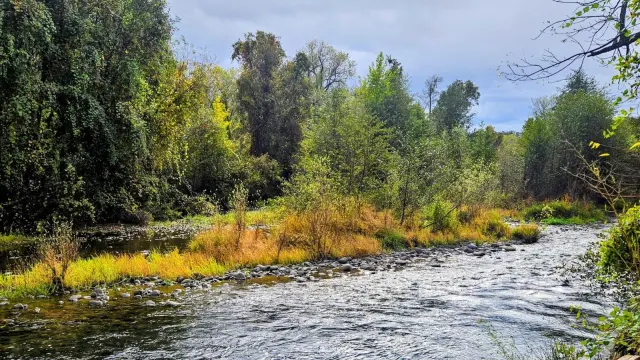
Shenzhen has added a serious cultural heavyweight to its lineup. The city's Natural History Museum, which opened to the public in July 2026, is a RMB3.5 billion (around S$668 million) project in the Pingshan district, and it might be the most striking building in a city not short of bold architecture. Designed to echo a river delta, the structure undulates like water, and a rooftop botanical garden with a walkway of more than 600m connects the museum to the Pingshan River Natural History Corridor, Yanzi Ridge Park and the Chi'ao Water Wetland Trail.
It's part of the city government's Ten Cultural Facilities of the New Era initiative, and the ambition shows inside too. Eight permanent halls spread over three levels take visitors from the birth of the universe to the wildlife living in Shenzhen's own backyard.
The Cosmos Hall starts things off with star charts, astrophotography and actual meteorites from space missions, alongside a replica of the Hooker Telescope, once the world's largest aperture telescope. The Earth Hall then grounds you with rocks and minerals that trace the planet's 4.6-billion-year geological history, including the forces behind China's famously varied terrain.
Life gets its due next. The Evolution Hall — the largest at 1,910sqm — covers 3.8 billion years of biology, fossils included, with a nod to Darwin and natural selection. The Dinosaur Hall is the crowd-pleaser, with towering skeletons and a focus on the red-bed basins of South China, home to one of the largest known Cretaceous dinosaur nesting grounds. China's growing role in dinosaur research gets proper attention here.
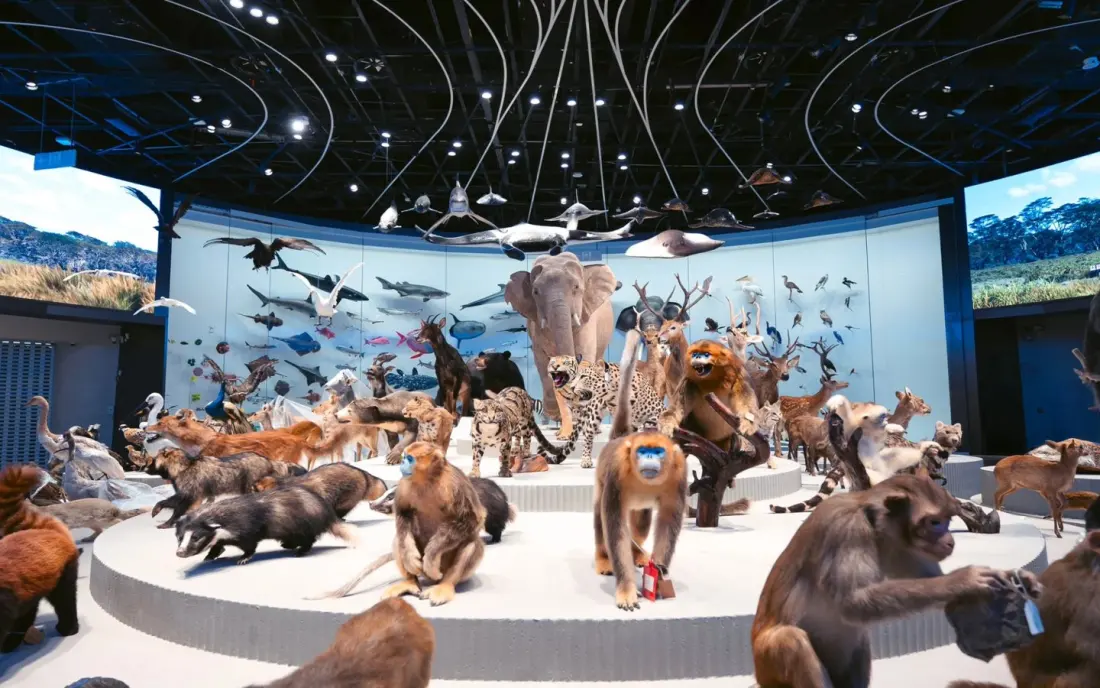
The Humanity Hall shifts to our own story, from early hominins to modern humans, with a section on stone-tool technology and the megafauna that once shared the landscape. The Biology Hall organises life by classification, spotlighting protected species in South China — and doesn't shy away from extinction and biodiversity loss. Ecology covers six major ecosystems, from rainforest to wetland, with predator-prey drama throughout. Finally, the Homeland Hall turns the lens on Shenzhen itself: its subtropical biodiversity, endemic and migratory species, and its conservation efforts in one of the world's busiest cities.
For travellers, this is a strong reason to look beyond Shenzhen's usual tech-and-shopping reputation. It works brilliantly as a family day out — dinosaur skeletons rarely fail — but there's enough depth for adults too, and the riverside setting means you can pair the visit with a walk through the adjoining wetland trails. Pingshan is a bit east of the city centre, so plan half a day minimum, and more if you want to do all eight halls justice. Singapore Airlines flies direct to Shenzhen, making it an easy add-on to a longer China trip.
Story via SilverKris.