
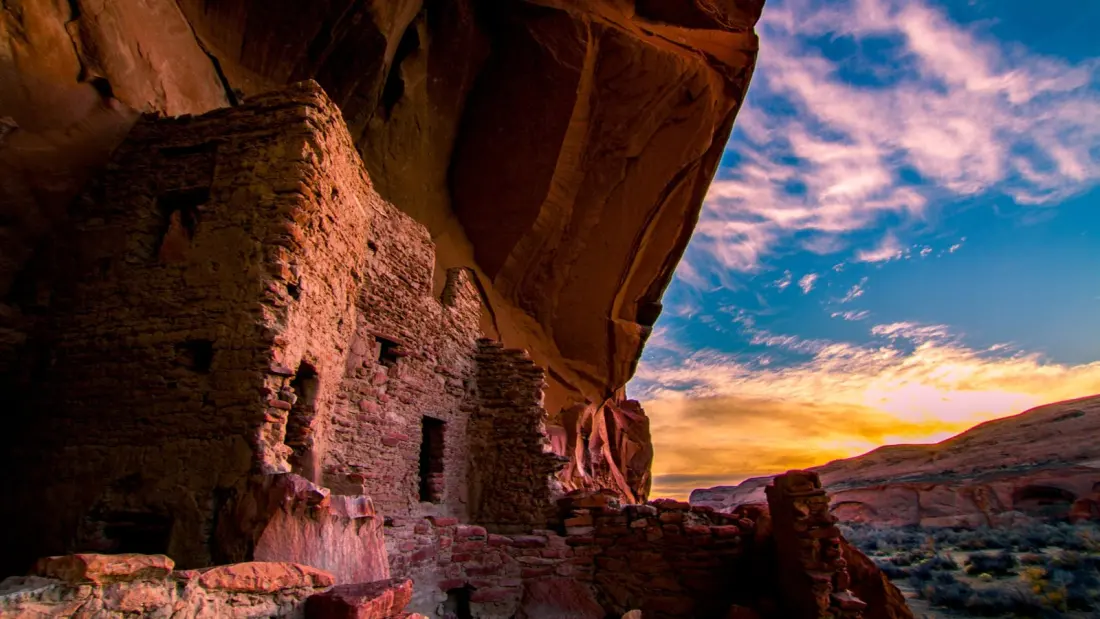
The Southwest's famous archaeological parks draw crowds for good reason, but some of the region's most striking Ancestral Puebloan sites sit far down quiet backcountry trails. Backpacker magazine recently pulled together six lesser-known hikes where you can pair a good workout with rock art, granaries, and cliff dwellings, often without another soul in sight.
In southeastern Utah's Bears Ears National Monument, the short walk to House on Fire Ruin packs a punch: a structure built into a sandstone alcove where the overhanging rock glows like flames leaping off the roof. Extend it up Mule Creek for a 6.4-mile outing, or combine it with the 17.3-mile Arch Canyon trail nearby. A short drive south, Moon House Ruins overlook McCloyd Canyon and include a room painted with lunar phases, effectively an ancient wall calendar. Access is capped at 20 people per day, so book ahead on recreation.gov.
Also in Utah, Salt Creek Canyon in Canyonlands National Park is the big one: 22.5 miles one way past natural arches, stacked granaries once used by the Ute for storing corn and masa flour, and remarkably preserved petroglyphs including the "Five Faces." Water sources are unreliable, so most hikers go in early spring, and camping permits open on recreation.gov four months before each seasonal block.
Over the state lines, Colorado's Canyons of the Ancients National Monument offers an 11.8-mile loop linking Sand Canyon, East Rock Creek, and Rock Creek trails, with unmarked Puebloan ruins hiding among sandstone caves and views of four named peaks. No permit needed, and dispersed camping is allowed. Hovenweep National Monument straddles the Utah-Colorado border with a 12.4-mile round trip past structures like the "Twin Towers" and "Hovenweep Castle," plus a 31-site campground near the trailhead.
The standout for effort and payoff is Keet Seel in Arizona's Navajo National Monument, the largest Ancestral Puebloan structure in the state. You can't visit independently; ranger-guided overnight trips run in spring and fall, covering a strenuous 17.2 miles down into and back out of a canyon, with just 20 visitors per day. Apply months in advance via the NPS.
One thing every one of these sites has in common: they're living heritage. Rangers and Native communities ask visitors to treat rock art and dwellings as they would a church or temple. Don't touch the art, leave potsherds where they lie, stick to trails, and practice Leave No Trace. Do that, and these trails reward you with a kind of quiet encounter with the past that Mesa Verde on a summer Saturday never will.