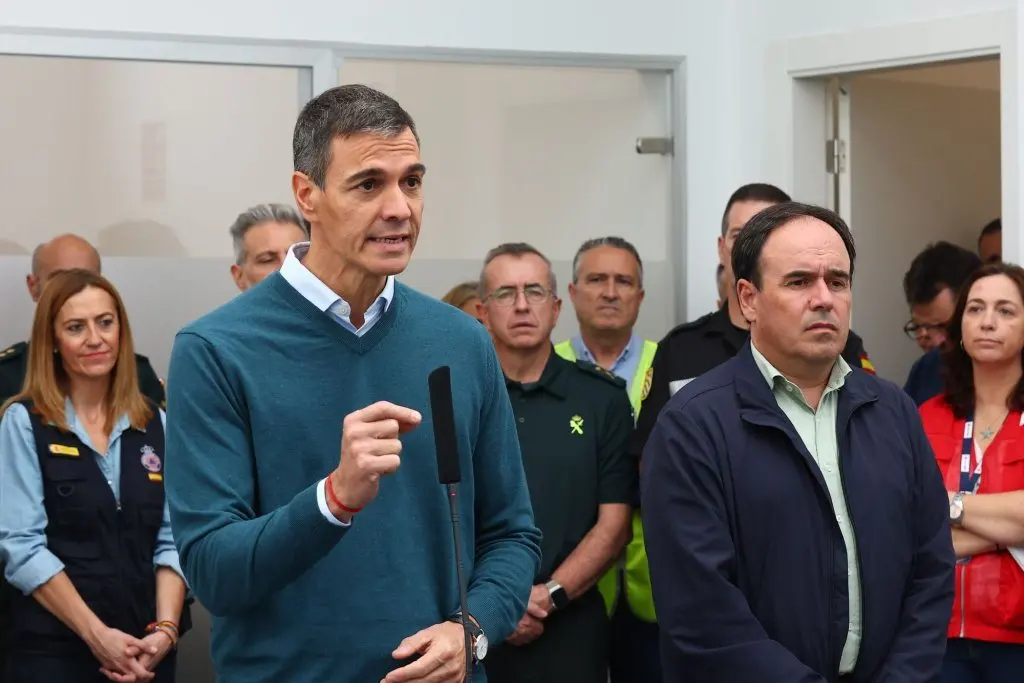
Storm Adam has left four people dead in Spain's Valencia region, with torrential rain triggering hundreds of rescues and lockdown orders across dozens of towns. Prime Minister Pedro Sánchez visited the emergency command centre in Oliva this week, promising funding and faster procedures to get affected communities back on their feet.
The storm was linked to a DANA — the 'gota fría' phenomenon that regularly dumps extreme autumn rain on Spain's Mediterranean coast. Conditions were severe enough that authorities in Valencia and Alicante told residents in up to 145 municipalities to stay indoors, and footage from the region showed rooftop rescues as water surged through streets.
Sánchez said the Cabinet will formally recognise all affected municipalities as disaster zones in the coming weeks, a designation that unlocks financial support and speeds up public procurement. 'We will provide financial resources and speed up public procurement so that normality can be restored as soon as possible,' he said. The reception in Oliva was mixed — applause and boos from residents — a sign of lingering tension after the catastrophic Valencia floods of October 2024, which this week's emergency inevitably recalls.
Beyond the immediate response, the Prime Minister used the visit to renew his push for a national pact on the climate emergency, arguing that Spain needs cooperation before and after disasters, not just during them. Such an agreement, he said, would 'save lives'. Valencian regional president Juanfran Pérez Llorca echoed the call for unity, saying the reconstruction phase now demands the same coordination shown during the emergency. He also pointed to unglamorous but vital fixes: clearing riverbeds and ravines and improving drainage through water infrastructure works.
Notably, the regional leader said warnings were issued in good time this round — an implicit contrast with 2024, when alert failures cost lives. Early alerts and preventive action, he argued, let services coordinate better.
For travellers, the practical takeaway is to take DANA warnings seriously. If you're booked into the Valencia region, Alicante or the Costa Blanca in autumn, check weather alerts from AEMET (Spain's meteorological agency) and regional emergency services, and follow shelter-in-place instructions if issued — they're common during these events and generally short-lived. Coastal rail and road links can close at short notice, so build flexibility into itineraries between October and December, when these storms typically hit.
The broader story matters too: extreme weather is becoming a recurring feature of eastern Spain's autumn, and recovery works — drainage, river maintenance, rebuilt towns — will shape how destinations like Valencia, Gandia, Dénia and Oliva welcome visitors over the coming seasons. Most tourism areas are unaffected once a storm passes, but it's worth checking local conditions before travelling to inland and riverside towns in the worst-hit zones.
Who it's for: anyone with autumn trips planned to eastern Spain, plus travellers weighing how climate-driven weather events are changing holiday planning in the Mediterranean.