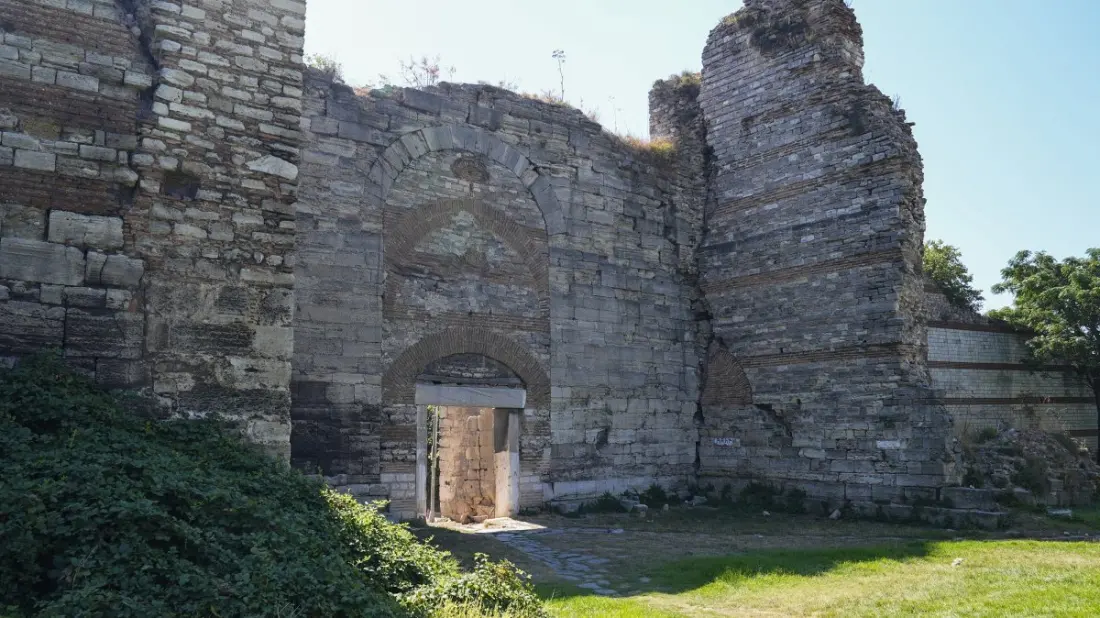
Istanbul is full of gates, but few carry as much weight as Sulukule. This modest passage in the Theodosian Walls, between Topkapı and Edirnekapı, looks like an ordinary shortcut used by locals — yet it was one of the hottest points of the 1453 siege of Constantinople, when Sultan Mehmed II's cannons hammered the walls in this very stretch in an attempt to break the city open.
The gate takes its name from a stream. The Lykos, which rose in Bayrampaşa and ran beneath the fortifications, is thought to have given both the gate and the neighbourhood their name — 'sulukule' roughly evokes a water tower. During the Byzantine era the passage was known as the Pempton Gate. Art historian Elif Rana Kabalıoğlu, speaking to Anadolu Agency, notes the area has been called Sulukule since Mehmed II's reign, and that the stream, present since early Byzantine times, gradually dried up under the Ottomans.
Look closely and you can read the gate's layered history in its stonework. A cross is still visible on the marble lintel above the entrance — a leftover from the Byzantine emperors, commanders and officials who periodically repaired the walls after earthquakes, fires and attacks. There is an Ottoman repair inscription on the same lintel. After the conquest, the gate was sealed with masonry for centuries and only reopened in the late 19th century, when it slipped back into everyday city life.
The story is not purely military. The land outside the walls was home to Roma communities who arrived during the Migration Period and initially lived beyond the fortifications, barred from the city. According to Kabalıoğlu, that changed after they helped an emperor suppress internal unrest — settlement rights inside the walls followed. Over time the Roma population settled alongside Jewish, Greek and other Christian neighbours, and the pattern persisted into the Ottoman era. In the Sulukule district, many families built their houses directly against the walls and worked as muleteers, blacksmiths, farriers and coppersmiths. Roma residents remain predominant in the neighbourhood today.
For travellers, the appeal is that Sulukule is not a roped-off monument but a working piece of the city. The Theodosian Walls stretch for kilometres along Istanbul's historic peninsula, and this section between Topkapı and Edirnekapı lets you combine a wall-side walk with stops at nearby heavyweights like Chora Church and the Kariye area. A small carved cross above a gate is exactly the kind of detail that turns a stroll into a lesson in how many civilisations have left their mark on one doorway.
If you are the kind of traveller who prefers quiet stonework and lived-in streets to long ticket queues, this corner of Istanbul rewards the detour — the gate itself is free, always open, and steeped in more drama than most museums can stage.