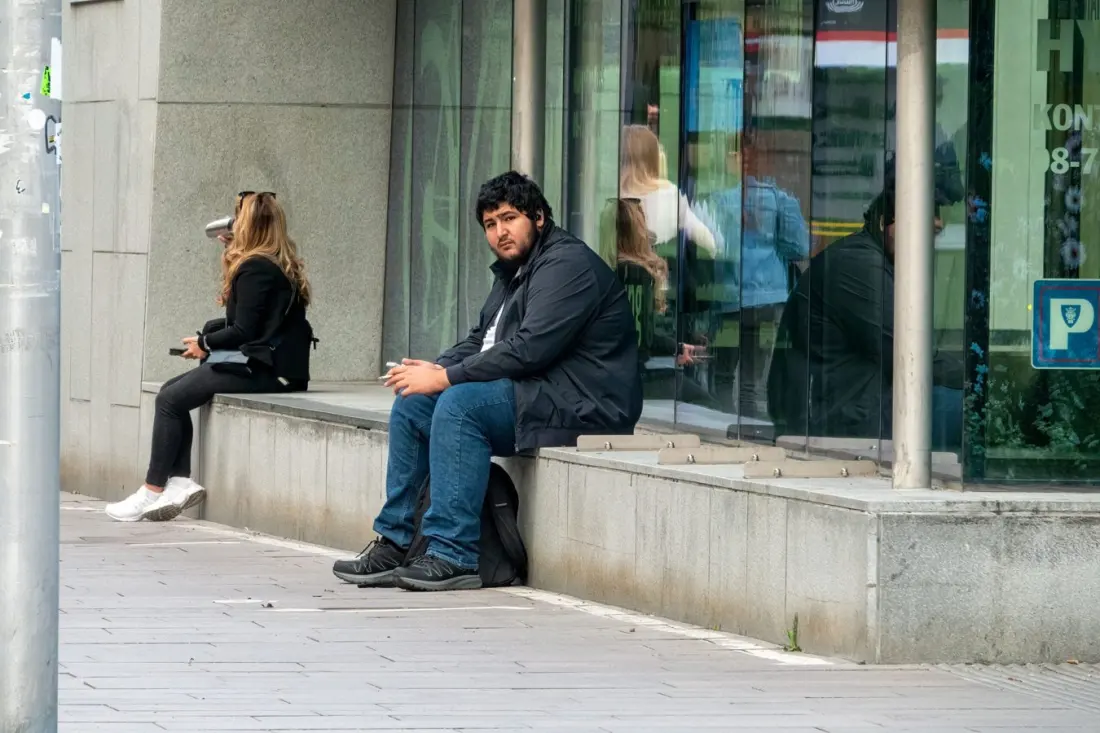
Sweden sits fourth in the 2025 World Happiness Report, behind only Finland, Denmark and Iceland. But a new Swedish study suggests that number is doing a lot of quiet work. Published in 2026 by researchers linked to the Stockholm School of Economics, Oslo Metropolitan University, Lund University and Harvard, the paper surveyed 15,068 Swedes aged 18 and over in early 2023. Its headline illustration: if the life-evaluation score of 18-to-24-year-olds applied to the whole country, Sweden would drop to 30th place — below Lithuania, Belize and Kosovo. Swap in the scores of Swedes aged 80 and over, and the country would leap to first.
The study, part of the 22-country Global Flourishing Study run by Gallup, went well beyond the single ladder question used in the global rankings. Across nearly every measure, the youngest and oldest respondents described different countries. Present life evaluation averaged 6.65 among young adults versus 7.97 among the over-80s. Financial stability scored 6.65 against 8.78. Loneliness was 4.12 for the young and just 2.08 for the old — a reversal of the usual assumption about who feels isolated. Around 35 to 37 per cent of young respondents reported anxiety or depressive symptoms on at least half of days, compared with 5 and 11 per cent of the oldest group.
One finding cuts against a simple despair narrative. Asked where they expected to be in five years, young adults averaged 8.06 — well above their current 6.65. The over-80s showed the opposite pattern, expecting a slight decline from a strong present. Young Swedes, in other words, are struggling now but still believe life will improve.
The caveats matter. The 30th-place figure is an illustrative comparison, not a rerun of the global survey, and the Swedish responses were collected in 2023 using a digital opt-in panel weighted for representativeness. The study cannot explain why the gap exists — candidates range from housing shortages and financial strain to the pandemic and climate anxiety — only that it is consistent and substantial.
For travellers, this is a useful corrective to 'happiest country' shorthand. Sweden is genuinely one of the world's best-rated places: national life evaluation averaged 7.20 against 6.34 across the 22-country pool, and anxiety symptom rates were far lower than average. But averages flatten uneven lives, in Sweden as anywhere. A visit shaped around this context — spending time in student-heavy neighbourhoods in Stockholm or Malmö as well as the placid countryside, and treating locals as individuals rather than a statistic — gives you a truer picture than any league table. The study's real lesson is portable: wherever you go, a country's headline number may describe some of its residents far better than others.